For sale / buy
Sudanskaya trava, Volynska region.
Price27 UAH.
Region:all of Ukraine,
Volyn region.
(Lutsk)
Updated:
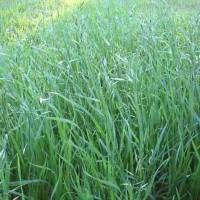
Sudan grass (Sudanka) gives high yields of both hay and green mass. Hay productivity is much higher than other annual fodder crops. With the correct cultivation technology, Sudanese grass yields 50–70 and even 100 centners of hay per hectare.
According to the data of long-term studies, the yield of green mass of Sudan grass in harvest crops under irrigation for many years was from 205 to 380 c/ha. Joint sowings of Sudanese grass with seeding in the course of three years yielded an average of 260 centners/ha of green mass.
HaySudan grass contains 9–10% protein. 1 kg of green mass contains 65–80 mg of carotene. The protein digestibility coefficient is 60.8%, fat – 45.7, non-nitrogenous extractives – 73.4, fiber – 69.1%. Yes, according to such indicators, it turns out that the hay of the Sudanese grass is good fodder for animals.
Botanical description:
Sudan grass (Sorghum sudanense stapf) has a powerfully developed pulpy root system extending to a depth of more than 2.5 m. In the horizontal direction, the roots spread 75 cm with a large feeding area. Sometimes aerial or accessory roots 6–8 cm long form from the lower stem nodes of Sudanese grass.
The stem is cylindrical, unpubescent, filled with white spongy parenchyma inside. The height of the stem varies from 80 to 300 cm. The number of internodes on the stem depends on the length of the growing season of one or another variety. Early-ripening varieties form 3–5 internodes on the main stem, and late-ripening ones - 8–12 internodes. The lower stem node is a tiller node. According to the overall bushiness, Sudan grass is divided into three groups: weakly bushy - with the number of shoots in a bush no more than 12, medium bushy - from 12 to 25 and tall bushy - with more than 25 shoots. According to the shape of the bush, varieties of Sudan grass are divided into erect, slightly spreading, spreading, semi-recumbent and recumbent. The varieties with upright and slightly spreading bushes became the most common. As a rule, varieties of Sudan grass with a dense bush are more productive than varieties with a loose bush.
The leaf consists of a sheath and a leaf plate. The leaf blade is broad-lined, up to 60 cm long, bare, smooth, with a slightly rough edge. The most developed leaves of the middle tier, which are very valuable in terms of fodder. According to the level of foliage, varieties of Sudan grass are divided into three groups: with weak foliage (the number of leaves on the main stem is up to 6, the mass of leaves in the total crop does not exceed 35%); with medium foliage (the number of leaves on the main stem is 6–9, the mass of leaves in the total harvest is 35–50%); with good foliage (the number of leaves is more than 9, the mass of leaves in the total harvest is more than 50%).
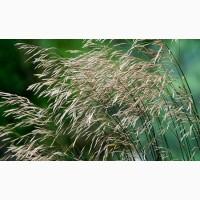
The inflorescence is a multi-spike panicle, approximately 40 cm long. There are strongly spreading, spreading, semi-compressed, compact, drooping and sorghum types of panicles. Spikelets are located at the ends of panicles.
The fruit is a grain tightly enclosed in spikelets. Unlike sorghum, the tip of the grain of Sudan grass does not stick out. 4–5 g of seeds are obtained from each panicle. The mass of 1000 seeds is from 10 to 15 g and more.
Biological features:
Temperature requirements. Sudan grass is a heat-loving plant. The minimum temperature for seed germination is 8–10°C, the optimal temperature is 20–30°C. The amount of heat required for full development, depending on the precocity of the variety, varies from 2200 to 3000°С. Frosts at 3–4°C kill seedlings. Intensive growth of stems occurs when the average daily air temperature exceeds 10°С.
Moisture requirements. Sudan grass is characterized by high drought tolerance. This property is caused by a powerfully developed root system and a rather long growing season, which allows plants to make good use of the sediments of the second half of the summer.
Sudan grass most of all absorbs moisture from deep soil horizons. This circumstance must be taken into account when placing its crops in field crop rotations. For example, sunflower, like Sudanese grass, absorbs a lot of moisture from a depth of 1 m or more. Therefore, placing this culture after Sudan grass or, conversely, Sudan grass after sunflower on non-irrigated lands of steppe regions is extremely undesirable. This culture responds well to irrigation, sharply increasing the yield of green mass or hay. Does not tolerate excessive moisture.
Requirements to the world. Sudan grass is a short-day plant. With a long day, its development slows down a bit. In the seedling-bush phase, it tolerates shading well and therefore can be used as a seed crop.
Soil and nutrition requirements. Sudan grass grows best on chernozem and dark-chestnut soils, worse – on light-chestnut and sandy soils. It tolerates slight acidity and does not grow on saline soils. For the formation of 1 ton of dry matter, the soil consumes a lot of nitrogen, approximately 25–30 kg/ha (therefore, it is very responsive to the application of nitrogen fertilizers), 6–7 kg/ha of P2O5 and 15–17 kg of K2O.
Growth phases. For 5–6 weeks after sowing, Sudanese grass grows very slowly and forms 4–5 leaves. Budding begins at the moment of formation of the fifth leaf. At the end of the tillering phase and in the subsequent period, an intensive daily increase in height is observed - 5–10 cm. Stem growth ends by the time of flowering. After mowing or weeding, regrowth occurs due to shoots that have developed from tiller nodes, formed from above-ground stem nodes and grown from cut shoots that have preserved the growth point. Thus, after mowing or thinning, the regrowth of shoots of three types occurs, which ensures the high density of Sudanese grass and the possibility of obtaining a large number of mowings in one hour.
The shedding of panicles on the main stems usually occurs 6–7 weeks after the emergence of seedlings and continues for 2–3 weeks. Flowering begins in the upper part of the panicle and ends with the last flowers located on the lower branches. Flowers open early in the morning. Anemophilic pollination. The length of the vegetation period is 100–120 days.
Place in crop rotation:
Sudan grass Sudan grass grows well after grain legumes, corn, perennial grasses and winter grasses. When placing this culture in crop rotation fields, it is necessary to take into account its features as a predecessor. After the Sudan grass, the soil is dried to a greater depth, and readily available nitrogen is used for crop formation. Therefore, in dry steppe areas, after it, melon crops are placed, in which the root system penetrates to a depth of 10 m. In the steppe areas, snow retention is used in the fields after Sudan grass.
(//tractor-service.com)
Fertilizers:
Application of rotted manure (18–20 t/ha) increases the yield of hay by 23–26%. Sudan grass reacts well to the introduction of manure under previous crops.
At the Poltava Agricultural Experimental Station, the application of manure at the rate of 36t/ha two years before sowing contributed to an increase in hay yield by 30–32%.
Nitrogen fertilizers are especially effective. Application of 45 kg/ha of nitrogen increased hay production by 12.7 tons/ha. And the application of 45 kg/ha of P2O5 increased the hay yield of Sudanese grass by 22.6%.
Potassium fertilizers have a positive effect on sandy soils. On average, it is recommended to apply: nitrogen – 45–50 kg, phosphorus – 30–45 kg and potassium – 30–45 kg per 1 ha of sowing.
Tillage and sowing:
Soil treatment for Sudan grass is the same as for millet. The seeding rate varies from 10—14 kg/ha in the dry steppe and semi-desert zone to 25—30 kg/ha in the forest-steppe zone with precipitation of 500—600 mm per hour.
According to the data of the Erastov experimental station, the introduction of granulated superphosphate into the rows at a dose of 75 kg/ha increased the yield of hay by 13.5 tons/ha.
Sowing begins when the soil temperature at a depth of 10 cm reaches 10–12°С. The sowing method is continuous when grown for fodder and wide-row when grown forseeds. The depth of sowing seeds is 3–4 cm, and on light soils – up to 6–8 cm. After sowing, the field is rolled.
Harvesting:
Harvesting of Sudanese grass for hay begins at the end of the phase of emergence into the tube - the beginning of throwing out panicles. The second and third mowing should be done with an interval of approximately 30 days. As shown by the data of the Erastov experimental station, with this mode of use, Sudanese grass gives the highest yields of green mass. The mowing height is 7–8 cm. With lower mowing, the growth of young shoots slows down and the yield of green mass decreases.
Mixed, oblique and harvest crops:
Good results are obtained with the joint cultivation of Sudanese grass and soybeans. Such crops succeed well in the south of the country, where a sufficient amount of precipitation falls or irrigation is used. On the irrigated lands of the "Studenovsky" State Farm of the Novosibirsk region, the yield of green mass of Sudan grass, sown together with pea, reached 415 t/ha.
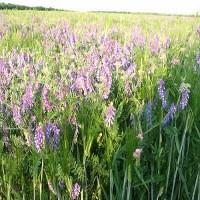
In Ukraine (Poltava region), a mixture of Sudanese grass with spring vetch or winter vetch allows to almost double the collection of protein per unit area compared to pure crops. Sometimes Sudanese grass is sown in a mixture with quinoa, peas or alkaloid-free lupine. The seeding rate in joint sowing is reduced by 15–20% compared to the pure seeding rate.
In the southern regions, Sudanese grass is good after harvesting barley, wheat, peas for grain (harvest crop), and in the forest-steppe zone - obliquely after harvesting winter rye, vetch-oat, chino-oat mixture for green fodder or hay.
Soil preparation for harvest crops must be carried out after harvesting the main crop. When the soil is well moistened, this is plowing to a depth of 20–25 cm with simultaneous harrowing. If the top layer of the soil is dry, first peel is carried out, then deep plowing with harrowing and pre-sowing rolling.
Features of growing Sudan grass for seeds:
Seed crops are best placed in the plowed field of field crop rotation. In arid regions, Sudanese grass is sown for seeds in a wide-row method with a row width of 45–50 cm. The seeding rate is 12–15 kg/ra. Sowing times are the most optimal.
Herbicides are used for weed control, and broadleaf
According to the data of long-term studies, the yield of green mass of Sudan grass in harvest crops under irrigation for many years was from 205 to 380 c/ha. Joint sowings of Sudanese grass with seeding in the course of three years yielded an average of 260 centners/ha of green mass.
HaySudan grass contains 9–10% protein. 1 kg of green mass contains 65–80 mg of carotene. The protein digestibility coefficient is 60.8%, fat – 45.7, non-nitrogenous extractives – 73.4, fiber – 69.1%. Yes, according to such indicators, it turns out that the hay of the Sudanese grass is good fodder for animals.
Botanical description:
Sudan grass (Sorghum sudanense stapf) has a powerfully developed pulpy root system extending to a depth of more than 2.5 m. In the horizontal direction, the roots spread 75 cm with a large feeding area. Sometimes aerial or accessory roots 6–8 cm long form from the lower stem nodes of Sudanese grass.
The stem is cylindrical, unpubescent, filled with white spongy parenchyma inside. The height of the stem varies from 80 to 300 cm. The number of internodes on the stem depends on the length of the growing season of one or another variety. Early-ripening varieties form 3–5 internodes on the main stem, and late-ripening ones - 8–12 internodes. The lower stem node is a tiller node. According to the overall bushiness, Sudan grass is divided into three groups: weakly bushy - with the number of shoots in a bush no more than 12, medium bushy - from 12 to 25 and tall bushy - with more than 25 shoots. According to the shape of the bush, varieties of Sudan grass are divided into erect, slightly spreading, spreading, semi-recumbent and recumbent. The varieties with upright and slightly spreading bushes became the most common. As a rule, varieties of Sudan grass with a dense bush are more productive than varieties with a loose bush.
The leaf consists of a sheath and a leaf plate. The leaf blade is broad-lined, up to 60 cm long, bare, smooth, with a slightly rough edge. The most developed leaves of the middle tier, which are very valuable in terms of fodder. According to the level of foliage, varieties of Sudan grass are divided into three groups: with weak foliage (the number of leaves on the main stem is up to 6, the mass of leaves in the total crop does not exceed 35%); with medium foliage (the number of leaves on the main stem is 6–9, the mass of leaves in the total harvest is 35–50%); with good foliage (the number of leaves is more than 9, the mass of leaves in the total harvest is more than 50%).
The inflorescence is a multi-spike panicle, approximately 40 cm long. There are strongly spreading, spreading, semi-compressed, compact, drooping and sorghum types of panicles. Spikelets are located at the ends of panicles.
The fruit is a grain tightly enclosed in spikelets. Unlike sorghum, the tip of the grain of Sudan grass does not stick out. 4–5 g of seeds are obtained from each panicle. The mass of 1000 seeds is from 10 to 15 g and more.
Biological features:
Temperature requirements. Sudan grass is a heat-loving plant. The minimum temperature for seed germination is 8–10°C, the optimal temperature is 20–30°C. The amount of heat required for full development, depending on the precocity of the variety, varies from 2200 to 3000°С. Frosts at 3–4°C kill seedlings. Intensive growth of stems occurs when the average daily air temperature exceeds 10°С.
Moisture requirements. Sudan grass is characterized by high drought tolerance. This property is caused by a powerfully developed root system and a rather long growing season, which allows plants to make good use of the sediments of the second half of the summer.
Sudan grass most of all absorbs moisture from deep soil horizons. This circumstance must be taken into account when placing its crops in field crop rotations. For example, sunflower, like Sudanese grass, absorbs a lot of moisture from a depth of 1 m or more. Therefore, placing this culture after Sudan grass or, conversely, Sudan grass after sunflower on non-irrigated lands of steppe regions is extremely undesirable. This culture responds well to irrigation, sharply increasing the yield of green mass or hay. Does not tolerate excessive moisture.
Requirements to the world. Sudan grass is a short-day plant. With a long day, its development slows down a bit. In the seedling-bush phase, it tolerates shading well and therefore can be used as a seed crop.
Soil and nutrition requirements. Sudan grass grows best on chernozem and dark-chestnut soils, worse – on light-chestnut and sandy soils. It tolerates slight acidity and does not grow on saline soils. For the formation of 1 ton of dry matter, the soil consumes a lot of nitrogen, approximately 25–30 kg/ha (therefore, it is very responsive to the application of nitrogen fertilizers), 6–7 kg/ha of P2O5 and 15–17 kg of K2O.
Growth phases. For 5–6 weeks after sowing, Sudanese grass grows very slowly and forms 4–5 leaves. Budding begins at the moment of formation of the fifth leaf. At the end of the tillering phase and in the subsequent period, an intensive daily increase in height is observed - 5–10 cm. Stem growth ends by the time of flowering. After mowing or weeding, regrowth occurs due to shoots that have developed from tiller nodes, formed from above-ground stem nodes and grown from cut shoots that have preserved the growth point. Thus, after mowing or thinning, the regrowth of shoots of three types occurs, which ensures the high density of Sudanese grass and the possibility of obtaining a large number of mowings in one hour.
The shedding of panicles on the main stems usually occurs 6–7 weeks after the emergence of seedlings and continues for 2–3 weeks. Flowering begins in the upper part of the panicle and ends with the last flowers located on the lower branches. Flowers open early in the morning. Anemophilic pollination. The length of the vegetation period is 100–120 days.
Place in crop rotation:
Sudan grass Sudan grass grows well after grain legumes, corn, perennial grasses and winter grasses. When placing this culture in crop rotation fields, it is necessary to take into account its features as a predecessor. After the Sudan grass, the soil is dried to a greater depth, and readily available nitrogen is used for crop formation. Therefore, in dry steppe areas, after it, melon crops are placed, in which the root system penetrates to a depth of 10 m. In the steppe areas, snow retention is used in the fields after Sudan grass.
(//tractor-service.com)
Fertilizers:
Application of rotted manure (18–20 t/ha) increases the yield of hay by 23–26%. Sudan grass reacts well to the introduction of manure under previous crops.
At the Poltava Agricultural Experimental Station, the application of manure at the rate of 36t/ha two years before sowing contributed to an increase in hay yield by 30–32%.
Nitrogen fertilizers are especially effective. Application of 45 kg/ha of nitrogen increased hay production by 12.7 tons/ha. And the application of 45 kg/ha of P2O5 increased the hay yield of Sudanese grass by 22.6%.
Potassium fertilizers have a positive effect on sandy soils. On average, it is recommended to apply: nitrogen – 45–50 kg, phosphorus – 30–45 kg and potassium – 30–45 kg per 1 ha of sowing.
Tillage and sowing:
Soil treatment for Sudan grass is the same as for millet. The seeding rate varies from 10—14 kg/ha in the dry steppe and semi-desert zone to 25—30 kg/ha in the forest-steppe zone with precipitation of 500—600 mm per hour.
According to the data of the Erastov experimental station, the introduction of granulated superphosphate into the rows at a dose of 75 kg/ha increased the yield of hay by 13.5 tons/ha.
Sowing begins when the soil temperature at a depth of 10 cm reaches 10–12°С. The sowing method is continuous when grown for fodder and wide-row when grown forseeds. The depth of sowing seeds is 3–4 cm, and on light soils – up to 6–8 cm. After sowing, the field is rolled.
Harvesting:
Harvesting of Sudanese grass for hay begins at the end of the phase of emergence into the tube - the beginning of throwing out panicles. The second and third mowing should be done with an interval of approximately 30 days. As shown by the data of the Erastov experimental station, with this mode of use, Sudanese grass gives the highest yields of green mass. The mowing height is 7–8 cm. With lower mowing, the growth of young shoots slows down and the yield of green mass decreases.
Mixed, oblique and harvest crops:
Good results are obtained with the joint cultivation of Sudanese grass and soybeans. Such crops succeed well in the south of the country, where a sufficient amount of precipitation falls or irrigation is used. On the irrigated lands of the "Studenovsky" State Farm of the Novosibirsk region, the yield of green mass of Sudan grass, sown together with pea, reached 415 t/ha.
In Ukraine (Poltava region), a mixture of Sudanese grass with spring vetch or winter vetch allows to almost double the collection of protein per unit area compared to pure crops. Sometimes Sudanese grass is sown in a mixture with quinoa, peas or alkaloid-free lupine. The seeding rate in joint sowing is reduced by 15–20% compared to the pure seeding rate.
In the southern regions, Sudanese grass is good after harvesting barley, wheat, peas for grain (harvest crop), and in the forest-steppe zone - obliquely after harvesting winter rye, vetch-oat, chino-oat mixture for green fodder or hay.
Soil preparation for harvest crops must be carried out after harvesting the main crop. When the soil is well moistened, this is plowing to a depth of 20–25 cm with simultaneous harrowing. If the top layer of the soil is dry, first peel is carried out, then deep plowing with harrowing and pre-sowing rolling.
Features of growing Sudan grass for seeds:
Seed crops are best placed in the plowed field of field crop rotation. In arid regions, Sudanese grass is sown for seeds in a wide-row method with a row width of 45–50 cm. The seeding rate is 12–15 kg/ra. Sowing times are the most optimal.
Herbicides are used for weed control, and broadleaf
|
Author, contacts | |
Lutsksemena / reviews, info. | |
|
Phone:
+380xxxxxx
show
| |
All user ads ~10 | |
Ad ID: #985250
(added by a registered user)
Added / Updated: 10-12-2025 07:20 (current, until: 10-12-2026)
Permanent Ad Address:
Impressions / views for today: ?, total: ?