For sale / buy
Vika Yarovaya, Volyn region.
Price20 UAH.
Region:All Ukraine,
Volyn region.
(Lutsk)
Updated:
The genus Vicia includes 120 species. Almost all of them are good fodder grasses that provide nutritious food with a high content of protein substances. They are well eaten by animals in the form of hay and on pasture. Spring vetch, or seed vetch, and shaggy vetch, or winter vetch, were introduced into the culture.
Spring vetch is the most common in field grass sowing. It is grown for hay, green fodder, silage and grain. Spring vetch hay contains 15–20% protein, 28–30% in grain. Hay, green mass, grain (in crushed and ground form) are willingly eaten by all types of animals.
The yield of green mass with proper agricultural technology reaches 250 cents/ha and grain - 20 cents/ha. On the TSHA Experimental Field, an average yield of 25.04 t/ha of green mass was obtained over 15 years. The vetch-oat mixture, distinguished by high fodder qualities, yields hay yields of up to 5 tons, and sometimes even up to 10 tons per hectare.
Spring vetch can be sown for fodder several times during the summer. In the main areas of cultivation, this is one of the most important crops in the green conveyor belt. It is mainly sown in a mixture with cereal crops. The most widely distributed vetch-oat mixture.
Spring vetch is a good precursor for grain crops. It can be widely used for crops in a steam field as a steam-absorbing crop, as well as for harvest crops in areas with sufficient moisture.
Spring vetch is grown for fodder mainly in areas with a sufficient amount of precipitation, namely: in forest and forest-steppe areas, as well as in wet areas of the Caucasus and Siberia, where it will give good harvests. The southern border of its cultivation for hay coincides with the border of clover sowing. In the case of grain cultivation, the border of cultivation passes a little further south.
Biological features:
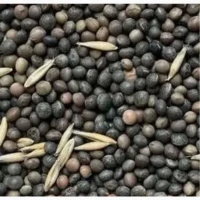
Spring vetch (V. sativa) is an annual plant with thin prostrate stems 50–60 cm high, reaching 100 cm or more under favorable conditions. The leaves are complex, pinnate, consist of 5–8 pairs of small soft leaflets: the stems of the leaves end in tendrils with which the vetch clings to other plants. There are usually two flowers in an inflorescence, their color is pink, whitish, red or purple. Spring vetch belongs to self-pollinating plants. The fruit is a multi-seeded oblong bean.Seeds are rounded, slightly flattened, relatively small.
Unlike other crops, spring vetch is less demanding of heat. This gives the opportunity to cultivate it in the northern regions (on the Kola Peninsula, in Arkhangelsk, Vologda and other northern regions). Germination of seeds begins at 2–3°С, seedlings can tolerate frosts of 3–5°С.
Spring vetch is demanding on moisture, especially in the flowering phase, when the greatest growth of stems and a significant increase in plant mass occur. In case of insufficient moisture, the harvest is significantly reduced.
This culture gives good crops on various soils - chernozems, chestnut soils, it is good on loamy, clayey, sandy soils, but it does not tolerate salty, waterlogged and acidic soils.
The vegetation period of different varieties of spring vetch is different: in early-ripening ones - 75-80 days, in medium-ripening ones - 110-120, in late-ripening ones - 130-140 days. In most district varieties, it is 90–100 days. Oblique ripening of medium-ripe varieties occurs on the 55–70th day, grain ripening on the 75th–120th day after sowing.
Agrotechnics:
Spring vetch is undemanding to its predecessors. It can grow well after winter and spring cereals, as well as after fallow crops. Spring vetch is a valuable precursor for other crops, as it leaves behind a lot of nitrogen in the soil and a significant amount of root and harvest residues.
Spring vetch It is usually grown in mixtures with cereals - oats, barley, etc. Cereal components serve as a support for dormant vetch, improve conditions for harvesting and drying hay, increase its quality, contributing to the preservation of easily falling leaves of spring vetch.
The most common vetch-oat mixtures, which in field crop rotations when grown on hay and green fodder, are often sown in a steam field as vaporizers; in fodder crop rotations, they are sown in different fields.
Obrabotka pochvy under vetch and a vetch-cereal mixture consists of deep plowing with preliminary husking of finch at the same time as harvesting the previous crop. In early spring, the field is harrowed, and before sowing, it is treated with hoof cultivators or huskers to the depth of seed placement with simultaneous harrowing. Heavy compacted soils are plowed and harrowed in the spring. Spring vetch and vetch-oat mixture respond well to fertilization.
For sowing, it is necessary to sort larger seeds and also check them for germination. Spring vetch and vetch-oat mixture are sown simultaneously with early grain crops. In the green conveyor, in order to provide the livestock with green fodder uninterruptedly, sowing is carried out in several periods at certain time intervals.
Harvest crops of vetch-oat mixture on the irrigated lands of the North Caucasus, Moldova and the south of Ukraine give good results. In some cases, repeated sowing of spring vetch is used, which is carried out after harvesting the first crop. In this case, the field is immediately cultivated and sowing is started. Delaying sowing sharply reduces the yield. The rate of sowing seeds during re-sowing increases by 15–20% compared to spring sowing. The depth of sowing seeds is usually increased by 1–2 cm. If they are more shallow, the shoots can be cut.(//tractor-service.com)
With oblique and harvest crops, the protein content in the above-ground mass increases noticeably. In the experiments of the Scientific Research Institute of Fodder, the protein content in the green mass of spring vetch was 17.6% when sown in spring and 22.3% when sown. Harvesting and oblique sowing contribute to clearing fields of weeds, prevent water or wind erosion, and enrich the soil with organic matter and nitrogen.
The norm of sowing seeds of vetch-oat mixture when growing for hay or green fodder is 150-200 kg/ha with a vetch-oat ratio of 2:1, and in wet areas - 3:1. The rye-oat mixture is usually sown in rows. The depth of sowing seeds is 5–6 cm. Special care during the growing season is not required, as vetch and vetch-cereal mixtures suppress weeds.
Harvest vetch-cereal mixtures for hay and green fodder better in the phase of formation of beans in vetches. As shown by the data of the All-Union Research Institute of Fodder, when vetch was harvested during this period, the hay yield was 54.4% higher, and the green mass was 61.2% higher than when it was mowed at the beginning of flowering. Although the content of nutrients (protein) decreased during harvesting during the formation of beans from 17 to 15%, the total collection of protein still increased by 36%.
Growing spring vetch for seeds:
Seed culture of spring vetch is based on joint sowing with the second component, which has a sufficiently strong stem, low foliage and seedlings with vetch growth and development. In most regions, it is oats or white mustard.
When choosing a field for a seed plot, it should be taken into account that at a pH of 4.5, spring vetch either does not bloom or gives a very low yield of meager seeds. It should be placed in the field where manure was applied 2-3 years ago. Placing seed crops on a fertilized field can lead to very strong lodging of plants and poor ripening of seeds.
For the formation of 1 ton of seeds and the corresponding amount of above-ground mass, spring vetch consumes 15 kg of P2O5, 18 kg of K2O and 65 kg of N from the soil. Therefore, to obtain a good crop of seeds, it is necessary to apply more phosphorus and potassium fertilizers.
According to experiments, application of 90 kg/ha of P2O5 in the form of superphosphate increases seed yield by 25–30% and shortens the vegetation period by 4–5 days. According to the Research Institute of Fodder, the greatest strength of oat stalks, sown in a mixture with vetch, is ensured when P60K60 is applied. Good increases in the yield of spring vetch seeds are obtained when phosphorite flour (4–5 c/ha) is applied during autumn plowing.Potassium fertilizers also increase seed yield.
Phosphorus-potassium fertilizers (except granulated superphosphate) are best applied in autumn.
Before sowing, the seeds of spring vetch are treated with molybdenum (dissolve 50–100 g of molybdenum in 2 liters of water and spray the hectare rate of seeds).
Spring vetch seeds are sown at the earliest. Harvesting begins when the seeds in the beans of the lower and middle tiers reach the phase of waxy maturity. Seeds ripen well in beans. The method of cleaning is separate. In years with a dry second half of the summer, direct harvesting should be used.
Winter vetch (shaggy)
Winter vetch (shaggy) Winter vetch (shaggy) has high fodder qualities. Before mowing for hay, the above-ground dry mass contains 15–20% protein, 1.4–2.4% fat, and 17–29% nitrogen-free extractive substances.
Botanical description and biological features:
Winter vetch (shaggy) (Vicia villosa Roth) has a well-developed taproot with numerous lateral roots.
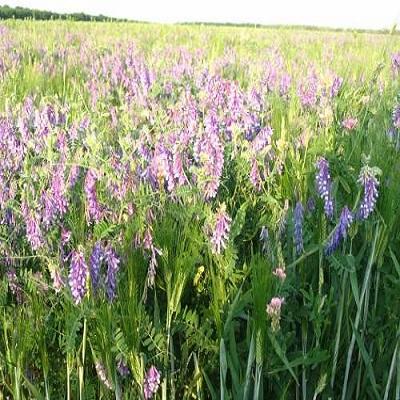
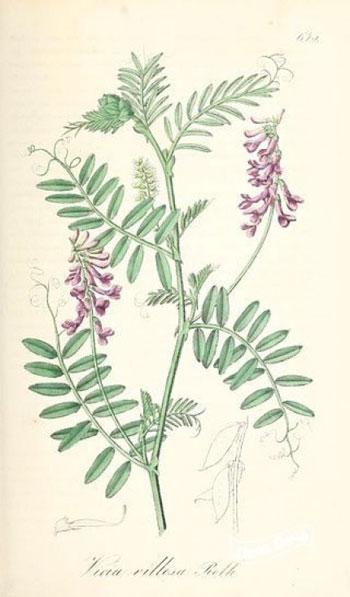
The stem of the vetch is hairy, thin, heavily pubescent, 100–120 cm high, and quickly recedes. The leaves are pinnate, ending in a tendril. The number of leaflets is 6–8–10 pairs, their shape is lanceolate. Inflorescence - a brush. The number of flowers in an inflorescence is up to 30. The color of the corolla is bright purple. Flowering begins with the lower flowers. Cross pollinator. Beans are dark brown, flattened, elongated rhombic. The number of seeds in a bean is from 2 to 6. The seeds are spherical in shape, black or dark brown in color. Weight of 1000 seeds 25–30 g.
Winter vetch seeds begin to germinate at a temperature of 2–3°С. Seedlings withstand frosts of 5–6°С. Frost resistance and winter resistance are low.
This moisture-loving plant tolerates shading well and is undemanding to the soil. Gives good crops on sandy and sandy soils (that's why it is sometimes called sand vetch), as well as on soils containing a lot of lime.
Vet does not carry cotyledons to the surface of the soil. On the 7th-9th day after the emergence of seedlings, branching begins. The main stem stops growing and dies. Lateral shoots are usually formed from a node located close to the soil surface. Hairy vetch often has underground root nodes from which new shoots are formed. By autumn on
Spring vetch is the most common in field grass sowing. It is grown for hay, green fodder, silage and grain. Spring vetch hay contains 15–20% protein, 28–30% in grain. Hay, green mass, grain (in crushed and ground form) are willingly eaten by all types of animals.
The yield of green mass with proper agricultural technology reaches 250 cents/ha and grain - 20 cents/ha. On the TSHA Experimental Field, an average yield of 25.04 t/ha of green mass was obtained over 15 years. The vetch-oat mixture, distinguished by high fodder qualities, yields hay yields of up to 5 tons, and sometimes even up to 10 tons per hectare.
Spring vetch can be sown for fodder several times during the summer. In the main areas of cultivation, this is one of the most important crops in the green conveyor belt. It is mainly sown in a mixture with cereal crops. The most widely distributed vetch-oat mixture.
Spring vetch is a good precursor for grain crops. It can be widely used for crops in a steam field as a steam-absorbing crop, as well as for harvest crops in areas with sufficient moisture.
Spring vetch is grown for fodder mainly in areas with a sufficient amount of precipitation, namely: in forest and forest-steppe areas, as well as in wet areas of the Caucasus and Siberia, where it will give good harvests. The southern border of its cultivation for hay coincides with the border of clover sowing. In the case of grain cultivation, the border of cultivation passes a little further south.
Biological features:
Spring vetch (V. sativa) is an annual plant with thin prostrate stems 50–60 cm high, reaching 100 cm or more under favorable conditions. The leaves are complex, pinnate, consist of 5–8 pairs of small soft leaflets: the stems of the leaves end in tendrils with which the vetch clings to other plants. There are usually two flowers in an inflorescence, their color is pink, whitish, red or purple. Spring vetch belongs to self-pollinating plants. The fruit is a multi-seeded oblong bean.Seeds are rounded, slightly flattened, relatively small.
Unlike other crops, spring vetch is less demanding of heat. This gives the opportunity to cultivate it in the northern regions (on the Kola Peninsula, in Arkhangelsk, Vologda and other northern regions). Germination of seeds begins at 2–3°С, seedlings can tolerate frosts of 3–5°С.
Spring vetch is demanding on moisture, especially in the flowering phase, when the greatest growth of stems and a significant increase in plant mass occur. In case of insufficient moisture, the harvest is significantly reduced.
This culture gives good crops on various soils - chernozems, chestnut soils, it is good on loamy, clayey, sandy soils, but it does not tolerate salty, waterlogged and acidic soils.
The vegetation period of different varieties of spring vetch is different: in early-ripening ones - 75-80 days, in medium-ripening ones - 110-120, in late-ripening ones - 130-140 days. In most district varieties, it is 90–100 days. Oblique ripening of medium-ripe varieties occurs on the 55–70th day, grain ripening on the 75th–120th day after sowing.
Agrotechnics:
Spring vetch is undemanding to its predecessors. It can grow well after winter and spring cereals, as well as after fallow crops. Spring vetch is a valuable precursor for other crops, as it leaves behind a lot of nitrogen in the soil and a significant amount of root and harvest residues.
Spring vetch It is usually grown in mixtures with cereals - oats, barley, etc. Cereal components serve as a support for dormant vetch, improve conditions for harvesting and drying hay, increase its quality, contributing to the preservation of easily falling leaves of spring vetch.
The most common vetch-oat mixtures, which in field crop rotations when grown on hay and green fodder, are often sown in a steam field as vaporizers; in fodder crop rotations, they are sown in different fields.
Obrabotka pochvy under vetch and a vetch-cereal mixture consists of deep plowing with preliminary husking of finch at the same time as harvesting the previous crop. In early spring, the field is harrowed, and before sowing, it is treated with hoof cultivators or huskers to the depth of seed placement with simultaneous harrowing. Heavy compacted soils are plowed and harrowed in the spring. Spring vetch and vetch-oat mixture respond well to fertilization.
For sowing, it is necessary to sort larger seeds and also check them for germination. Spring vetch and vetch-oat mixture are sown simultaneously with early grain crops. In the green conveyor, in order to provide the livestock with green fodder uninterruptedly, sowing is carried out in several periods at certain time intervals.
Harvest crops of vetch-oat mixture on the irrigated lands of the North Caucasus, Moldova and the south of Ukraine give good results. In some cases, repeated sowing of spring vetch is used, which is carried out after harvesting the first crop. In this case, the field is immediately cultivated and sowing is started. Delaying sowing sharply reduces the yield. The rate of sowing seeds during re-sowing increases by 15–20% compared to spring sowing. The depth of sowing seeds is usually increased by 1–2 cm. If they are more shallow, the shoots can be cut.(//tractor-service.com)
With oblique and harvest crops, the protein content in the above-ground mass increases noticeably. In the experiments of the Scientific Research Institute of Fodder, the protein content in the green mass of spring vetch was 17.6% when sown in spring and 22.3% when sown. Harvesting and oblique sowing contribute to clearing fields of weeds, prevent water or wind erosion, and enrich the soil with organic matter and nitrogen.
The norm of sowing seeds of vetch-oat mixture when growing for hay or green fodder is 150-200 kg/ha with a vetch-oat ratio of 2:1, and in wet areas - 3:1. The rye-oat mixture is usually sown in rows. The depth of sowing seeds is 5–6 cm. Special care during the growing season is not required, as vetch and vetch-cereal mixtures suppress weeds.
Harvest vetch-cereal mixtures for hay and green fodder better in the phase of formation of beans in vetches. As shown by the data of the All-Union Research Institute of Fodder, when vetch was harvested during this period, the hay yield was 54.4% higher, and the green mass was 61.2% higher than when it was mowed at the beginning of flowering. Although the content of nutrients (protein) decreased during harvesting during the formation of beans from 17 to 15%, the total collection of protein still increased by 36%.
Growing spring vetch for seeds:
Seed culture of spring vetch is based on joint sowing with the second component, which has a sufficiently strong stem, low foliage and seedlings with vetch growth and development. In most regions, it is oats or white mustard.
When choosing a field for a seed plot, it should be taken into account that at a pH of 4.5, spring vetch either does not bloom or gives a very low yield of meager seeds. It should be placed in the field where manure was applied 2-3 years ago. Placing seed crops on a fertilized field can lead to very strong lodging of plants and poor ripening of seeds.
For the formation of 1 ton of seeds and the corresponding amount of above-ground mass, spring vetch consumes 15 kg of P2O5, 18 kg of K2O and 65 kg of N from the soil. Therefore, to obtain a good crop of seeds, it is necessary to apply more phosphorus and potassium fertilizers.
According to experiments, application of 90 kg/ha of P2O5 in the form of superphosphate increases seed yield by 25–30% and shortens the vegetation period by 4–5 days. According to the Research Institute of Fodder, the greatest strength of oat stalks, sown in a mixture with vetch, is ensured when P60K60 is applied. Good increases in the yield of spring vetch seeds are obtained when phosphorite flour (4–5 c/ha) is applied during autumn plowing.Potassium fertilizers also increase seed yield.
Phosphorus-potassium fertilizers (except granulated superphosphate) are best applied in autumn.
Before sowing, the seeds of spring vetch are treated with molybdenum (dissolve 50–100 g of molybdenum in 2 liters of water and spray the hectare rate of seeds).
Spring vetch seeds are sown at the earliest. Harvesting begins when the seeds in the beans of the lower and middle tiers reach the phase of waxy maturity. Seeds ripen well in beans. The method of cleaning is separate. In years with a dry second half of the summer, direct harvesting should be used.
Winter vetch (shaggy)
Winter vetch (shaggy) Winter vetch (shaggy) has high fodder qualities. Before mowing for hay, the above-ground dry mass contains 15–20% protein, 1.4–2.4% fat, and 17–29% nitrogen-free extractive substances.
Botanical description and biological features:
Winter vetch (shaggy) (Vicia villosa Roth) has a well-developed taproot with numerous lateral roots.
The stem of the vetch is hairy, thin, heavily pubescent, 100–120 cm high, and quickly recedes. The leaves are pinnate, ending in a tendril. The number of leaflets is 6–8–10 pairs, their shape is lanceolate. Inflorescence - a brush. The number of flowers in an inflorescence is up to 30. The color of the corolla is bright purple. Flowering begins with the lower flowers. Cross pollinator. Beans are dark brown, flattened, elongated rhombic. The number of seeds in a bean is from 2 to 6. The seeds are spherical in shape, black or dark brown in color. Weight of 1000 seeds 25–30 g.
Winter vetch seeds begin to germinate at a temperature of 2–3°С. Seedlings withstand frosts of 5–6°С. Frost resistance and winter resistance are low.
This moisture-loving plant tolerates shading well and is undemanding to the soil. Gives good crops on sandy and sandy soils (that's why it is sometimes called sand vetch), as well as on soils containing a lot of lime.
Vet does not carry cotyledons to the surface of the soil. On the 7th-9th day after the emergence of seedlings, branching begins. The main stem stops growing and dies. Lateral shoots are usually formed from a node located close to the soil surface. Hairy vetch often has underground root nodes from which new shoots are formed. By autumn on
|
Author, contacts | |
Lutsksemena / feedback, info. / activity evaluation | |
|
Phone:
+380xxxxxx
show
| |
All user ads ~10 | |
Ad ID: #985247
(added by a registered user, registration date: 06-12-2019)
Added/Updated: 10-12-2025 07:20 (current, until: 10-12-2026)
Permanent Ad Address:
Impressions / views for today: ?, total: ?
Similar ads
Among them there are many interesting ones...
Filters: Clover seeds