For sale / buy
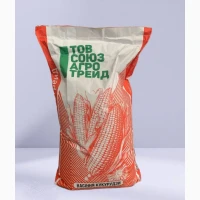
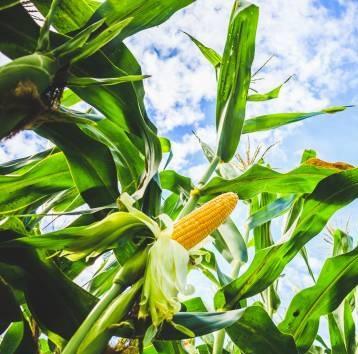
NUR corn seeds, FAO 170, harvest 2025, Dnipropetrovsk region.
Price2500 UAH. / bag
Region:all of Ukraine,
Dnipropetrovsk region.
(Synelnikovo)
Updated:
Purpose of grain: Sowing material
Corn seeds DN NUR homeostatic type treated with insecticide
Accelerated moisture release with grains.
A simple modified early-ripening hybrid (FAO 170).
Listed in the Register of Varieties of Ukraine in 2019.
The direction of use isgrain.
The plant is 220-230 cm tall, does not bush, the height of the cob attachment is 70-80 cm.
The cob is up to 20-22 cm long, the number of rows of grains is 14-16, the stem is white. The grain is yellow, flint-tooth-like.
Weight of 1000 grains - 250-260 g.
A hybrid of the homeostatic type, however, it responds well to improving growing conditions, is resistant to lodging and exposure to major diseases and pests.(//tractor-service.com)
According to the genetic model, DN Nur is close to the hybrid DN Palanok, but has better resistance to drought and powdery mildew diseases and is characterized by better seed production.
According to long-term data, the test showed a higher grain yield compared to the standard DN Pyvikha hybrid by 0.2-0.3 t/ha, with poor grain moisture at harvest by 2.5%.
In 2018, the grain yield in the competitive test of the National Academy of Sciences of the National Academy of Sciences was 6.35 t/ha, and in 2019 it was 6.35 t/ha. - 9.18 t/ha. In an environmental test at 12 points in Ukraine, the average yield was at the level of 7.1 t/ha with a grain moisture content of 14.5%.
Resistance to drought 8.0 points, spikes - 8 points, lodging - 9 points, blistering and volatile soot - 9 points. Grain yield during threshing is about 80.6%.
Cultivation zone: Forest steppe.
The recommended pre-election density of plants in the forest-steppe zone is 80-90 thousand units/ha.
Peculiarities of seed production:
The seeds of the first generation at the hybridization sites are grown on a sterile basis according to the fertility restoration scheme. Recommended seeding schemes of parent components are 6:2 and 4:2.
According to the results of 2017-2019, the average yield of the female component was 4.05 t/ha, and the moisture content of the grain was 13.1%.
Accelerated moisture release with grains.
A simple modified early-ripening hybrid (FAO 170).
Listed in the Register of Varieties of Ukraine in 2019.
The direction of use isgrain.
The plant is 220-230 cm tall, does not bush, the height of the cob attachment is 70-80 cm.
The cob is up to 20-22 cm long, the number of rows of grains is 14-16, the stem is white. The grain is yellow, flint-tooth-like.
Weight of 1000 grains - 250-260 g.
A hybrid of the homeostatic type, however, it responds well to improving growing conditions, is resistant to lodging and exposure to major diseases and pests.(//tractor-service.com)
According to the genetic model, DN Nur is close to the hybrid DN Palanok, but has better resistance to drought and powdery mildew diseases and is characterized by better seed production.
According to long-term data, the test showed a higher grain yield compared to the standard DN Pyvikha hybrid by 0.2-0.3 t/ha, with poor grain moisture at harvest by 2.5%.
In 2018, the grain yield in the competitive test of the National Academy of Sciences of the National Academy of Sciences was 6.35 t/ha, and in 2019 it was 6.35 t/ha. - 9.18 t/ha. In an environmental test at 12 points in Ukraine, the average yield was at the level of 7.1 t/ha with a grain moisture content of 14.5%.
Resistance to drought 8.0 points, spikes - 8 points, lodging - 9 points, blistering and volatile soot - 9 points. Grain yield during threshing is about 80.6%.
Cultivation zone: Forest steppe.
The recommended pre-election density of plants in the forest-steppe zone is 80-90 thousand units/ha.
Peculiarities of seed production:
The seeds of the first generation at the hybridization sites are grown on a sterile basis according to the fertility restoration scheme. Recommended seeding schemes of parent components are 6:2 and 4:2.
According to the results of 2017-2019, the average yield of the female component was 4.05 t/ha, and the moisture content of the grain was 13.1%.
|
Store, contacts | |
Volodymyr / feedback, info. / activity evaluation | |
|
Phone:
+38-xxxxxx
show
| |
| Telegram: ukrseeds | |
| Viber: +380980689645 | |
| https://souzagro.com.ua/| ||205 | |
| facebook.com/profile.php?id=61553620077279 | |
| youtube.com/channel/UCMx4B4NoJRqxbR4AU40k0yQ | |
All user ads ~45 | |

Ad ID: #1352255
(added by registered user, registration date: 10-06-2024)
Added / Updated: 21-09-2026 14:52 (current, until: 09-21-2027)
Permanent Ad Address:
Impressions / views for today: ?, total: ?