/ Fertilizers and plant protection products / Fungicides / Alfa-Standard - Local systemic fungicide...

For sale / buy
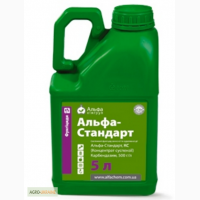
Alfa-Standard - Local systemic fungicide of protective and curative action, Kyiv region.
Price7$
Region:all Ukraine,
Kiev region.
(Vyshhorodok)
Updated:
Alfa-Standard - Local systemic fungicide with protective and curative action.
Active substance: Carbendazim, 500 g/l
Formulation: Suspension concentrate
Container: 10 l, the price is for 1 l.
Culture:sunflower,wheat winter, sugar beet (registration is pending on
Spring and winter barley, rye, spring wheat)
Advantages of Alpha Standard:
Highly effective protection against a wide range of diseases.
Excellent control of fungal diseases in various climatic conditions.
It has a preventive and curative effect, stopping the disease in its early phase.
High biological efficiency.
Easy to use.
It has an extended period of protective action.
It has a quick stop action.
Effective with one-time use.
Lack of phytotoxicity (well tolerated by plants regardless of the stage of culture development).
Highly economical - the increase in yield covers processing costs many times over.
Mechanism of action:
Alpha-Standard is a universal local and systemic fungicide with protective and curative action. Adsorbed through roots and green leaves and translocated throughout the plant. Protects against infections that are inside, as well as on the surface of the plant. Fungitoxic action consists in inhibiting the processes of division of disease-causing cells.
Properties:
Alpha-Standard is one of the most effective drugs against pathogens of sugar beet diseases: cercosporosis and powdery mildew. It is characterized by a quick initial action and a long protective period. The fungicide quickly penetrates the plant and is redistributed in it, preventing infection from inside and outside. The drug is well tolerated by plants, regardless of the stage of culture development. Increases the vitality of plants, exhibits prophylactic and preventive effects, suppressing diseases in the early phase.
General recommendations:
Alpha-Standard protects against diseases prophylactically or at the first signs. To prevent the emergence of resistance, rotation with fungicides of different mechanisms of action is recommended if multiple treatments are required during one growing season. Alpha-Standard has no toxic effect on bees and has only a weak toxic effect on fish. It is impossible to allow the drug and the remains of its working solution, as well as its empty containers, to enter water bodies. The drug should be used during the growing season when signs of the disease appear. It is necessary to apply evenly on the leaf surface of the plant, using well-adjusted equipment.
Rate of consumption of working fluid: 200–400 l/ha.
Scope and cost norms (registered in Ukraine)
Culture - Diseases - Drug consumption rates, l/ha - Processing period - Waiting period, days - Maximum number of treatments
* Sugar beets
-Cercosporosis, powdery mildew
-0.3–0.4
- Spraying during the growing season
-20 2
* Sunflower
- Powdery mildew, fomosis, white and gray rot(//tractor-service.com)
-1.5
-Spraying during the growing season
-30 2
* Winter wheat
- Powdery mildew, septoriosis, helminthosporiosis
-0.5
-Spraying during the growing season
-30 2
Registration for the following cultures is planned:
Culture - Diseases - Drug consumption rates, l/ha - Processing period - Waiting period, days - Maximum number of treatments
* Spring and winter barley
- Powdery mildew, leaf spotting
-0.5
-Spraying during the growing season
-30 2
* Spring wheat
- Powdery mildew, septoriosis, helminthosporiosis
-0.5
- Spraying during the growing season
-30 2
* Rye
Powdery mildew, septoriosis
-0.5
-Spraying during the growing season
-30 2
* Wheat, barley
-Snow mold, powdery mildew diseases
-1.5
- Seed treatment (10 liters of water per 1 ton of seeds) – –
* Sunflower
-Gray and white rot, fomosis, powdery mildew
-Treatment of seeds before sowing – –
Harmful objects:
Phomopsis (brown spotting of stems) - Phomopsis helianthi Munt.
Septoriosis (brown spotting of leaves) - Septoria helianthi Ellis et Kellerm.
White rot, or sclerotiniosis - Sclerotinia sclerotiorum (Lib.) de Bary.
Gray rot - Botrytis cinerea Pers. ex Fr.
Active substance: Carbendazim, 500 g/l
Formulation: Suspension concentrate
Container: 10 l, the price is for 1 l.
Culture:sunflower,wheat winter, sugar beet (registration is pending on
Spring and winter barley, rye, spring wheat)
Advantages of Alpha Standard:
Highly effective protection against a wide range of diseases.
Excellent control of fungal diseases in various climatic conditions.
It has a preventive and curative effect, stopping the disease in its early phase.
High biological efficiency.
Easy to use.
It has an extended period of protective action.
It has a quick stop action.
Effective with one-time use.
Lack of phytotoxicity (well tolerated by plants regardless of the stage of culture development).
Highly economical - the increase in yield covers processing costs many times over.
Mechanism of action:
Alpha-Standard is a universal local and systemic fungicide with protective and curative action. Adsorbed through roots and green leaves and translocated throughout the plant. Protects against infections that are inside, as well as on the surface of the plant. Fungitoxic action consists in inhibiting the processes of division of disease-causing cells.
Properties:
Alpha-Standard is one of the most effective drugs against pathogens of sugar beet diseases: cercosporosis and powdery mildew. It is characterized by a quick initial action and a long protective period. The fungicide quickly penetrates the plant and is redistributed in it, preventing infection from inside and outside. The drug is well tolerated by plants, regardless of the stage of culture development. Increases the vitality of plants, exhibits prophylactic and preventive effects, suppressing diseases in the early phase.
General recommendations:
Alpha-Standard protects against diseases prophylactically or at the first signs. To prevent the emergence of resistance, rotation with fungicides of different mechanisms of action is recommended if multiple treatments are required during one growing season. Alpha-Standard has no toxic effect on bees and has only a weak toxic effect on fish. It is impossible to allow the drug and the remains of its working solution, as well as its empty containers, to enter water bodies. The drug should be used during the growing season when signs of the disease appear. It is necessary to apply evenly on the leaf surface of the plant, using well-adjusted equipment.
Rate of consumption of working fluid: 200–400 l/ha.
Scope and cost norms (registered in Ukraine)
Culture - Diseases - Drug consumption rates, l/ha - Processing period - Waiting period, days - Maximum number of treatments
* Sugar beets
-Cercosporosis, powdery mildew
-0.3–0.4
- Spraying during the growing season
-20 2
* Sunflower
- Powdery mildew, fomosis, white and gray rot(//tractor-service.com)
-1.5
-Spraying during the growing season
-30 2
* Winter wheat
- Powdery mildew, septoriosis, helminthosporiosis
-0.5
-Spraying during the growing season
-30 2
Registration for the following cultures is planned:
Culture - Diseases - Drug consumption rates, l/ha - Processing period - Waiting period, days - Maximum number of treatments
* Spring and winter barley
- Powdery mildew, leaf spotting
-0.5
-Spraying during the growing season
-30 2
* Spring wheat
- Powdery mildew, septoriosis, helminthosporiosis
-0.5
- Spraying during the growing season
-30 2
* Rye
Powdery mildew, septoriosis
-0.5
-Spraying during the growing season
-30 2
* Wheat, barley
-Snow mold, powdery mildew diseases
-1.5
- Seed treatment (10 liters of water per 1 ton of seeds) – –
* Sunflower
-Gray and white rot, fomosis, powdery mildew
-Treatment of seeds before sowing – –
Harmful objects:
Phomopsis (brown spotting of stems) - Phomopsis helianthi Munt.
Septoriosis (brown spotting of leaves) - Septoria helianthi Ellis et Kellerm.
White rot, or sclerotiniosis - Sclerotinia sclerotiorum (Lib.) de Bary.
Gray rot - Botrytis cinerea Pers. ex Fr.
|
Shop, contacts | |
Yuriy / отзывы, инфо. / activity evaluation | |
|
Telephone:
+38(xxxxxx
show
| |
All user ads ~1000 | |
Ad ID: #982535
(added by a registered user, registration date: 10-08-2016)
Added / Updated: 21-09-2026 09:32 (relevant, until: 09-21-2027)
Permanent ad address:
Showed / watched for today: ?, total: ?
Similar ads
There are many interesting ones among them...