Sell / buy
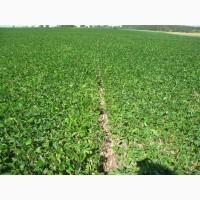
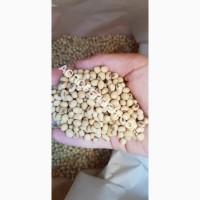
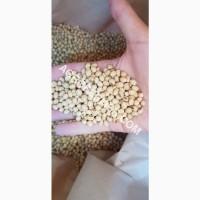
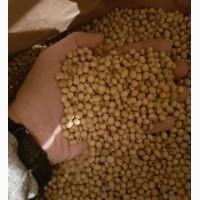
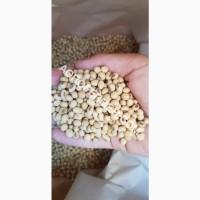
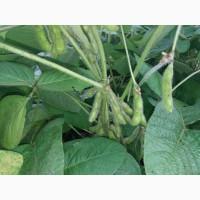
Soya SEDNA Canadian transgenic variety, Zaporizhskaya oblast.
Region:all of Ukraine,
Zaporizhskaya oblast.
Grain purpose: Sowing material
Quantity: 10000 tons
The weight of 1000 seeds of the Sedna soybean variety is 157 grams.
The yield of the Sedna soybean variety is 70 cents. - 80 cents. s 1 - hectare.
Sowing Sowing of the Sedna variety begins in the spring from March 20 to June 10 inclusive
The essential differences between transgenic soybeans and ordinary hybrids and varieties are that:
1) it is resistant to EPSP Synthase isolated from the soil bacterium Agrobacterium sp. strain СП4 transferred into the genome of soybeans with the help of a gene gun, which made this soybean resistant tofull-action herbicide RR Roundup Ready.
2) Soybeans are characterized by good drought resistance up to 60 °C*, characterized by uniform ripening, resistant to lying down and shedding (heavy rains, wind, hail), soybeans are harvested directly and do not require desiccation.
3) This soybean variety is resistant to all soybean diseases that affect ordinary soybean varieties and hybrids and is not affected by diseases such as (fusarium, cercosporosis, powdery mildew, rust spot, rust, powdery mildew, ascochitosis, angular spot, etc.).
4) Resistant transgenic soybean to viral diseases wrinkled mosaic, yellow mosaic, pustular bacteriosis, bacterial burn, black spot.(//tractor-service.com)
5) Resistant to abiotic stresses (sharp temperature changes from 60 C* to -10 C* during the entire vegetation period.
Soybean oil content is 55% - 56%.
The weight of 1000 seeds of the Sedna soybean variety is 157 grams.
The yield of the Sedna soybean variety is 70 cents. - 80 cents. c 1 - hectare.
Sowing Sowing of the Sedna variety begins in the spring from March 20 and until June 10 inclusively, it is possible to sow soybeans at a temperature of 5 C*, 8 C *, as it is not afraid of spring frosts, soybean sprouts appear after 8-10 days.
The rate of sowing Sedna soybeans per 1 ha is 600,000 (95 kg per 1 ha)
It is sown to a depth of 4 cm on light soils and 2 cm on heavy soils, with row spacings of 15 cm x 30 cm.grains with SZT - 3, SZU - 3, SZ -3, SZA -3, SGD-6 MF, as well as precision seed drills.
Soybean yield depends on the planting density for southern steppe regions, the optimal planting density is 600,000 per hectare, for forest-steppe regions, 650,000 per hectare. For soybeans, shingle plowing is recommended. Pre-sowing soil treatment should provide fine-grained, well-drained soil. Only well-dried soil is processed. Surface applicationfertilized simultaneously protects the soil from soiling.
The yield of the Sedna soybean variety is 70 cents. - 80 cents. s 1 - hectare.
Sowing Sowing of the Sedna variety begins in the spring from March 20 to June 10 inclusive
The essential differences between transgenic soybeans and ordinary hybrids and varieties are that:
1) it is resistant to EPSP Synthase isolated from the soil bacterium Agrobacterium sp. strain СП4 transferred into the genome of soybeans with the help of a gene gun, which made this soybean resistant tofull-action herbicide RR Roundup Ready.
2) Soybeans are characterized by good drought resistance up to 60 °C*, characterized by uniform ripening, resistant to lying down and shedding (heavy rains, wind, hail), soybeans are harvested directly and do not require desiccation.
3) This soybean variety is resistant to all soybean diseases that affect ordinary soybean varieties and hybrids and is not affected by diseases such as (fusarium, cercosporosis, powdery mildew, rust spot, rust, powdery mildew, ascochitosis, angular spot, etc.).
4) Resistant transgenic soybean to viral diseases wrinkled mosaic, yellow mosaic, pustular bacteriosis, bacterial burn, black spot.(//tractor-service.com)
5) Resistant to abiotic stresses (sharp temperature changes from 60 C* to -10 C* during the entire vegetation period.
Soybean oil content is 55% - 56%.
The weight of 1000 seeds of the Sedna soybean variety is 157 grams.
The yield of the Sedna soybean variety is 70 cents. - 80 cents. c 1 - hectare.
Sowing Sowing of the Sedna variety begins in the spring from March 20 and until June 10 inclusively, it is possible to sow soybeans at a temperature of 5 C*, 8 C *, as it is not afraid of spring frosts, soybean sprouts appear after 8-10 days.
The rate of sowing Sedna soybeans per 1 ha is 600,000 (95 kg per 1 ha)
It is sown to a depth of 4 cm on light soils and 2 cm on heavy soils, with row spacings of 15 cm x 30 cm.grains with SZT - 3, SZU - 3, SZ -3, SZA -3, SGD-6 MF, as well as precision seed drills.
Soybean yield depends on the planting density for southern steppe regions, the optimal planting density is 600,000 per hectare, for forest-steppe regions, 650,000 per hectare. For soybeans, shingle plowing is recommended. Pre-sowing soil treatment should provide fine-grained, well-drained soil. Only well-dried soil is processed. Surface applicationfertilized simultaneously protects the soil from soiling.
Ad ID: #894595
(added by registered user)
Permanent ad address:
Showed / watched for today: ?, total: ?
Similar fresh ads
Among them there are many interesting...