/ Agricultural equipment, equipment, inventory / Sowing and planting equipment / Various sowing and planting equipment + in assortment / Graphite for seed drills (seed loosener...
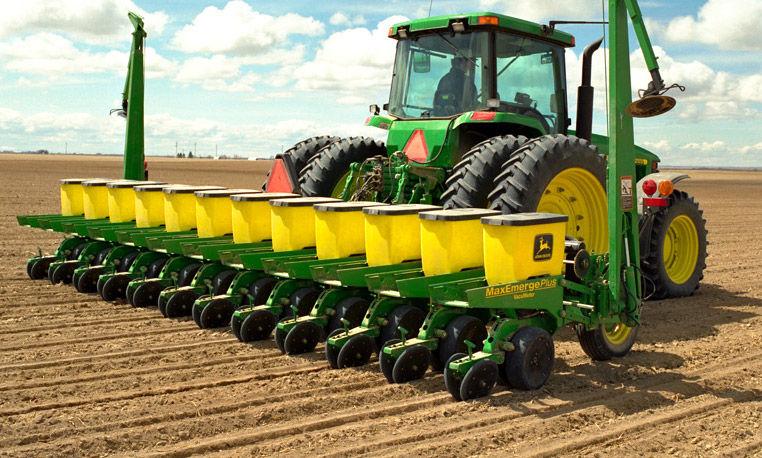


For sale / buy
Graphite for seed drills (seed loosener), Kyiv region.
Region:all Ukraine,
Kyivskaya region.
I will sell graphite powder for loosening the seed. It is a flaky graphite with high lubricating properties.
Packaging: bags with a polyethylene liner of 25 kg; 155сеялок.
Упаковка: мешки с полиетиленовым вкладышем по 25кг;
Скидка 10% на период посевной компании.
Wholesale and retail shipments.
We ship by all possible methods and carriers.
Original article: https://www.agweb.com/article/talc_and_graphite_what_you_need_to_know_before_you_plant_naa_dan_anderson/
Reasons for using talc and graphite in planters.
How much graphite or talc should be added to fill the planter, and why is graphite and/or talc needed in the first place?
"Graphite is a dry lubricant used to reduce wear on mechanical seeding mechanisms," says Calby Kruger, John Deere Product Specialist. "A good example is finger grippers. Graphite reduces friction in these devices and increases the service life of components".
Talc, which is recommended as seed material in "air" planters, is also a dry lubricant, but its main role is drying. Fans in systems for dosing seeds in the air move huge volumes of air. Even low levels of humidity in the air increase due to high air flow and cause problems associated with pesticide coatings commonly applied to seeds.
(//tractor-service.com)
These coatings forinsecticides and fungicides are considered hygroscopic, which means that they easily absorb moisture due to the large volumes of air passing through air planters. When they absorb moisture, their surfaces become sticky, leading to problems with seed compaction and bridging in seed hoppers and seed adhesiondisks in seed counters.
"The seed coats become rougher and stickier as they absorb moisture," says Krueger. "Talcum fills the pores, smoothes and dries the surface of the seeds and improves fluidity."
Weather systems that bring low humidity reduce seed treatment problems, but increase another seed measurement problem associated with static electricity.
As the plastic measuring discs turn into seed counters, static electricity can develop on the surface of the seeds pushing against the bottom of the hoppers or as they rattle through the plastic seed tubes. Static electric charges cause the seeds to accumulate and cross.
"Static electricity can be a big problem with some seeds," says Daryl Kress, service manager at Great Plains Manufacturing. "It varies between different types of seeds, seed covers and conditions. For some reason, Milo and canola have the worst problems."
Fortunately, talc and graphite have antistatic characteristics. Talc is an insulator that minimizes the accumulation and transmission of static electricity. Graphite is a conductor that easily transfers any static electricity that develops in the components of the planter to the "earth". The combination of talc and graphite 80/20 proved that air planters have optimal seed drying capabilities, as well as adequate control of static electricity.
The key to the application of the appropriate amount of graphite,
Kenny Dill, technical support for Precision Planting, says the goal with graphite is to provide sufficient lubricity for the mechanical components without fouling the seed tube sensor enough to reduce seed control accuracy. In fingerprint meters, an excess of graphite can also increase "passes".
"Too much graphite can make the seeds so slippery that your fingers have trouble holding them," says Dill.
An excess of talc has no harmful effects, except for the farmer's wallet.
"Excess talc usually ends up in the atmosphere," says Kruger, "so the problem is that it's a waste of money." The key is to apply talc to the seeds beforehand so that each seed is evenly coated.
Упаковка: мешки с полиетиленовым вкладышем по 25кг;
Скидка 10% на период посевной компании.
Wholesale and retail shipments.
We ship by all possible methods and carriers.
Original article: https://www.agweb.com/article/talc_and_graphite_what_you_need_to_know_before_you_plant_naa_dan_anderson/
Reasons for using talc and graphite in planters.
How much graphite or talc should be added to fill the planter, and why is graphite and/or talc needed in the first place?
"Graphite is a dry lubricant used to reduce wear on mechanical seeding mechanisms," says Calby Kruger, John Deere Product Specialist. "A good example is finger grippers. Graphite reduces friction in these devices and increases the service life of components".
Talc, which is recommended as seed material in "air" planters, is also a dry lubricant, but its main role is drying. Fans in systems for dosing seeds in the air move huge volumes of air. Even low levels of humidity in the air increase due to high air flow and cause problems associated with pesticide coatings commonly applied to seeds.
(//tractor-service.com)
These coatings forinsecticides and fungicides are considered hygroscopic, which means that they easily absorb moisture due to the large volumes of air passing through air planters. When they absorb moisture, their surfaces become sticky, leading to problems with seed compaction and bridging in seed hoppers and seed adhesiondisks in seed counters.
"The seed coats become rougher and stickier as they absorb moisture," says Krueger. "Talcum fills the pores, smoothes and dries the surface of the seeds and improves fluidity."
Weather systems that bring low humidity reduce seed treatment problems, but increase another seed measurement problem associated with static electricity.
As the plastic measuring discs turn into seed counters, static electricity can develop on the surface of the seeds pushing against the bottom of the hoppers or as they rattle through the plastic seed tubes. Static electric charges cause the seeds to accumulate and cross.
"Static electricity can be a big problem with some seeds," says Daryl Kress, service manager at Great Plains Manufacturing. "It varies between different types of seeds, seed covers and conditions. For some reason, Milo and canola have the worst problems."
Fortunately, talc and graphite have antistatic characteristics. Talc is an insulator that minimizes the accumulation and transmission of static electricity. Graphite is a conductor that easily transfers any static electricity that develops in the components of the planter to the "earth". The combination of talc and graphite 80/20 proved that air planters have optimal seed drying capabilities, as well as adequate control of static electricity.
The key to the application of the appropriate amount of graphite,
Kenny Dill, technical support for Precision Planting, says the goal with graphite is to provide sufficient lubricity for the mechanical components without fouling the seed tube sensor enough to reduce seed control accuracy. In fingerprint meters, an excess of graphite can also increase "passes".
"Too much graphite can make the seeds so slippery that your fingers have trouble holding them," says Dill.
An excess of talc has no harmful effects, except for the farmer's wallet.
"Excess talc usually ends up in the atmosphere," says Kruger, "so the problem is that it's a waste of money." The key is to apply talc to the seeds beforehand so that each seed is evenly coated.
Ad ID: #791836
(added by a registered user)
Permanent ad address:
Showed / watched for today: ?, total: ?
Similar fresh ads
Among them there are many interesting ones...

All Ukraine: Selkhoztehnika, oborudovanie, inventory 45636 / Sowing and planting equipment 2334 / Various sowing and planting equipment + in assortmente 27
Kyiv region: Agricultural equipment, equipment, inventory 4273 / Posevnaya i posadochnaya technics 137 / Various seeding and planting equipment + in assortment 0