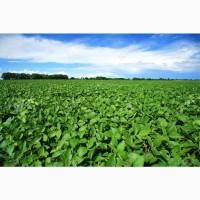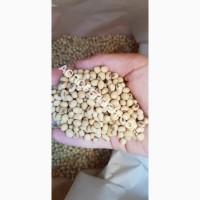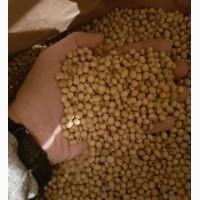


For sale / buy
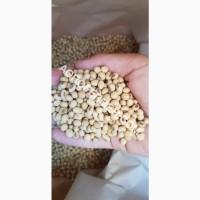
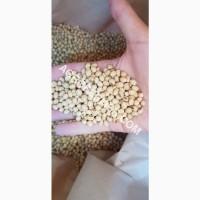
Canadian soybean seeds whitby, Poltava region.
Region:all of Ukraine,
Poltava region.
(G Kyiv)
Grain purpose: Posevnoy material
Quantity: 1000 tons
Today we offer soybean seeds to buy from us:
- WHITBY variety - roundproof!
You can request an electronic description by phone or e-mail.
OUR WEBSITE: http://semena-cernel.com
The weight of 1000 seeds of the Canadian soybean variety is 160 grams.
Germination - 98%, Germination energy - 98%, Typicality - 99.99%, Moisture - 8%, Purity - 99.99%
The yield of the Canadian soybean variety is 73-75 t/ha.
Sowing WHITBY soybean sowing begins in the spring from March 20 to June 10 inclusive. It is possible to sow soybeans at a temperature of + 5 C*, + 8 C *, as it is not afraid of spring frosts, soybean sprouts appear in 8-10 days.
The rate of sowing of the Canadian soybean variety WHITBY per hectare is 600,000, it is sown to a depth of 4 cm on light soils and 2 cm on heavy soils, with 15 cm x 30 cm row spacings, the method of sowing is narrow-row 7.5 cm. pneumatic and grain seeders NZT - 3, SZU - 3, SZ -3, SZA -3, SPG- 6 MF, as well as precision drills.
Soybean yield depends on the density of planting for southern steppe regions, the optimal planting density is 600,000 per hectare, for forest-steppe regions, 650,000 per hectare. For soybeans, shingle plowing is recommended. Pre-sowing soil treatment should provide fine-grained, well-drained soil. Only well-dried soil is treated. Surface application of fertilizer at the same time protects the soil from soiling.
The herbicide is processed by Roundup systemic herbicide (isopropylamine salt of glyphosate 607 g/l) for the destruction of a wide range of annual cereals, perennial weeds, dicotyledonous weeds, and also has a dual mechanism of action. The drug kills both vegetative and seed-grown weeds. cuticle, and then gets directly into the root system, which leads to the cessation of cell growth and the death of plants after 20-30 days. The herbicide is applied with the help of ground sprayers, after the appearance of soybean sprouts in the phase of 2 to 5 true leaves (soy cotyledons are not taken into account), it is possible to carry out roundup treatment every month at 2 liters until July. The consumption rate of Roundup herbicide is 2 liters per hectare
Fertilizers Application of phosphorus and nitrogen fertilizers increases not only yield, but also oiliness. per 1 ha, superphosphate at the time of sowing and nitroammofosk 120-130 kg. per hectare before sowing or after soybean sprouts.
Insecticides Before sowing, it is necessary to treat soybean seeds with Tabu Neo preservative 1 liter per 1 ton of seeds, or Kosmos 500 - 500g/l Fipronil preservative.
The vegetation period of the transgenic Canadian soybean variety from sowing to harvesting is 85 days (early).
Harvesting of soybeans should begin when the leaves have fallen, the stems and soybeans have dried at a humidity of 14-15%, harvesting is carried out with ordinary combines Don, Jondyr, Case. This is a product of nanotechnology in 2016, introduced for ego development by the DOW Chemical concern (USA) and the SERTIS holding (Canada). Passed sorting tests in Russia (Krasnodar region), India, Israel, Kyrgyzstan, Kazakhstan, Argentina, Angola, Egypt, Tanzania, Ethiopia with average subjects. + 60 C *
(//tractor-service.com)
OUR WEBSITE: http://semena-cernel.com
Canadian soybean seeds differ in a number of characteristics:
Soy is resistant to EPSP Synthase isolated from the soil bacterium Agrobacterium sp. strain СП4 transferred into the soybean genome with the help of a gene gun, which made this soybean resistant to the continuous action herbicide RR Roundup Ready. 2;
It is characterized by good drought resistance up to +60 C*, uniform ripening, resistant to lying down and shedding (heavy rains, wind, hail), soybeans are harvested directly and do not require desiccation.
This variety is resistant to all soybean diseases affecting common soybean varieties and hybrids. It is not affected by such diseases as: fusarium, cercosporosis, powdery mildew, rusty spot, rust, powdery mildew, ascochitosis, angular spot, etc.
Resistant transgenic soybean to viral diseases: wrinkled mosaic, yellow mosaic, pustular bacteriosis, bacterial burn, black spot.
It is resistant to abiotic stresses (sharp temperature changes from + 60 C* to - 10 C* during the entire vegetation period.
The content of soybean oil in soybeans is 55-56%.
This type of soybean is self-pollinating and does not require the presence of bees.
This soybean variety is resistant to acid rain.
Buy hybrid soybean seeds
Where can I buy hybrid soybean seeds characterized by high germination (97%), typicality (100%), humidity 8%?Buy soybean seeds of Canadian selection, the yield of which reaches a maximum of 80 centners per hectare, you can always buy from us, which you will not regret for a minute. The price of soybean seeds is affordable and corresponds to the quality. The choice of our seeds will ensure a high-quality end result.Sale of soybean seeds is carried out by non-cash settlement or another convenient method for you, specified on our site.
Soy is one of the oldest cultivated plants after wheat. China is considered to be the first country in which it was grown. Soybeans were found during the excavations buried during the Yin and Shang dynasties 3700 years ago, soybean seeds were also found during the excavations of the site of a primitive society in the village of Damudan Tun, Ning'an County, Hailongjiang Province 3000 years BC. Then it came to Korea, and from there to Japan in 500 BC, and soybeans came to Europe in 1740, when the French began to eat them. The famous Chinese scientist Wang studied the origin of soybeans using ancient Chinese literature, inscriptions found during excavations buried in the Chinese Shang dynasty. He came to the conclusion that the lower part of the Yellow River in northern China is the first region of soybean cultivation. The first experimental sowings of soybeans in the Russian Empire were made in 1877 on the lands of the Tavricheskaya and Kherson provinces.
Soy is often called a miracle plant in part due to its relatively high yield and high vegetable protein content, much like animal protein, which averages 40% of the seed weight. 100 grams of soybeans contains: water - 8.5 g, protein - 60 g, fat - 20 g, carbohydrates - 20.1 g, fiber - 3.2 g, vitamin A - 0.15 g, vitamin B1 - 1 g, vitamin B2 - 0.2 mg, vitamin B 3 - 2.2 g, vitamin B5 - 1.7 g, vitamin B6 - 0.8 mg, vitamin B9 - 200 mcg, vitamin C - 6 mg, vitamin E - 17 mg, biotin - 7 mcg, choline - 270 mg.beans soybeans contain triglycerides, PUFAs - prevent the deposition of cholesterol in the walls of blood vessels, Phospholipids - strengthen capillaries, strengthen the liver, remove toxins, Tocopherols - slow down the aging of cells, increase the protective properties of the body. The height of the stem is from 1.40 to 1.50 meters, the stem is straight, powerful, the diameter of the calliper is 20 mm, the root is powerful and taps into the ground at a depth of up to 350 cm, the leaves are trifoliate, the corolla of the flower is purple and black and white. The height of the attachment of the lower soybeans is 12 cm, the number of pods in the nodules is 8 pods and they are located at a distance from the lower 3 cm to the upper next nodule. The soybean fruit is a bean with two opening flaps and usually containing 6 seeds along the dorsal seams. Large bean is 9 cm long, has 500 beans on one plant, resistant to cracking. The pericarp (bean flaps) of soybeans consists of 3 layers: exocarp, mesocarp, and endocarp. The shape of soybean seeds is oval, the seed coat, dense, shiny, impermeable to water forms hard seeds.
OUR SITE: http://semena-cernel.com
- WHITBY variety - roundproof!
You can request an electronic description by phone or e-mail.
OUR WEBSITE: http://semena-cernel.com
The weight of 1000 seeds of the Canadian soybean variety is 160 grams.
Germination - 98%, Germination energy - 98%, Typicality - 99.99%, Moisture - 8%, Purity - 99.99%
The yield of the Canadian soybean variety is 73-75 t/ha.
Sowing WHITBY soybean sowing begins in the spring from March 20 to June 10 inclusive. It is possible to sow soybeans at a temperature of + 5 C*, + 8 C *, as it is not afraid of spring frosts, soybean sprouts appear in 8-10 days.
The rate of sowing of the Canadian soybean variety WHITBY per hectare is 600,000, it is sown to a depth of 4 cm on light soils and 2 cm on heavy soils, with 15 cm x 30 cm row spacings, the method of sowing is narrow-row 7.5 cm. pneumatic and grain seeders NZT - 3, SZU - 3, SZ -3, SZA -3, SPG- 6 MF, as well as precision drills.
Soybean yield depends on the density of planting for southern steppe regions, the optimal planting density is 600,000 per hectare, for forest-steppe regions, 650,000 per hectare. For soybeans, shingle plowing is recommended. Pre-sowing soil treatment should provide fine-grained, well-drained soil. Only well-dried soil is treated. Surface application of fertilizer at the same time protects the soil from soiling.
The herbicide is processed by Roundup systemic herbicide (isopropylamine salt of glyphosate 607 g/l) for the destruction of a wide range of annual cereals, perennial weeds, dicotyledonous weeds, and also has a dual mechanism of action. The drug kills both vegetative and seed-grown weeds. cuticle, and then gets directly into the root system, which leads to the cessation of cell growth and the death of plants after 20-30 days. The herbicide is applied with the help of ground sprayers, after the appearance of soybean sprouts in the phase of 2 to 5 true leaves (soy cotyledons are not taken into account), it is possible to carry out roundup treatment every month at 2 liters until July. The consumption rate of Roundup herbicide is 2 liters per hectare
Fertilizers Application of phosphorus and nitrogen fertilizers increases not only yield, but also oiliness. per 1 ha, superphosphate at the time of sowing and nitroammofosk 120-130 kg. per hectare before sowing or after soybean sprouts.
Insecticides Before sowing, it is necessary to treat soybean seeds with Tabu Neo preservative 1 liter per 1 ton of seeds, or Kosmos 500 - 500g/l Fipronil preservative.
The vegetation period of the transgenic Canadian soybean variety from sowing to harvesting is 85 days (early).
Harvesting of soybeans should begin when the leaves have fallen, the stems and soybeans have dried at a humidity of 14-15%, harvesting is carried out with ordinary combines Don, Jondyr, Case. This is a product of nanotechnology in 2016, introduced for ego development by the DOW Chemical concern (USA) and the SERTIS holding (Canada). Passed sorting tests in Russia (Krasnodar region), India, Israel, Kyrgyzstan, Kazakhstan, Argentina, Angola, Egypt, Tanzania, Ethiopia with average subjects. + 60 C *
(//tractor-service.com)
OUR WEBSITE: http://semena-cernel.com
Canadian soybean seeds differ in a number of characteristics:
Soy is resistant to EPSP Synthase isolated from the soil bacterium Agrobacterium sp. strain СП4 transferred into the soybean genome with the help of a gene gun, which made this soybean resistant to the continuous action herbicide RR Roundup Ready. 2;
It is characterized by good drought resistance up to +60 C*, uniform ripening, resistant to lying down and shedding (heavy rains, wind, hail), soybeans are harvested directly and do not require desiccation.
This variety is resistant to all soybean diseases affecting common soybean varieties and hybrids. It is not affected by such diseases as: fusarium, cercosporosis, powdery mildew, rusty spot, rust, powdery mildew, ascochitosis, angular spot, etc.
Resistant transgenic soybean to viral diseases: wrinkled mosaic, yellow mosaic, pustular bacteriosis, bacterial burn, black spot.
It is resistant to abiotic stresses (sharp temperature changes from + 60 C* to - 10 C* during the entire vegetation period.
The content of soybean oil in soybeans is 55-56%.
This type of soybean is self-pollinating and does not require the presence of bees.
This soybean variety is resistant to acid rain.
Buy hybrid soybean seeds
Where can I buy hybrid soybean seeds characterized by high germination (97%), typicality (100%), humidity 8%?Buy soybean seeds of Canadian selection, the yield of which reaches a maximum of 80 centners per hectare, you can always buy from us, which you will not regret for a minute. The price of soybean seeds is affordable and corresponds to the quality. The choice of our seeds will ensure a high-quality end result.Sale of soybean seeds is carried out by non-cash settlement or another convenient method for you, specified on our site.
Soy is one of the oldest cultivated plants after wheat. China is considered to be the first country in which it was grown. Soybeans were found during the excavations buried during the Yin and Shang dynasties 3700 years ago, soybean seeds were also found during the excavations of the site of a primitive society in the village of Damudan Tun, Ning'an County, Hailongjiang Province 3000 years BC. Then it came to Korea, and from there to Japan in 500 BC, and soybeans came to Europe in 1740, when the French began to eat them. The famous Chinese scientist Wang studied the origin of soybeans using ancient Chinese literature, inscriptions found during excavations buried in the Chinese Shang dynasty. He came to the conclusion that the lower part of the Yellow River in northern China is the first region of soybean cultivation. The first experimental sowings of soybeans in the Russian Empire were made in 1877 on the lands of the Tavricheskaya and Kherson provinces.
Soy is often called a miracle plant in part due to its relatively high yield and high vegetable protein content, much like animal protein, which averages 40% of the seed weight. 100 grams of soybeans contains: water - 8.5 g, protein - 60 g, fat - 20 g, carbohydrates - 20.1 g, fiber - 3.2 g, vitamin A - 0.15 g, vitamin B1 - 1 g, vitamin B2 - 0.2 mg, vitamin B 3 - 2.2 g, vitamin B5 - 1.7 g, vitamin B6 - 0.8 mg, vitamin B9 - 200 mcg, vitamin C - 6 mg, vitamin E - 17 mg, biotin - 7 mcg, choline - 270 mg.beans soybeans contain triglycerides, PUFAs - prevent the deposition of cholesterol in the walls of blood vessels, Phospholipids - strengthen capillaries, strengthen the liver, remove toxins, Tocopherols - slow down the aging of cells, increase the protective properties of the body. The height of the stem is from 1.40 to 1.50 meters, the stem is straight, powerful, the diameter of the calliper is 20 mm, the root is powerful and taps into the ground at a depth of up to 350 cm, the leaves are trifoliate, the corolla of the flower is purple and black and white. The height of the attachment of the lower soybeans is 12 cm, the number of pods in the nodules is 8 pods and they are located at a distance from the lower 3 cm to the upper next nodule. The soybean fruit is a bean with two opening flaps and usually containing 6 seeds along the dorsal seams. Large bean is 9 cm long, has 500 beans on one plant, resistant to cracking. The pericarp (bean flaps) of soybeans consists of 3 layers: exocarp, mesocarp, and endocarp. The shape of soybean seeds is oval, the seed coat, dense, shiny, impermeable to water forms hard seeds.
OUR SITE: http://semena-cernel.com
Ad ID: #769975
(added by registered by the user)
Permanent ad address:
Showed / watched for today: ?, total: ?
Similar fresh ads
Among them there are many interesting...