/ Agricultural equipment, equipment, inventory / Forage preparation (equipment) / Granulators / Alfalfa granulation line

For sale / buy
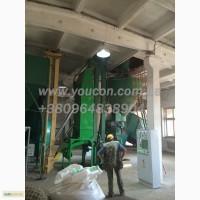
Alfalfa granulation line, Kharkov region.
Price1 109 100 UAH.
Region:
Kharkiv region.
(Kharkov region, Kharkiv, Kholodnohorskaya street 3A)
Updated:
Description
Alfalfa granulation line
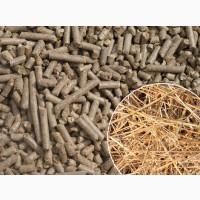
Alfalfa as a raw material for biomass pellets
To obtain alfalfa of the highest quality, it is necessary to monitor it from the field to its arrival at the plant.
Production process of obtaining granulated alfalfa.
Reception of raw materials → Grinding → Granulation → Cooling → Packaging
Composition of the alfalfa granulation line:
Table for feeding rolls, bales, bulk raw materials — 1 pc.
Straw cutter Rotary hay and straw chopper — 1 pc. 150
Шкаф управления сырьевым участком — 1 шт.
OGM-1.5 granulation block — 1 set.
OGM granulation block control cabinet — 1 pc.
Water supply system to the OGM-1.5 granulator — 1 pc.
Pressinggranulator roller OGM-1.5 — 2 pcs.
The price does not include:
OGM-1.5 granulator matrix (choice of pellet diameter and granulated raw material)
Additional equipment (optional): noria, hopper for storage of ready-made pellets,scales for BIG-BEG, packing device for packing pellets from 1 to 50 kg into ready-made containers.
The main equipment related to the plant for the production of granulating alfalfa.
1. Serving table
For the convenience of work, a chain conveyor is used, which can accept a roll with a diameter of 1900 mm or a bale weighing up to 500 kg. The feeding table is equipped with a roll unwinding system (unrolling is not used for bales). Thanks to the conveyor, the raw material is metered into the hay chopper.
2. Straw cutter
The biomass shredder is used for grinding hay, straw, alfalfa and crops at a humidity of up to 25% (with humidity above 25%, the productivity of the shredder decreases and, as a result, the productivity of the line as a whole decreases). The shredder is ideally suited for granulation lines for the production of grass pellets, the production of briquettes, pellets (fuel pellets) because the resulting fraction at the exit of the straw cutter is ground to a uniform size of less than 8 mm and does not require further additional grindingcrusher, and this is a huge saving of electricity in production!
3. Granulation
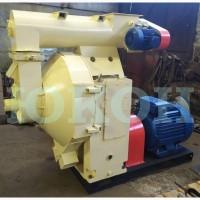
Granulation is the main procedure on the production line of pellets from hay, straw, alfalfa, grass flour. The OGM-1.5 granulator with a ring matrix is designed for the production of pellets from crushed raw materials, such as wood sawdust, husks, grass, alfalfa, straw, dry fodder, soybean husk, rice husk, cottonwood, bird droppings, peat, production of compound feed and granulation of other loose materials. Usually, the granulator is equipped with a ring matrix with a diameter of 6 mm, 8 mm, since fuel granules with a diameter of 6 mm and 8 mm are more favorable for burning. In addition, ring matrices of other hole diameters can also be made according to the customer's requirements.
Working principle.
The raw material prepared for granulation is fed by a pneumatic system into the storage hopper, from where the raw material is uniformly fed by a dispenser into the mixer of the OGM granulator, where it is moistened with water or steam to the humidity required for granulation and intensively mixed with a stirrer (moisture promotes the formation of strong granules). From the mixer, the moistened raw material is introduced into the press. In the pressing chamber, the raw material is pulled between the rotating matrix and rollers and pushed into the radial holes of the matrix, where granules are formed under the action of high pressure. The granules squeezed out of the holes hit the stationary knife and break off. By turning the knife on its axis, you can adjust the length of broken granules. The broken granules fall down and are removed from the press through the casing sleeve. The granules coming out of the press have a high temperature and are fragile, so they are transported by the noria to the cooling column. Here, air is sucked in through the layer of granules by a fan, which cools the granules and at the same time sucks part of the non-granular raw material into the cyclone. During the cooling process, the humidity of the granules decreases due to the evaporation of moisture, and physical and chemical changes occur in the granules. As a result, they acquire the necessary hardness, humidity and temperature. From the cooling column, as it fills, the granules are sent to sorting, where conditioning granules are separated from crumbs.(//tractor-service.com)
The granules are discharged through the discharge nozzle, and the crumb is sent to the cyclone and further sent along with the raw material for re-pressing.
Basic data: straw productivity — up to 800 kg/h. The productivity of the equipment depends on the granulated material and the selected matrix (combined feed productivity up to 3 tons per hour).
The total installed power of electric motors is 105 kW. The binding substance is water.
The main components of the OGM granulation block: a press with a matrix, a storage hopper, a cooler-sorter, active cyclones, a passive cyclone, a noria, an electric cabinet, a mixer with a water supply system, a dispenser.
Cooling
The granulation block includes the original OGM cooler.
After the granulation process, the granules have a high temperature (80-90 ℃) and humidity (about 16-18%). Therefore, a wood pellet cooler is needed to reduce the temperature of the pellets by approximately 3~5 ℃ above the ambient temperature and reduce the moisture content to 10-13%, which is better for storage. We use international advanced cooling technology, the pellet cooler creates an excellent effect of maintaining the integrity of the pellets in the work process.
IMPORTANT! Made from a copy of the original Lithuanian cooler.
System for packing finished products, (optional)
Packaging of pellets is the last stage in the process of production of granules from sawdust (pellet production), the stage at which the product is packaged in a ready-made container.
For convenience, additional equipment is used: a wheelbarrow and a hopper for ready-made pellets, floor scales for BIG-BEG. After sieving, the granules fall into the storage hopper with the help of a noria. Scales are installed for weight control. Packaged products are stored in a closed shop.
It is also possible to install a granule packer in ready-made containers from 3 to 50 kilograms. The granule packaging machine can protect granules from moisture, corrosion and oxidation.
Why do they choose alfalfa pellets?
Conditioning granulated alfalfa in pellets facilitates storage and distribution, as it increases the density and provides standardized and stable fodder for livestock.
The advantage is that the product is better not only dust-free, which reduces the problem caused by it and adds more fiber for livestock feeding.
Granulated alfalfa contains the energy per kilogram to produce 1.40 liters of milk and the protein needed to produce 2.00 liters of milk.
Another aspect that should be taken into account is that the time of passage through the gastrointestinal tract is reduced and, therefore, the risk of obstruction, because it is healthier for the digestive system of animals.
It is ideal for feeding all types of cattle, horses, sheep, goats, as well as for rabbits and breeding camels.
Recommended sums for each type of livestock:
Dairy products - 3.5 kg per day
Cattle - 2 kg per day
Goats and sheep — 0.5 kg per day.
Horses and camels — 2 kg per day
Alfalfa granulation line
Alfalfa as a raw material for biomass pellets
To obtain alfalfa of the highest quality, it is necessary to monitor it from the field to its arrival at the plant.
Production process of obtaining granulated alfalfa.
Reception of raw materials → Grinding → Granulation → Cooling → Packaging
Composition of the alfalfa granulation line:
Table for feeding rolls, bales, bulk raw materials — 1 pc.
Straw cutter Rotary hay and straw chopper — 1 pc. 150
Шкаф управления сырьевым участком — 1 шт.
OGM-1.5 granulation block — 1 set.
OGM granulation block control cabinet — 1 pc.
Water supply system to the OGM-1.5 granulator — 1 pc.
Pressinggranulator roller OGM-1.5 — 2 pcs.
The price does not include:
OGM-1.5 granulator matrix (choice of pellet diameter and granulated raw material)
Additional equipment (optional): noria, hopper for storage of ready-made pellets,scales for BIG-BEG, packing device for packing pellets from 1 to 50 kg into ready-made containers.
The main equipment related to the plant for the production of granulating alfalfa.
1. Serving table
For the convenience of work, a chain conveyor is used, which can accept a roll with a diameter of 1900 mm or a bale weighing up to 500 kg. The feeding table is equipped with a roll unwinding system (unrolling is not used for bales). Thanks to the conveyor, the raw material is metered into the hay chopper.
2. Straw cutter
The biomass shredder is used for grinding hay, straw, alfalfa and crops at a humidity of up to 25% (with humidity above 25%, the productivity of the shredder decreases and, as a result, the productivity of the line as a whole decreases). The shredder is ideally suited for granulation lines for the production of grass pellets, the production of briquettes, pellets (fuel pellets) because the resulting fraction at the exit of the straw cutter is ground to a uniform size of less than 8 mm and does not require further additional grindingcrusher, and this is a huge saving of electricity in production!
3. Granulation
Granulation is the main procedure on the production line of pellets from hay, straw, alfalfa, grass flour. The OGM-1.5 granulator with a ring matrix is designed for the production of pellets from crushed raw materials, such as wood sawdust, husks, grass, alfalfa, straw, dry fodder, soybean husk, rice husk, cottonwood, bird droppings, peat, production of compound feed and granulation of other loose materials. Usually, the granulator is equipped with a ring matrix with a diameter of 6 mm, 8 mm, since fuel granules with a diameter of 6 mm and 8 mm are more favorable for burning. In addition, ring matrices of other hole diameters can also be made according to the customer's requirements.
Working principle.
The raw material prepared for granulation is fed by a pneumatic system into the storage hopper, from where the raw material is uniformly fed by a dispenser into the mixer of the OGM granulator, where it is moistened with water or steam to the humidity required for granulation and intensively mixed with a stirrer (moisture promotes the formation of strong granules). From the mixer, the moistened raw material is introduced into the press. In the pressing chamber, the raw material is pulled between the rotating matrix and rollers and pushed into the radial holes of the matrix, where granules are formed under the action of high pressure. The granules squeezed out of the holes hit the stationary knife and break off. By turning the knife on its axis, you can adjust the length of broken granules. The broken granules fall down and are removed from the press through the casing sleeve. The granules coming out of the press have a high temperature and are fragile, so they are transported by the noria to the cooling column. Here, air is sucked in through the layer of granules by a fan, which cools the granules and at the same time sucks part of the non-granular raw material into the cyclone. During the cooling process, the humidity of the granules decreases due to the evaporation of moisture, and physical and chemical changes occur in the granules. As a result, they acquire the necessary hardness, humidity and temperature. From the cooling column, as it fills, the granules are sent to sorting, where conditioning granules are separated from crumbs.(//tractor-service.com)
The granules are discharged through the discharge nozzle, and the crumb is sent to the cyclone and further sent along with the raw material for re-pressing.
Basic data: straw productivity — up to 800 kg/h. The productivity of the equipment depends on the granulated material and the selected matrix (combined feed productivity up to 3 tons per hour).
The total installed power of electric motors is 105 kW. The binding substance is water.
The main components of the OGM granulation block: a press with a matrix, a storage hopper, a cooler-sorter, active cyclones, a passive cyclone, a noria, an electric cabinet, a mixer with a water supply system, a dispenser.
Cooling
The granulation block includes the original OGM cooler.
After the granulation process, the granules have a high temperature (80-90 ℃) and humidity (about 16-18%). Therefore, a wood pellet cooler is needed to reduce the temperature of the pellets by approximately 3~5 ℃ above the ambient temperature and reduce the moisture content to 10-13%, which is better for storage. We use international advanced cooling technology, the pellet cooler creates an excellent effect of maintaining the integrity of the pellets in the work process.
IMPORTANT! Made from a copy of the original Lithuanian cooler.
System for packing finished products, (optional)
Packaging of pellets is the last stage in the process of production of granules from sawdust (pellet production), the stage at which the product is packaged in a ready-made container.
For convenience, additional equipment is used: a wheelbarrow and a hopper for ready-made pellets, floor scales for BIG-BEG. After sieving, the granules fall into the storage hopper with the help of a noria. Scales are installed for weight control. Packaged products are stored in a closed shop.
It is also possible to install a granule packer in ready-made containers from 3 to 50 kilograms. The granule packaging machine can protect granules from moisture, corrosion and oxidation.
Why do they choose alfalfa pellets?
Conditioning granulated alfalfa in pellets facilitates storage and distribution, as it increases the density and provides standardized and stable fodder for livestock.
The advantage is that the product is better not only dust-free, which reduces the problem caused by it and adds more fiber for livestock feeding.
Granulated alfalfa contains the energy per kilogram to produce 1.40 liters of milk and the protein needed to produce 2.00 liters of milk.
Another aspect that should be taken into account is that the time of passage through the gastrointestinal tract is reduced and, therefore, the risk of obstruction, because it is healthier for the digestive system of animals.
It is ideal for feeding all types of cattle, horses, sheep, goats, as well as for rabbits and breeding camels.
Recommended sums for each type of livestock:
Dairy products - 3.5 kg per day
Cattle - 2 kg per day
Goats and sheep — 0.5 kg per day.
Horses and camels — 2 kg per day
|
Author, contacts | |
Aleksandr Nikolaevich / отзывы, инфо. / evaluation activities | |
|
Phone:
+38(xxxxxx
show
| |
| http://youcon.prom.ua | |
| facebook.com/groups/529374943912723/?ref=bookmarks | |
All ads user ~218 | |
Ad ID: #1094976
(added by a registered user, registration date: 02-19-2016)
Added / Updated: 07-15-2026 14:53 (current, until: 15-07-2027)
Permanent ad address:
Showed / watched for today: ?, total: ?
Similar ads
Among them there are many interesting ones...


All Ukraine: Selkhoztehnika, oborudovanie, inventory 45594 / Preparation of fodder (equipment) 345 / Granulators 87
Kharkiv region: Agricultural equipment, equipment, inventory 5506 / Food preparation (equipment) 22 / Granulators 13