/ Fertilizers and plant protection products / Herbicides / Agent post-emergence systemic herbicide analogue...

Sell / buy
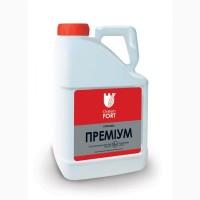
Agent post-emergence systemic herbicide analogue Pryma, Dnipropetrovsk region.
Region:all of Ukraine,
Dnipropetrovsk region.
(Synelnikovo)
Agent
Post-emergence systemic herbicide for the destruction of annual dicotyledonous weeds, including those resistant to 2,4-D and MCPA and some perennial dicotyledonous species in corn crops.corn crops. культур и кукурузы.
5 l
• inherent high speed of impact on weeds;
• capable of controlling a wide range of weed species;
• compatible with other agrochemicals in crops of grain crops and corn;
• used in a wider temperature range compared to other forms of 2,4-D drugs;
• sufficiently wide "technological window" of application;
• lack of effect of the drug on subsequent crops in the crop rotation;
• non-toxic to animals and humans, harmless to the environment.
Sorghum
Corn
Millet
Winter wheat, Spring barley, Spring wheat, Winter barley
Preparative form
Suspo-emulsion
Active substance:
Florasulam 6.25 g/l
Chemical group
Derivatives of chlorophenoxyacetic acid + triazolpyrimidines
Toxicity(//tractor-service.com)
WHO classification: danger class 3
Time limits for workers to leave the treated areas for mechanized work - 3 days, for manual work - not required.
Packages
5 l
Compatibility:
Compatible with other pesticides and agrochemicals that have a neutral reaction. Before preparing the working mixtures, it is expedient to check the compatibility of the drugs (absence of sediment, pencil cases, delamination, whipping into lumps, incomplete dissolution of one of the drugs, etc.). Combine only those components that coincide with the recommended processing times, taking into account the phase of culture development. Not compatible with anti-cereal herbicides.
Mechanism of action:
2,4-D is of the auxin type, blocks the action of plant growth and development hormone and affects the growth processes of cells in weeds. Flumetsulam and Florasulam are inhibitors of acetolactate synthase, which is the main enzyme in the biosynthesis of amino acids such as isoleucine, leucine, and valine. The combination of two active substances with completely different mechanisms of action completely prevents the emergence of resistance (stability) to the drug.
Range of action:
Sensitive weeds: ragwort, gray sedum, field mustard, common shepherd's bag, thin-leaved double-leaved, split yellow, Sophia's descourainia, white dream, self-poppy, descourainia thorny, red small-fruited, rapeseed, common surepitsa,sunflower wilt, dry ribs, field sedge, scotchwort, amaranth zaprokinutiy.
Moderately sensitive weeds: field bindweed, yellow thistle, pink thistle.
The maximum number of treatments: 198
Норма расхода рабочего раствора:
150-200 l/ha, depending on the numerous composition of the weed component
Features of use:
Visible symptoms of herbicidal activity appear already a few days after applying the drug, and the complete death of weeds is observed after 2-3 weeks, depending on the phase, species composition of weeds and weather conditions.
Treatment with the drug must be carried out in the stage of active growth of weeds: in the phase of cotyledons - 2-4 leaves. Spraying must be carried out at an air temperature of 10 to 25 °C and at a wind speed of no more than 5 m/s. Spraying is inappropriately carried out immediately after frosts or when they are expected, and when plants are in a stressful state (during drought, excessive soil moisture, damaged by pests, diseases, frosts, etc.), as well as when there is a sharp drop in night and day temperatures.
Post-emergence systemic herbicide for the destruction of annual dicotyledonous weeds, including those resistant to 2,4-D and MCPA and some perennial dicotyledonous species in corn crops.corn crops. культур и кукурузы.
5 l
• inherent high speed of impact on weeds;
• capable of controlling a wide range of weed species;
• compatible with other agrochemicals in crops of grain crops and corn;
• used in a wider temperature range compared to other forms of 2,4-D drugs;
• sufficiently wide "technological window" of application;
• lack of effect of the drug on subsequent crops in the crop rotation;
• non-toxic to animals and humans, harmless to the environment.
Sorghum
Corn
Millet
Winter wheat, Spring barley, Spring wheat, Winter barley
Preparative form
Suspo-emulsion
Active substance:
Florasulam 6.25 g/l
Chemical group
Derivatives of chlorophenoxyacetic acid + triazolpyrimidines
Toxicity(//tractor-service.com)
WHO classification: danger class 3
Time limits for workers to leave the treated areas for mechanized work - 3 days, for manual work - not required.
Packages
5 l
Compatibility:
Compatible with other pesticides and agrochemicals that have a neutral reaction. Before preparing the working mixtures, it is expedient to check the compatibility of the drugs (absence of sediment, pencil cases, delamination, whipping into lumps, incomplete dissolution of one of the drugs, etc.). Combine only those components that coincide with the recommended processing times, taking into account the phase of culture development. Not compatible with anti-cereal herbicides.
Mechanism of action:
2,4-D is of the auxin type, blocks the action of plant growth and development hormone and affects the growth processes of cells in weeds. Flumetsulam and Florasulam are inhibitors of acetolactate synthase, which is the main enzyme in the biosynthesis of amino acids such as isoleucine, leucine, and valine. The combination of two active substances with completely different mechanisms of action completely prevents the emergence of resistance (stability) to the drug.
Range of action:
Sensitive weeds: ragwort, gray sedum, field mustard, common shepherd's bag, thin-leaved double-leaved, split yellow, Sophia's descourainia, white dream, self-poppy, descourainia thorny, red small-fruited, rapeseed, common surepitsa,sunflower wilt, dry ribs, field sedge, scotchwort, amaranth zaprokinutiy.
Moderately sensitive weeds: field bindweed, yellow thistle, pink thistle.
The maximum number of treatments: 198
Норма расхода рабочего раствора:
150-200 l/ha, depending on the numerous composition of the weed component
Features of use:
Visible symptoms of herbicidal activity appear already a few days after applying the drug, and the complete death of weeds is observed after 2-3 weeks, depending on the phase, species composition of weeds and weather conditions.
Treatment with the drug must be carried out in the stage of active growth of weeds: in the phase of cotyledons - 2-4 leaves. Spraying must be carried out at an air temperature of 10 to 25 °C and at a wind speed of no more than 5 m/s. Spraying is inappropriately carried out immediately after frosts or when they are expected, and when plants are in a stressful state (during drought, excessive soil moisture, damaged by pests, diseases, frosts, etc.), as well as when there is a sharp drop in night and day temperatures.
Ad ID: #962321
(added by a registered user)
Permanent Ad Address:
Impressions / views for today: ?, total: ?
Similar recent ads
There are many interesting ones among them...