/ Fertilizers and plant protection products / Herbicides / Doubloon - protection of corn crops from complex weeds...
For sale / buy
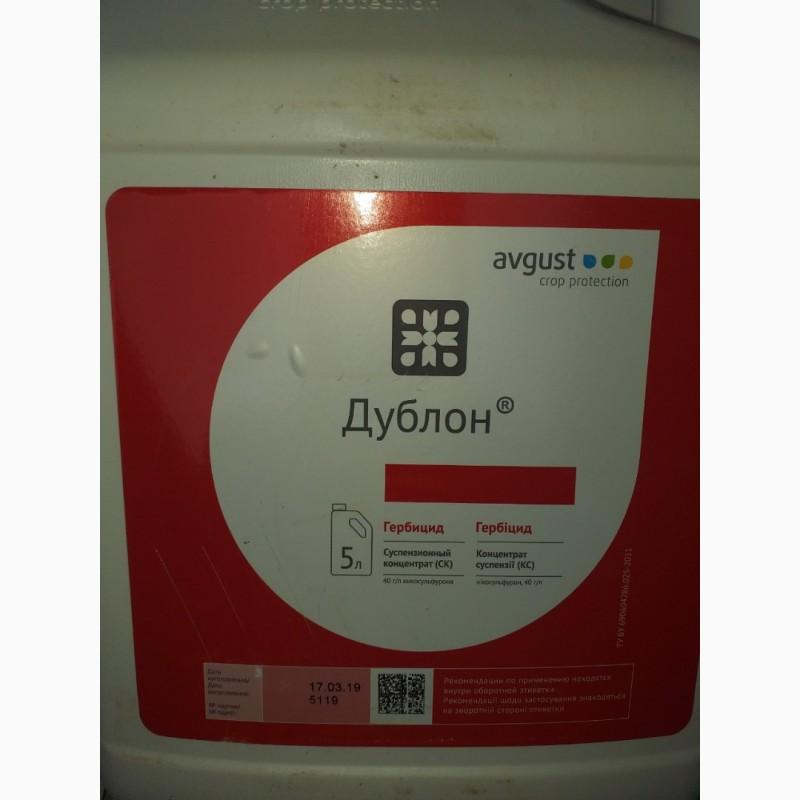
Doubloon - protection of corn crops from a complex of weeds, Kyiv region.
Price10$
Region:all Ukraine,
Kyiv region.
(Vyshhorodok)
Updated:
Dublon™ - Post-emergence systemic herbicide for controlling grass and annual dicotyledonous weeds in corn crops.
Active ingredient: nicosulfuron 40 g/l
Preparative form: KC (suspension concentrate)
Chemical group: nicosulfuron belongs to the chemical class of sulfonylurea derivatives.
Package: 5 l canister
Manufacturer: Avgust
Recommendations for use:
*Corn
Harmful object: Annual and perennial grasses and some dicotyledonous weeds.
Method, processing time, limitations:
Consumption rates: 1.0 - 1.25 l / ha
Norms for the use of working solution min/max: 1.0 - 1.25 l / ha
Compatibility:
to expand the spectrum of action and reduce consumption rates, it is allowed to use the drug Dublon™ in tank mixtures with other pesticides. Before use, it is necessary to check the mixture for compatibility and phytotoxicity with respect to corn.
It is not recommended to use the herbicide in a mixture with organophosphorus insecticides, as well as to alternate treatments with organophosphorus insecticides and herbicide, if the gap between them does not exceed 7 - 14 days, due to possible suppression of the culture.
High efficiency is demonstrated by the tank mixture of Dublon™ with Ballerina® (1 - 1.2 l/ha + 0.25 - 0.3 l/ha) - the set Dublon™ Trio*.
Range of action:
Dublon™ is effective against annual and perennial grasses and some annual dicotyledonous weeds.
Mechanism of action:
the active substance of the drug is an inhibitor of the formation of the enzyme acetolactate synthase, which is involved in the synthesis of essential amino acids. The herbicide has a systemic effect, quickly penetrates weed plants and stops their growth.
Speed and symptoms of exposure:(//tractor-service.com)
depending on the weather conditions, the herbicide stops the growth of weeds already 4-6 hours after treatment. During the week, the weeds change color (turn brown). Complete dying of plants occurs 7 - 20 days after spraying.
Period of protective action:
depending on the species composition of weeds, soil, climatic and weather conditions of the year, the period of protective action of Dublon™ is up to 3 weeks.
Advantages:
• high efficiency even against creeping wheatgrass and gum;
• wide application range — 3 - 10 leaves of culture;
• selective towards culture;
• high-tech preparation form.
Features of application:
the best results are achieved when spraying is carried out during the period when weeds are actively growing. The minimum rate of herbicide consumption is used against annual grass weeds (the optimal phase is 1-3 leaves), the maximum rate is used on areas heavily weeded with gum (growths from the rhizomes) and other perennial weeds (grass 15-25 cm tall). Against annual dicotyledonous weeds, the drug is most effective in the phase of 2-4 leaves. The phase of crop development during processing is 3 - 10 leaves, but at the same time it is necessary to ensure that the corn plants are not "screened" by weeds.
Factors affecting the effectiveness of the kit:
the optimal air temperature during spraying is in the range of 15-25°C, with optimal soil and air humidity. It is not recommended to use the drug in cold or hot weather, with excessive rainfall, as well as in a situation where weeds are in a state of stress.
Restrictions on crop rotation:
nicosulfuron is rapidly decomposed by soil microflora in moist and warm conditions with a soil solution reaction (pH less than 7). However, there are limitations when using the drug. If it is necessary to reseed the areas treated with Dublon™ herbicide, in the spring the area can be reseeded only with corn or after plowing with soybeans, in the autumn with winter barley or wheat. Any crop can be sown the following year after using the drug. There is a possibility of damage to subsequent crops of the rotation on soils with an alkaline reaction (pH greater than 8), if dry conditions prevailed between the application of Dublon™ and the sowing of the next crop. The minimum time (months) before sowing the following crop rotations: corn (for grain) - at any time; soy - after 9 months;cereals ears of corn - after 5 months; beans - after 9 months; alfalfa - after 9 months. The specified interval can be reduced to 3 months if the pH of the soil is below 7 (acidic soils).
Preparation of the working solution:
the working solution is prepared immediately before spraying. The drug is mixed well in the factory packaging, then the necessary amount of it is measured for one fillingsprayer. It is recommended to inject the drug directly into the tank of the sprayer, provided that the hydraulic stirrer is working well. At the same time, the tank of the sprayer must be at least half filled with water. The container in which the herbicide was located is washed with water several times.
Additional information:
Possibility of resistance:
to prevent the emergence of resistance, it is advisable to alternate the drug with herbicides of other chemical classes.
Selectivity:
for recommendations on the use of the drug on sensitive hybrids and some lines, contact the seed originator companies.
Active ingredient: nicosulfuron 40 g/l
Preparative form: KC (suspension concentrate)
Chemical group: nicosulfuron belongs to the chemical class of sulfonylurea derivatives.
Package: 5 l canister
Manufacturer: Avgust
Recommendations for use:
*Corn
Harmful object: Annual and perennial grasses and some dicotyledonous weeds.
Method, processing time, limitations:
Consumption rates: 1.0 - 1.25 l / ha
Norms for the use of working solution min/max: 1.0 - 1.25 l / ha
Compatibility:
to expand the spectrum of action and reduce consumption rates, it is allowed to use the drug Dublon™ in tank mixtures with other pesticides. Before use, it is necessary to check the mixture for compatibility and phytotoxicity with respect to corn.
It is not recommended to use the herbicide in a mixture with organophosphorus insecticides, as well as to alternate treatments with organophosphorus insecticides and herbicide, if the gap between them does not exceed 7 - 14 days, due to possible suppression of the culture.
High efficiency is demonstrated by the tank mixture of Dublon™ with Ballerina® (1 - 1.2 l/ha + 0.25 - 0.3 l/ha) - the set Dublon™ Trio*.
Range of action:
Dublon™ is effective against annual and perennial grasses and some annual dicotyledonous weeds.
Mechanism of action:
the active substance of the drug is an inhibitor of the formation of the enzyme acetolactate synthase, which is involved in the synthesis of essential amino acids. The herbicide has a systemic effect, quickly penetrates weed plants and stops their growth.
Speed and symptoms of exposure:(//tractor-service.com)
depending on the weather conditions, the herbicide stops the growth of weeds already 4-6 hours after treatment. During the week, the weeds change color (turn brown). Complete dying of plants occurs 7 - 20 days after spraying.
Period of protective action:
depending on the species composition of weeds, soil, climatic and weather conditions of the year, the period of protective action of Dublon™ is up to 3 weeks.
Advantages:
• high efficiency even against creeping wheatgrass and gum;
• wide application range — 3 - 10 leaves of culture;
• selective towards culture;
• high-tech preparation form.
Features of application:
the best results are achieved when spraying is carried out during the period when weeds are actively growing. The minimum rate of herbicide consumption is used against annual grass weeds (the optimal phase is 1-3 leaves), the maximum rate is used on areas heavily weeded with gum (growths from the rhizomes) and other perennial weeds (grass 15-25 cm tall). Against annual dicotyledonous weeds, the drug is most effective in the phase of 2-4 leaves. The phase of crop development during processing is 3 - 10 leaves, but at the same time it is necessary to ensure that the corn plants are not "screened" by weeds.
Factors affecting the effectiveness of the kit:
the optimal air temperature during spraying is in the range of 15-25°C, with optimal soil and air humidity. It is not recommended to use the drug in cold or hot weather, with excessive rainfall, as well as in a situation where weeds are in a state of stress.
Restrictions on crop rotation:
nicosulfuron is rapidly decomposed by soil microflora in moist and warm conditions with a soil solution reaction (pH less than 7). However, there are limitations when using the drug. If it is necessary to reseed the areas treated with Dublon™ herbicide, in the spring the area can be reseeded only with corn or after plowing with soybeans, in the autumn with winter barley or wheat. Any crop can be sown the following year after using the drug. There is a possibility of damage to subsequent crops of the rotation on soils with an alkaline reaction (pH greater than 8), if dry conditions prevailed between the application of Dublon™ and the sowing of the next crop. The minimum time (months) before sowing the following crop rotations: corn (for grain) - at any time; soy - after 9 months;cereals ears of corn - after 5 months; beans - after 9 months; alfalfa - after 9 months. The specified interval can be reduced to 3 months if the pH of the soil is below 7 (acidic soils).
Preparation of the working solution:
the working solution is prepared immediately before spraying. The drug is mixed well in the factory packaging, then the necessary amount of it is measured for one fillingsprayer. It is recommended to inject the drug directly into the tank of the sprayer, provided that the hydraulic stirrer is working well. At the same time, the tank of the sprayer must be at least half filled with water. The container in which the herbicide was located is washed with water several times.
Additional information:
Possibility of resistance:
to prevent the emergence of resistance, it is advisable to alternate the drug with herbicides of other chemical classes.
Selectivity:
for recommendations on the use of the drug on sensitive hybrids and some lines, contact the seed originator companies.
|
Shop, contacts | |
Yuriy/ feedback, info./ evaluation activities | |
|
Phone:
+38(xxxxxx
show
| |
All ads user ~1000 | |
Ad ID: #929494
(added by registered user, registration date: 2016-08-10)
Added / Updated: 2016-10-15 09:25 (current, until: 10-15-2026)
Permanent Ad Address:
Impressions / views for today: ?, total: ?
Similar ads
Among them there are many interesting ones...