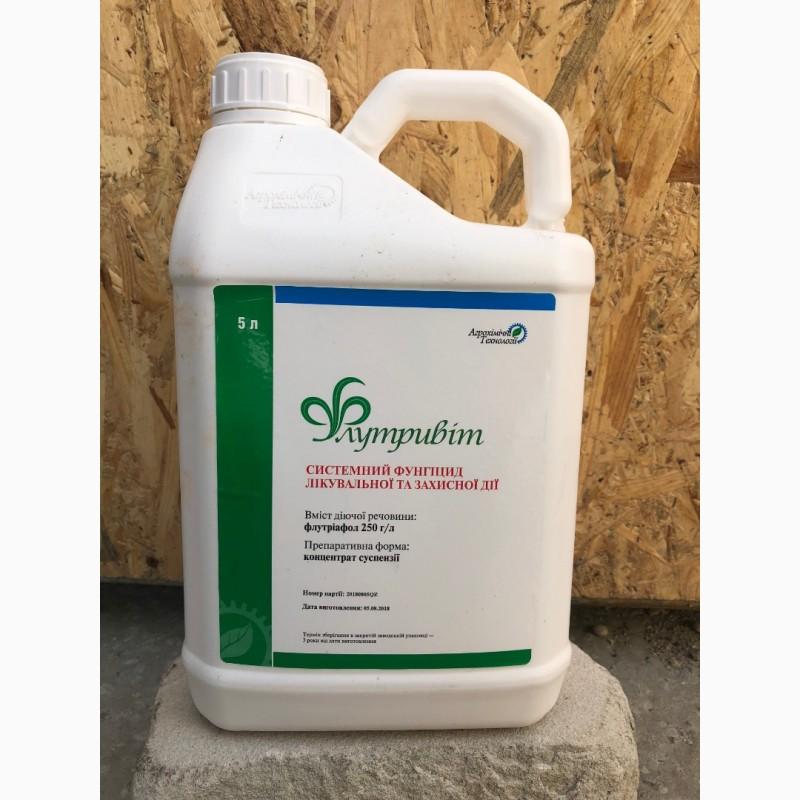
/ Fertilizers and plant protection products / Fungicides / Fungicide FLUTRIVIT (flutriafol), analogue impact


For sale / buy
Fungicide FLUTRIVIT (flutriafol), analog impact, Kyiv
Region:all of Ukraine,
Kyiv
(Kyiv)
Analog: Impact.
Active substance: flutriafol, 250 g / l
Application rate l, kg / ha 0.25-0.5
Flutrivit is a systemic fungicide of contact action. It is used to protect such crops as: winter and spring wheat, winter and spring barley, rye, sugar beets, grapes and apple trees. Spraying work should be carried out during the vegetation period of the plant. The permissible number of treatments per season is two times. Protects plants from the following harmful phenomena: powdery mildew, septoriosis, brown rust, alternariosis, helminthosporiosis, rhynchosporiosis, fomosis, cercosporosis, oidium. It is characterized by high resistance to precipitation, after half an hour rain does not reduce the effectiveness of the drug. Information about the drug Flutrivit from the Agrochemical Technologies company. The Agrochemical Technologies company created a fungicide called Flutrivit, designed to protect crops of cultivated plants from a number of pathogens. This drug contains the active substance - flutriafol. Flutriafol from the group of triazoles is the most mobile. This substance moves quickly through the plant, having a detrimental effect on fungal diseases. Flutrivit penetrates even into those parts of the plants that appeared after treatment with the drug, as the active substance remains in the plant for 6-8 weeks. Thanks to all this, reliable protection against diseases and pathogens is provided. Fungicide Flutrivit also has a fumigant effect. The solution, evaporating, forms a fumigant cloud that covers the entire plant. With one-time processing on grain crops, you can combine Flutrivit with herbicides, insecticides or fertilizers. But it is still recommended for intensive technologygrowing cereals cultivate crops twice. Due to the high absorbability of Flutrivit by plants, diseases were eradicated after 6 hours. This is very important in conditions of intensive development of epiphytotia. After entering the plant, the fungicide is not collected at one point of penetration, but spreads throughout the plant. A significant part of the drug moves up through the xylem. Flutrivit is recommended for use at the first manifestations of diseases. The drug has a therapeutic effect, but it is still recommended to treat crops in advance to prevent crop losses due to diseases. The main advantages of Flutrivit fungicide:
1) Duration of plant protection.
2) It has a systemic, contact and fumigant effect.
3) Prophylactic and therapeutic drug.
4) Has resistance to being washed away by precipitation.(//tractor-service.com)
5) Effective even at low temperatures of +5 C.
Recommendations for using Flutrivit fungicide on different cultures:
1) Use on winter and spring wheat crops: Application rate of 0.5 l/ha. Processing should be carried out during the vegetation period of the plant. Protects crops from powdery mildew, septoriosis, brown rust, alternariosis.
2) Use on crops of winter and spring barley: Application rate of 0.5 l/ha. Processing should be carried out during the vegetation period of the plant. Protects crops from powdery mildew, helmitosporiosis, rhynchosporiosis, septoriosis.
3) Use on peak crops: Application rate of 0.5 l/ha. Processing should be carried out during the vegetation period of the plant. Protects crops from rust and powdery mildew.
4) Use on sugar beet crops: Application rate of 0.25 l/ha. Processing should be carried out during the vegetation period of the plant, as well as at the first manifestations of diseases. Protects crops from fomosis, cercosporosis, powdery mildew.
5) Use ongrape plantations: Application rate 0.1 l/ha. Processing should be carried out during the growing season of the plant, as well as when 4-5 leaves are formed, immediately after flowering, on young berries and when the first signs of the disease appear. Protects plantings from oidium.
6) Use on apple plantations: Application rate of 0.1-0.15 l/ha. Processing should be carried out during the vegetation period of the plant, as well as in the phase of the green cone, immediately after flowering and when the diameter of the fruits is more than 1.5 cm. It protects the plantation from powdery mildew.
Active substance: flutriafol, 250 g / l
Application rate l, kg / ha 0.25-0.5
Flutrivit is a systemic fungicide of contact action. It is used to protect such crops as: winter and spring wheat, winter and spring barley, rye, sugar beets, grapes and apple trees. Spraying work should be carried out during the vegetation period of the plant. The permissible number of treatments per season is two times. Protects plants from the following harmful phenomena: powdery mildew, septoriosis, brown rust, alternariosis, helminthosporiosis, rhynchosporiosis, fomosis, cercosporosis, oidium. It is characterized by high resistance to precipitation, after half an hour rain does not reduce the effectiveness of the drug. Information about the drug Flutrivit from the Agrochemical Technologies company. The Agrochemical Technologies company created a fungicide called Flutrivit, designed to protect crops of cultivated plants from a number of pathogens. This drug contains the active substance - flutriafol. Flutriafol from the group of triazoles is the most mobile. This substance moves quickly through the plant, having a detrimental effect on fungal diseases. Flutrivit penetrates even into those parts of the plants that appeared after treatment with the drug, as the active substance remains in the plant for 6-8 weeks. Thanks to all this, reliable protection against diseases and pathogens is provided. Fungicide Flutrivit also has a fumigant effect. The solution, evaporating, forms a fumigant cloud that covers the entire plant. With one-time processing on grain crops, you can combine Flutrivit with herbicides, insecticides or fertilizers. But it is still recommended for intensive technologygrowing cereals cultivate crops twice. Due to the high absorbability of Flutrivit by plants, diseases were eradicated after 6 hours. This is very important in conditions of intensive development of epiphytotia. After entering the plant, the fungicide is not collected at one point of penetration, but spreads throughout the plant. A significant part of the drug moves up through the xylem. Flutrivit is recommended for use at the first manifestations of diseases. The drug has a therapeutic effect, but it is still recommended to treat crops in advance to prevent crop losses due to diseases. The main advantages of Flutrivit fungicide:
1) Duration of plant protection.
2) It has a systemic, contact and fumigant effect.
3) Prophylactic and therapeutic drug.
4) Has resistance to being washed away by precipitation.(//tractor-service.com)
5) Effective even at low temperatures of +5 C.
Recommendations for using Flutrivit fungicide on different cultures:
1) Use on winter and spring wheat crops: Application rate of 0.5 l/ha. Processing should be carried out during the vegetation period of the plant. Protects crops from powdery mildew, septoriosis, brown rust, alternariosis.
2) Use on crops of winter and spring barley: Application rate of 0.5 l/ha. Processing should be carried out during the vegetation period of the plant. Protects crops from powdery mildew, helmitosporiosis, rhynchosporiosis, septoriosis.
3) Use on peak crops: Application rate of 0.5 l/ha. Processing should be carried out during the vegetation period of the plant. Protects crops from rust and powdery mildew.
4) Use on sugar beet crops: Application rate of 0.25 l/ha. Processing should be carried out during the vegetation period of the plant, as well as at the first manifestations of diseases. Protects crops from fomosis, cercosporosis, powdery mildew.
5) Use ongrape plantations: Application rate 0.1 l/ha. Processing should be carried out during the growing season of the plant, as well as when 4-5 leaves are formed, immediately after flowering, on young berries and when the first signs of the disease appear. Protects plantings from oidium.
6) Use on apple plantations: Application rate of 0.1-0.15 l/ha. Processing should be carried out during the vegetation period of the plant, as well as in the phase of the green cone, immediately after flowering and when the diameter of the fruits is more than 1.5 cm. It protects the plantation from powdery mildew.
Ad ID: #922219
(added by a registered user)
Permanent Ad Address:
Impressions / views for today: ?, total: ?
Similar recent ads
Among them there are many interesting ones...