For sale / buy
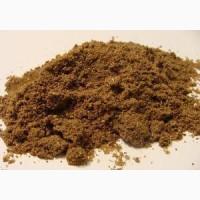
Bone flour, Dnipropetrovsk region.
Region:All Ukraine,
Dnipropetrovsk region region.
(Pyatihatky)
Bone meal is a product of processing waste from the livestock industry. Organic fertilizers made from bone meal are used in agriculture where additional calcium is needed to reduce acidity. Suitable for all garden and indoor decorative crops. This is an ecologically clean, harmless, long-acting fertilizer that becomes part of the soil over a period of 6 to 8 months.
When making bone meal, the raw material is sterilized, which completely excludes the introduction of pathogenic bacteria into the finished product. The scientific name of the fertilizer obtained from flour is phosphonitrogen. Flour contains 15% phosphorus in the calcium phosphate compound. Until recently, bone powder was used to compensate for calcium deficiency in animals.
Today, the product of bone processing began to be used as an organic phosphorus fertilizer. If industrial nitrogen and potassium fertilizers are replaced by humus and ash, respectively, then superphosphate replaces bone powder.
Animal breeders are well familiar withbone meal, which is added to feed to compensate for calcium deficiency in dairy cattle and laying hens. But the use of the product is not limited to this, as bone meal is also used by gardeners as a fertilizer.
Bone fertilizer is applied to the soil in autumn. The period of its decomposition is from 6 to 8 months, and by the onset of spring, nutrients manage to pass into a form convenient for assimilation. It is enough to apply once an hour so that the plants do not experience a lack of nutrition throughout the entire vegetation period. But experienced gardeners claim that 1 time per hour is too much, and it is enough to use 1 time every 3 years to maintain soil fertility.
For flower crops grown in pots, 1 part of flour per 100 parts of soil is enough. In a medium-sized pot, you can mix 2-3 tablespoons of bone meal. The product decomposes for a long time, so in the next six months you can not worry that the plants will experience a lack of nutrition.
When planting berry crops - strawberries, raspberries, currants, gooseberries, the substance is introduced into the hole in time to save the gardener from the need for fertilizing. Do not worry that the substance will damage the root system. It is harmless and long-lasting.(//tractor-service.com)
Meat and bone meal for onion crops is applied in autumn or spring in dry form. Decorative bulbous plants are fertilized in grooves around the root. After laying, the furrows are sprinkled with earth.
Fertilizer application rates: 150
• При посадке плодовых деревьев – 3 стакана на посадочную яму;
• When planting shrubs - 1 glass per planting hole;
• When planting perennial flowers - ½ glass per planting hole;
• For planting vegetable crops, 200 grams of fertilizer per 1m2;
• Under trees in the trunk circle - once an hour from 2 to 4 glasses per plant (depending on the size of the tree).
Phosphorous fertilizers reduce the acidity of the soil, so bone meal is not recommended to be applied to plants growing on acidic soils, such as blueberries, rhododendrons, camellias.
When making bone meal, the raw material is sterilized, which completely excludes the introduction of pathogenic bacteria into the finished product. The scientific name of the fertilizer obtained from flour is phosphonitrogen. Flour contains 15% phosphorus in the calcium phosphate compound. Until recently, bone powder was used to compensate for calcium deficiency in animals.
Today, the product of bone processing began to be used as an organic phosphorus fertilizer. If industrial nitrogen and potassium fertilizers are replaced by humus and ash, respectively, then superphosphate replaces bone powder.
Animal breeders are well familiar withbone meal, which is added to feed to compensate for calcium deficiency in dairy cattle and laying hens. But the use of the product is not limited to this, as bone meal is also used by gardeners as a fertilizer.
Bone fertilizer is applied to the soil in autumn. The period of its decomposition is from 6 to 8 months, and by the onset of spring, nutrients manage to pass into a form convenient for assimilation. It is enough to apply once an hour so that the plants do not experience a lack of nutrition throughout the entire vegetation period. But experienced gardeners claim that 1 time per hour is too much, and it is enough to use 1 time every 3 years to maintain soil fertility.
For flower crops grown in pots, 1 part of flour per 100 parts of soil is enough. In a medium-sized pot, you can mix 2-3 tablespoons of bone meal. The product decomposes for a long time, so in the next six months you can not worry that the plants will experience a lack of nutrition.
When planting berry crops - strawberries, raspberries, currants, gooseberries, the substance is introduced into the hole in time to save the gardener from the need for fertilizing. Do not worry that the substance will damage the root system. It is harmless and long-lasting.(//tractor-service.com)
Meat and bone meal for onion crops is applied in autumn or spring in dry form. Decorative bulbous plants are fertilized in grooves around the root. After laying, the furrows are sprinkled with earth.
Fertilizer application rates: 150
• При посадке плодовых деревьев – 3 стакана на посадочную яму;
• When planting shrubs - 1 glass per planting hole;
• When planting perennial flowers - ½ glass per planting hole;
• For planting vegetable crops, 200 grams of fertilizer per 1m2;
• Under trees in the trunk circle - once an hour from 2 to 4 glasses per plant (depending on the size of the tree).
Phosphorous fertilizers reduce the acidity of the soil, so bone meal is not recommended to be applied to plants growing on acidic soils, such as blueberries, rhododendrons, camellias.
Ad ID: #838871
(added by a registered user)
Permanent Ad Address:
Impressions / views for today: ?, total: ?
Similar recent ads
There are many interesting ones among them...