/ Fertilizers and plant protection products / Herbicides / Aylar (Challenge) - herbicide from the complex bur'...
For sale / buy
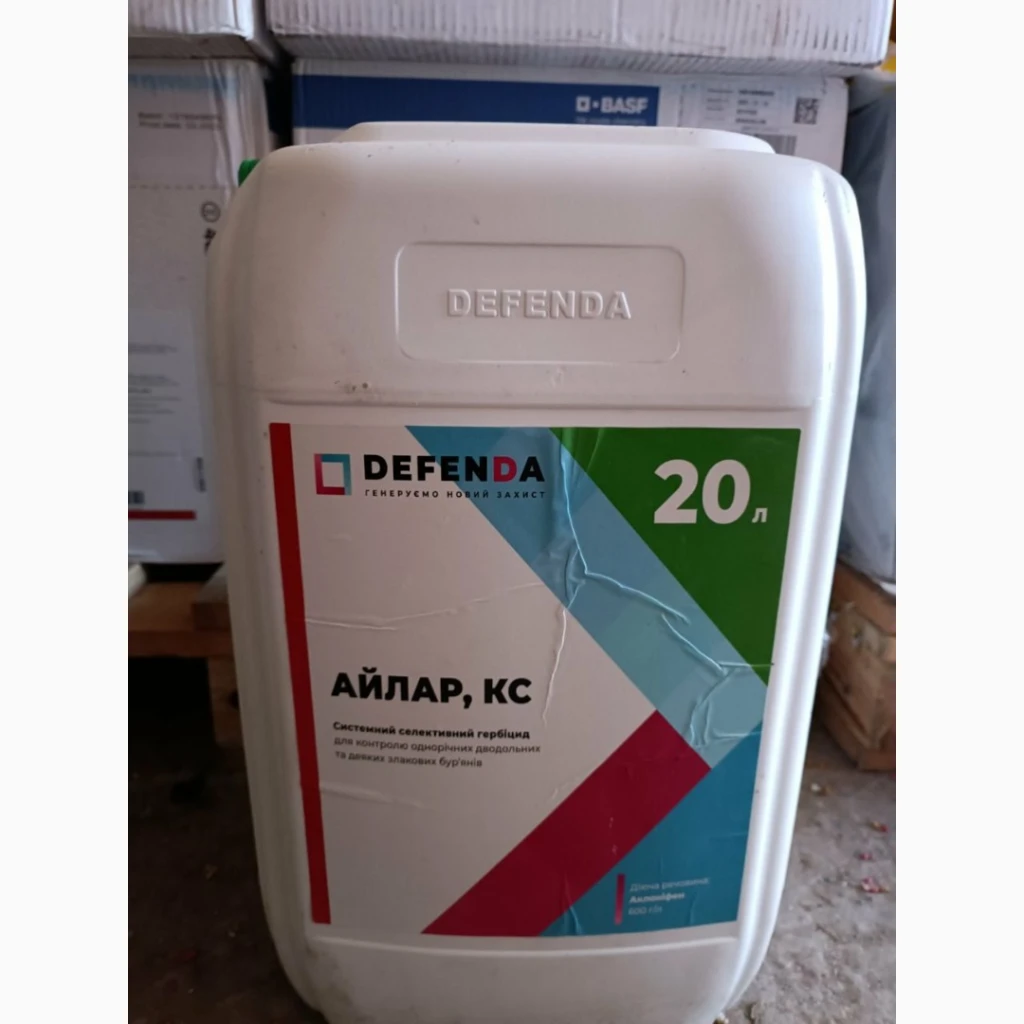
Aylar (Challenge) - herbicide from a complex of weeds, Kyiv region.
Price11.5$
Region:everywhere Ukraine,
Kyiv region.
(Vyshhorodok)
Updated:
Aylar herbicide (Challenge) is a systemic herbicide for combating dicotyledonous weeds.
Active substance content: Aclonifen, 600 g/l
Chemical group: diphenylethers
Preparative formula: suspension concentrate
WHO classification: III class (moderately dangerous)
Packaging: 20 liter canisters, the price is for 1 liter. 143
Переваги:
Low level of phytotoxicity due to high selectivity.
Low sensitivity to soil moisture when applied, low risk of leaching into the soil.
Control of problematic weeds, including those resistant to triazines.
Regulations of application:
Culture, a processed object
Range of action
Phase
introduction
Consumption rates, l/ha
Maximum number of treatments
Sunflower
Dicotyledonous weeds
Spraying the soil after sowing to seedling growth.
3.0-6.0
1(//tractor-service.com)
Peas
Dicotyledonous weeds
Spraying the soil after sowing to seedling growth.
3.0-4.0
1
Sunflower
Dicotyledonous weeds
Spraying crops in the phase of 2-4 true leaves of the culture.
1.0-2.0
1
Peas
Dicotyledonous weeds
Spraying crops in the phase of 2-4 true leaves of the culture.
0.5
1
Rate of consumption of working solution: 150-250 l/ha.
Registration is planned for the following crops:
Culture
Harmful object Drug consumption rate, l/ha Treatment period Max. number of treatments
Carrot
Broadleaf weeds 4.0 Spraying before crop emergence 1
Onion onion* Broadleaf weeds 0.5 After crop emergence. The phase of cultural development — 12–14 VVSN. 2
*Do not process the culture after the phase of the developed (2 cm long) 6th true leaf!
Mechanism of action:
Aclonifen disrupts chlorophyll synthesis in weed plants, is taken up by the coleoptile, hypocotyl, and cotyledons, but not by the root system, and translocates to the meristem tissues of the weed plant. Aclonifen leads to the accumulation of phyton in the plant, which suppresses the synthesis of chlorophyll and other photosynthetically active pigments. The action of aclonifen is manifested in the discoloration of germinating young weeds. Their growth stops and after 2-3 weeks they die.
Active substance content: Aclonifen, 600 g/l
Chemical group: diphenylethers
Preparative formula: suspension concentrate
WHO classification: III class (moderately dangerous)
Packaging: 20 liter canisters, the price is for 1 liter. 143
Переваги:
Low level of phytotoxicity due to high selectivity.
Low sensitivity to soil moisture when applied, low risk of leaching into the soil.
Control of problematic weeds, including those resistant to triazines.
Regulations of application:
Culture, a processed object
Range of action
Phase
introduction
Consumption rates, l/ha
Maximum number of treatments
Sunflower
Dicotyledonous weeds
Spraying the soil after sowing to seedling growth.
3.0-6.0
1(//tractor-service.com)
Peas
Dicotyledonous weeds
Spraying the soil after sowing to seedling growth.
3.0-4.0
1
Sunflower
Dicotyledonous weeds
Spraying crops in the phase of 2-4 true leaves of the culture.
1.0-2.0
1
Peas
Dicotyledonous weeds
Spraying crops in the phase of 2-4 true leaves of the culture.
0.5
1
Rate of consumption of working solution: 150-250 l/ha.
Registration is planned for the following crops:
Culture
Harmful object Drug consumption rate, l/ha Treatment period Max. number of treatments
Carrot
Broadleaf weeds 4.0 Spraying before crop emergence 1
Onion onion* Broadleaf weeds 0.5 After crop emergence. The phase of cultural development — 12–14 VVSN. 2
*Do not process the culture after the phase of the developed (2 cm long) 6th true leaf!
Mechanism of action:
Aclonifen disrupts chlorophyll synthesis in weed plants, is taken up by the coleoptile, hypocotyl, and cotyledons, but not by the root system, and translocates to the meristem tissues of the weed plant. Aclonifen leads to the accumulation of phyton in the plant, which suppresses the synthesis of chlorophyll and other photosynthetically active pigments. The action of aclonifen is manifested in the discoloration of germinating young weeds. Their growth stops and after 2-3 weeks they die.
|
Магазин, контакти | |
Юрій / відгуки, інфо. | |
|
Телефон:
+38(xxxxxx
показати
| |
All user ads ~1000 | |
Ad ID: #834596
(added by a registered user)
Added/Updated: 09-23-2026 09:31 (current, until: 09-23-2027)
Permanent Ad Address:
Impressions / views for today: ?, total: ?