/ Seeds, seedlings and sowing materials / Seedlings of fruit trees / Seedlings of various fruit trees + in assortment / Wisteria (wisteria)

For sale / buy
Wisteria (wisteria), Ternopil region.
Region:
Ternopil region.
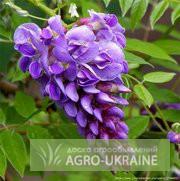
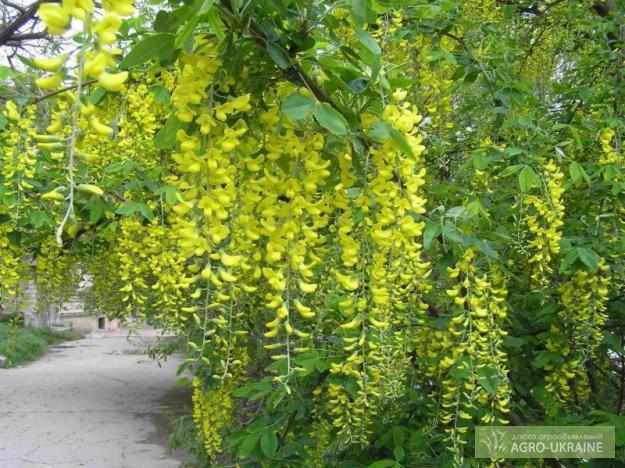
Wisteria, or wisteria (Wisteria floribunda) - large beautiful flowering deciduous creepers, valued for abundant and long flowering and fresh dark green foliage. Their fragrant flowers, white, blue, purple or purple, look like moths. Collected in large hanging brushes, they look extremely impressive against the background of thick green foliage. The flowers are 1.5-2 cm long, purple and violet-blue, collected in thin brushes, reaching a length of 25 cm. The fruit is velvety, tapering to the base, 10-15 cm long.
It has been in culture for a long time. Introduced in Western Europe since 1830, on the Black Sea coast of the Caucasus since the end of the 19th century, in Crimea since 1902.
Care Cut dry shoots. Tie the curly stems to the support. In drought - water. If necessary,feed with fertilizers for fruit trees. In the spring, cut off the shoots of the current year for more abundant flowering.
Propagation Wisteria is propagated by sowingseeds, cuttings, root and stem cuttings. For gardeners, propagation by layering in spring or summer is the most preferable.(//tractor-service.com)
Landing Wisteria is planted in a permanent (warm, windless and sunny) place in the spring. Although she can put up with any garden soil. Any soil is suitable. For better development, soil for flowers is used, and when planting, top dressing withorganic fertilizers (chicken droppings, manure, eggshell, wood ash). After planting, wisteria may not show signs of growth for several months. In the first years of development, the creeper grows long and thin shoots. At maturity, dense knotty wood with a diameter of up to 15 cm is formed, and the stems of some species reach 10 m in height.
Implementation is carried out with a flexible system of discounts, wholesale deliveries are possible. Our experience allows us to confidently guarantee the high quality of the offered products, high durability and an impressive result for your garden and you!
Delivery across Ukraine
tel. 066-195-35-59
It has been in culture for a long time. Introduced in Western Europe since 1830, on the Black Sea coast of the Caucasus since the end of the 19th century, in Crimea since 1902.
Care Cut dry shoots. Tie the curly stems to the support. In drought - water. If necessary,feed with fertilizers for fruit trees. In the spring, cut off the shoots of the current year for more abundant flowering.
Propagation Wisteria is propagated by sowingseeds, cuttings, root and stem cuttings. For gardeners, propagation by layering in spring or summer is the most preferable.(//tractor-service.com)
Landing Wisteria is planted in a permanent (warm, windless and sunny) place in the spring. Although she can put up with any garden soil. Any soil is suitable. For better development, soil for flowers is used, and when planting, top dressing withorganic fertilizers (chicken droppings, manure, eggshell, wood ash). After planting, wisteria may not show signs of growth for several months. In the first years of development, the creeper grows long and thin shoots. At maturity, dense knotty wood with a diameter of up to 15 cm is formed, and the stems of some species reach 10 m in height.
Implementation is carried out with a flexible system of discounts, wholesale deliveries are possible. Our experience allows us to confidently guarantee the high quality of the offered products, high durability and an impressive result for your garden and you!
Delivery across Ukraine
tel. 066-195-35-59
Ad ID: #59516
(added by an unregistered user)
Permanent Ad Address:
Impressions / views for today: ?, total: ?
Similar recent ads
There are many interesting ones among them...



Total148 similar fresh adsin the rubric "Seedlings of fruit trees"
All Ukraine: Seeds, seedlings and seedlings materials 1219 / Seedlings of fruit trees 148 / Seedlings of various fruit trees + in assortment 67
Ternopil region: Seeds, seedlings and sowing materials 17 / Fruit seedlings trees 2 / Seedlings of various fruit trees + in assortment 0