/ Agricultural machinery, equipment, inventory / Soil cultivation equipment / Cultivators / Rotor spike-9, 3; 7, 0; 4, 2 Rotary cultivator...
Sell / buy
Rotary spike-9, 3; 7, 0; 4, 2 Rotary cultivator, Shtrigel, Grudoboy, Matyga, Kyiv region.
Region:all of Ukraine,
Kyiv region.
(city of Belaya Tserkov)
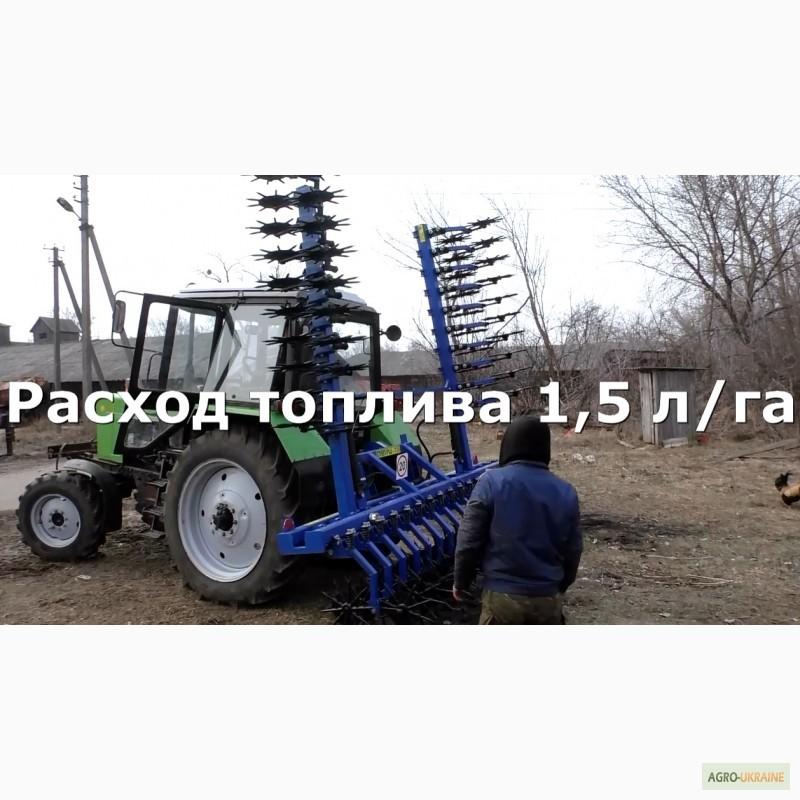
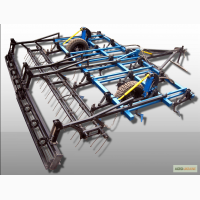
Rotary spike STEP RSh prepares the soil before sowing. After sowing, this unit loosens the soil and thus prevents late germination of grain and increases its growth rate. It loosens and increases the porosity of the soil, thereby contributing to the uniform distribution of moisture in the soil, leading to the strengthening and growth of the plant, making it more resistant to drought. Effectively and evenly loosens the soil without damaging the plant. It is intended for continuous and inter-row cultivation, allows to cultivate the soil when the plant has sprouted. It is used for mechanical weed control. Ensures moisture retention and performs loosening on stony and hard soils that are prone to cracking.
With the standard size, the spacing of the RSh works from 2 leaves to 20 cm of plant height. If you increase the width of the rows, it is possible to work with a plant height of up to 50 cm.
Processing is carried out along the entire width of the unit, with different amounts of plant residues on the field, while the working organs are not clogged. The quality of processing depends on the speed of processing - the higher it is, the stronger the unit loosens and breaks the soil.(//tractor-service.com)
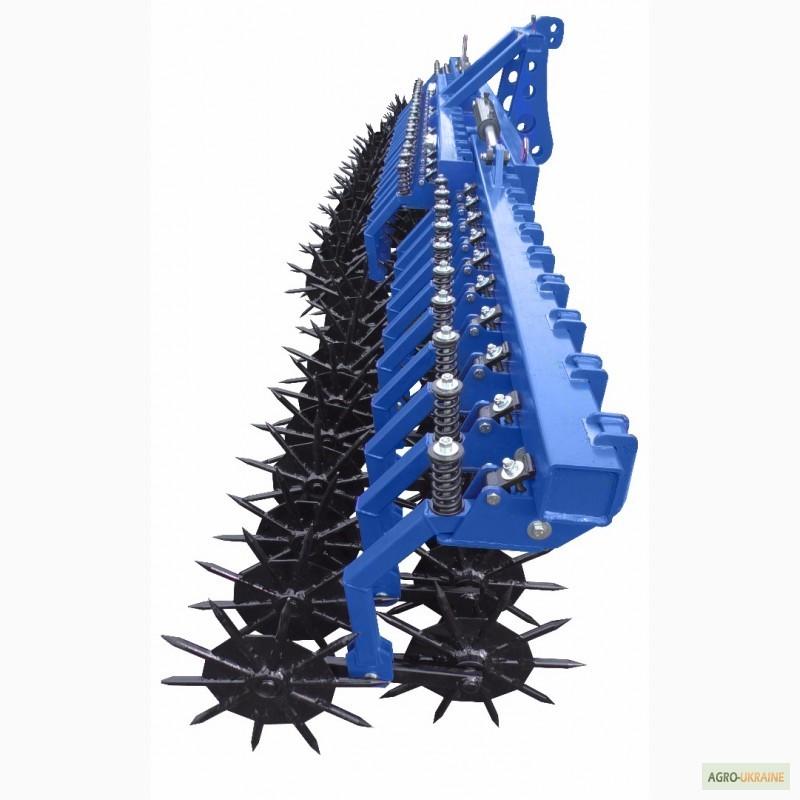
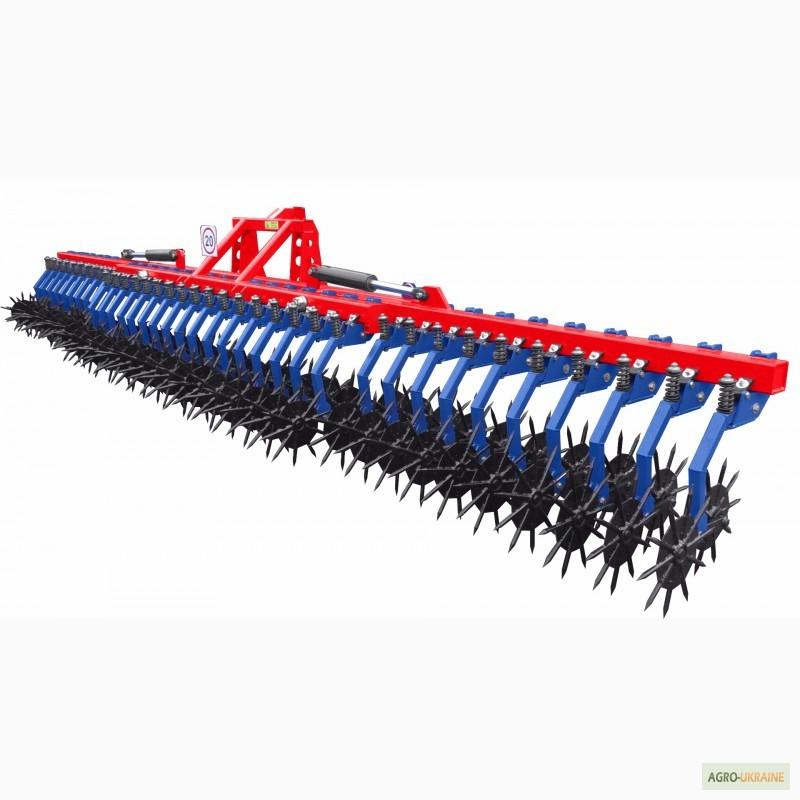
In the rotary spike, a specialcogwheel creates a virtual explosion effect that loosens the soil without damaging the plant. Row spacing is adjusted by unscrewing and moving the racks along the supporting frame of the unit. Spikes are made of wear-resistant heat-treated metal. A closed bearing unit is used.
The rotary spike is produced both in a mounted version and in a trailer version. A working width of over 4.2 meters is produced with a hydraulic folding mechanism, each post is spring-loaded and has 2disc spikes.
From the point of view of agronomic work, the RSH rotary spike combines a cultivator for plowed crops on one side, and a toothed harrow on the otherборону.
After passing through the field of the rotary spike of STEP RSh, thanks to the loosening of the soil and access of air to the root system of the plant, savings on ammonia fertilizer of up to 30-40 kg/ha are achieved.
With the standard size, the spacing of the RSh works from 2 leaves to 20 cm of plant height. If you increase the width of the rows, it is possible to work with a plant height of up to 50 cm.
Processing is carried out along the entire width of the unit, with different amounts of plant residues on the field, while the working organs are not clogged. The quality of processing depends on the speed of processing - the higher it is, the stronger the unit loosens and breaks the soil.(//tractor-service.com)
In the rotary spike, a specialcogwheel creates a virtual explosion effect that loosens the soil without damaging the plant. Row spacing is adjusted by unscrewing and moving the racks along the supporting frame of the unit. Spikes are made of wear-resistant heat-treated metal. A closed bearing unit is used.
The rotary spike is produced both in a mounted version and in a trailer version. A working width of over 4.2 meters is produced with a hydraulic folding mechanism, each post is spring-loaded and has 2disc spikes.
From the point of view of agronomic work, the RSH rotary spike combines a cultivator for plowed crops on one side, and a toothed harrow on the otherборону.
After passing through the field of the rotary spike of STEP RSh, thanks to the loosening of the soil and access of air to the root system of the plant, savings on ammonia fertilizer of up to 30-40 kg/ha are achieved.
ID ad: #573091
(added by a registered user)
Permanent Ad Address:
Impressions / views for today: ?, total: ?
Similar ads
Total1611 similar adsin the heading "Cultivators"
All Ukraine: Agricultural machinery, equipment, inventory 45618 / Soil processing equipment 5477 / Cultivators 1611
Kyiv Region: Agricultural machinery, equipment, inventory 4276 / Soil processing technics 730 / Cultivators 121