/ Agricultural machinery, equipment, inventory / Soil cultivation equipment / Harrows / Harrow-Hoe Rotary (BR) 6 METERS Vse...


For sale / buy
Borona-Motyha Rotatsionnaya (BR) 6 METROVAYA Vse novoe- eto br-6, Dnipropetrovsk region.
Region:all Ukraine,
Dnipropetrovsk region.
(Dnepropetrovsk)
Updated:
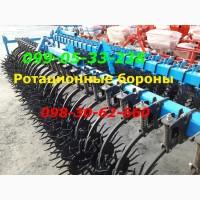
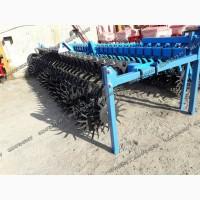
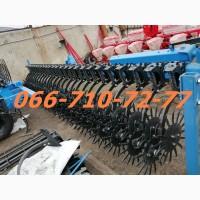
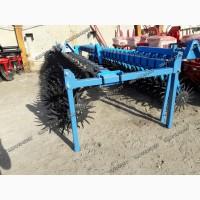
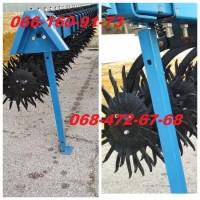
Harrow for sale-Rotatory hoe (BR) 6 METROWAY Everything is new - this is a well-forgotten old one. This BR-6 is better suited to a harrow-hoe, the use and evaluation of which was carried out back in 1991. What is BMR? This is an agricultural implement, the working parts of which are sun-shapedwheels with a diameter of 480 mm, of a special shape, assembled in blocks in a unit. The main purpose of BMR is pre-emergence and post-emergence harrowing of field crops (cereal, plowed, technical crops) with the aim of surface loosening and aeration of the soil, destruction of filamentous weed seedlings.
(//tractor-service.com)
When the tractor moves, the wheels begin to rotate spontaneously (like disk guns), sink into the soil, to a depth of 3-5 cm, due to which the surface crust is destroyed. At the exit of the wheel beam from the ground, a micro-explosion is produced, thanks to which air is injected into the soil. As a result, the nitrogen contained in the air passes into the fertile soil layer and is absorbed by plants. This makes it possible to refuse to apply nitrogen fertilizers. The working organs of the hoe create an ideal background for the initial development of the root system of plants, the upper layer of the soil is well mulched, the soil crust is destroyed, thereby preserving moisture. Up to 0.8% of cultivated plants are damaged during BMR operation. For comparison, when processed with tooth harrows of the BZSS type, damage amounts to 10-15%. At the same time, threadlike roots of weeds are destroyed up to one hundred percent at speeds of up to 15 km per hour. Timely use of the harrow makes it possible to completely abandon herbicides. With the appearance of a monolithic soil crust, on early seedlings of cultivated plants, for example, corn at the stage of 2-3 leaves, the use of tooth harrows becomes impossible, and then the efficiency of using a hoe increases dramatically.
As a result of the experiments with the direct application of BMR, data and positive results were obtained. In the phase of spring tillering, a comparison was made on the percentage accumulation and content of nitrogen, namely in an available form, for winter wheat from the air, in comparison with the plot where ammonium nitrate was applied, at the rate of 20-21 kg d.v./ha or 60 kg/ha. Selection of plants for analysis was carried out on the 15th and 35th days after treatment. The entire aerial part of the plant was analyzed using the Kjeldahl method.
(//tractor-service.com)
When the tractor moves, the wheels begin to rotate spontaneously (like disk guns), sink into the soil, to a depth of 3-5 cm, due to which the surface crust is destroyed. At the exit of the wheel beam from the ground, a micro-explosion is produced, thanks to which air is injected into the soil. As a result, the nitrogen contained in the air passes into the fertile soil layer and is absorbed by plants. This makes it possible to refuse to apply nitrogen fertilizers. The working organs of the hoe create an ideal background for the initial development of the root system of plants, the upper layer of the soil is well mulched, the soil crust is destroyed, thereby preserving moisture. Up to 0.8% of cultivated plants are damaged during BMR operation. For comparison, when processed with tooth harrows of the BZSS type, damage amounts to 10-15%. At the same time, threadlike roots of weeds are destroyed up to one hundred percent at speeds of up to 15 km per hour. Timely use of the harrow makes it possible to completely abandon herbicides. With the appearance of a monolithic soil crust, on early seedlings of cultivated plants, for example, corn at the stage of 2-3 leaves, the use of tooth harrows becomes impossible, and then the efficiency of using a hoe increases dramatically.
As a result of the experiments with the direct application of BMR, data and positive results were obtained. In the phase of spring tillering, a comparison was made on the percentage accumulation and content of nitrogen, namely in an available form, for winter wheat from the air, in comparison with the plot where ammonium nitrate was applied, at the rate of 20-21 kg d.v./ha or 60 kg/ha. Selection of plants for analysis was carried out on the 15th and 35th days after treatment. The entire aerial part of the plant was analyzed using the Kjeldahl method.
Agricultural machinery from a Ukrainian manufacturer! chopping rinks, balers,
Convenient delivery across Ukraine. Fast delivery. Large assortment.
Convenient delivery across Ukraine. Fast delivery. Large assortment.
|
Author, contacts | |
Mykola Romanovych / feedback, info. / activity evaluation | |
|
Phone:
+38(xxxxxx
show
| |
| Skype: agroprodazha | |
| http://agroprodazha.com.ua | |
Advertisement ID: #274745
(added by a registered user, registration date: 2011-07-13)
Added / Updated: 10-28-2025 12:02 (current, until: 10-28-2026)
Permanent Ad Address:
Impressions / views for today: ?, total: ?
Similar ads
Among them there are many interesting ones...


Total2561 similar adsin the section "Harrows"
All Ukraine: Agricultural machinery, equipment, inventory 49050 / Soil processing equipment 6559 / Harrows 2561
Dnipropetrovsk region: Agricultural machinery, equipment, inventory 9036 / Soil processing technics 2837 / Harrows 1216