Sell / buy
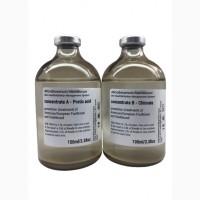
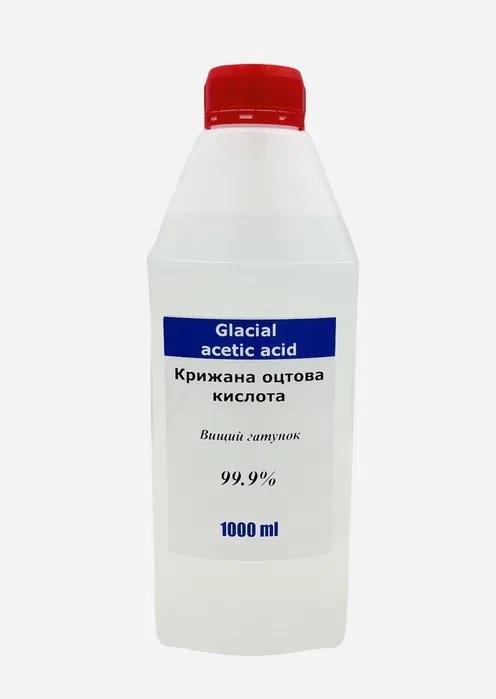
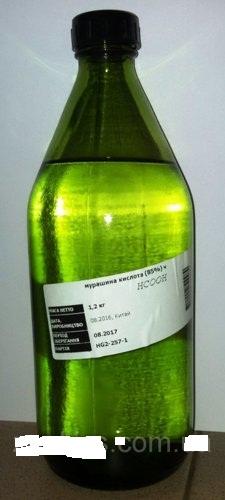
Vinegar, formic acid, Kyiv
Price278 UAH.
Region:
Kyiv
(Lybidska Street-1A)
Updated:
Use of formic acid
Why should you buy formic acid? In different spheres, it is called upon to fulfill one or another list of tasks. Here is the main thing you need to know about this:
• food industry. Here, the substance indicated asadditive to food under code E236 inhibits the development of mold fungi and resists pathogenic microbes. Due to this ability, it is very important for canning fish and vegetables. It is also introduced into soft drinks. And for the purpose of disinfection, it is used for disinfecting barrels containing beer and wine;
• medicine. It is part of various medicines. It performs the role of antiseptic, pain reliever, effectively cleanses and fights inflammation. Its presence in skin treatment products and the implementation of certain preventive measures in this perspective is not uncommon. Disinfection of equipment in pharmaceuticals is also appropriate.(//tractor-service.com)
• agriculture. Technical formic acid is used in silage (forage preparation). As one of the most effective preservative products, it significantly prolongs the shelf life of silage mass (slows down rotting and decay). It is especially valuable for beekeeping. Excellent fight against parasitic varroa mites, capable of destroying entire beesbee colonies;
• leather production. Animal skins are often treated with formic acid. During tanning, it helps to soften the skin and gives it elasticity. And when painting, thanks to her, it is possible to achieve evenness of fixation of coloring components;
• laboratory practice. Serves as a solvent in a number of chemicals. reactions It is used in the creation of carbon monoxide.
Is formic acid safe?
When ordering formic acid wholesale or retail, clients often ask: is there any danger in its use? Right away, we want to emphasize the fact that everything depends on the concentration of the substance. If the concentration is high, burns of the skin, accompanied by pain, are not excluded. Harm to mucous membranes and respiratory organs is also possible. Ingestion similarly entails a harmful effect on the body. A safe concentration is up to 10%. When this threshold is exceeded, mild irritation is replaced by strong corrosion
Why should you buy formic acid? In different spheres, it is called upon to fulfill one or another list of tasks. Here is the main thing you need to know about this:
• food industry. Here, the substance indicated asadditive to food under code E236 inhibits the development of mold fungi and resists pathogenic microbes. Due to this ability, it is very important for canning fish and vegetables. It is also introduced into soft drinks. And for the purpose of disinfection, it is used for disinfecting barrels containing beer and wine;
• medicine. It is part of various medicines. It performs the role of antiseptic, pain reliever, effectively cleanses and fights inflammation. Its presence in skin treatment products and the implementation of certain preventive measures in this perspective is not uncommon. Disinfection of equipment in pharmaceuticals is also appropriate.(//tractor-service.com)
• agriculture. Technical formic acid is used in silage (forage preparation). As one of the most effective preservative products, it significantly prolongs the shelf life of silage mass (slows down rotting and decay). It is especially valuable for beekeeping. Excellent fight against parasitic varroa mites, capable of destroying entire beesbee colonies;
• leather production. Animal skins are often treated with formic acid. During tanning, it helps to soften the skin and gives it elasticity. And when painting, thanks to her, it is possible to achieve evenness of fixation of coloring components;
• laboratory practice. Serves as a solvent in a number of chemicals. reactions It is used in the creation of carbon monoxide.
Is formic acid safe?
When ordering formic acid wholesale or retail, clients often ask: is there any danger in its use? Right away, we want to emphasize the fact that everything depends on the concentration of the substance. If the concentration is high, burns of the skin, accompanied by pain, are not excluded. Harm to mucous membranes and respiratory organs is also possible. Ingestion similarly entails a harmful effect on the body. A safe concentration is up to 10%. When this threshold is exceeded, mild irritation is replaced by strong corrosion
|
Shop, contacts | |
Yaremenko Andrii Mykolayovych / reviews, info. / evaluation of activity | |
|
Phone:
+380xxxxxx
show
| |
| Skype: asparagus_19 | |
| http://www.stroy.erinok.com | |
All user ads ~33 | |
Ad ID: #1319188
(added by a registered user, registration date: 09-07-2019)
Added/Updated: 12-10-2025 11:59 (current, until: 10-12-2026)
Permanent Ad Address:
Impressions / views for today: ?, total: ?
Similar ads
There are many interesting ones among them...