Sell / buy
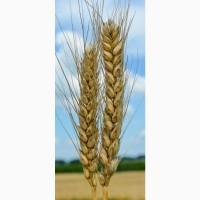
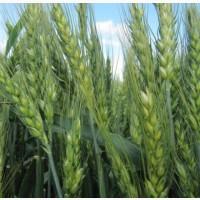
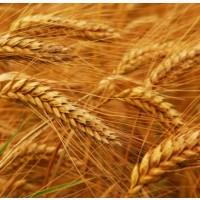
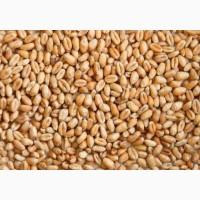
Winter wheat seeds SHESTOPALIVKA Elita 2025, Poltava region.
Price15,000 UAH.
Region:all of Ukraine,
Poltava region.
Updated:
Purpose grains: Seed material
Quantity: 100 tons
Purpose of grain: Seed material
Quantity: 100 tons
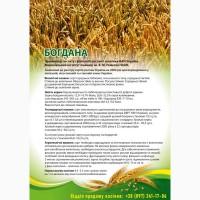
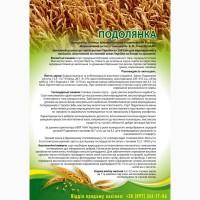
Approbation signs: a variety of erythrospermum. Vegetation period - 260 - 270 days. The period of vernalization is 19 days (two-handed).
Root: the root system is powerful, makes excellent use of soil fertility
Stem: Plant height 80-90 cm. Weakly reacts to the continental climate.
Grain quality:
- high mass of 1000 grains: 45-55 grams.
- strong wheat
- high-quality grain (due to high production reliability) with an increased gluten content of 30-33% and protein 14.5-16%.
- general evaluation of bread: 9 points.
Features of the Shestopalovka variety:
- the first! fifth generation variety (with a physiologically dual nature).
- a cosmopolitan variety suitable for all regions of Ukraine.
- the leader of production crops in Ukraine as of 2016
- obtained yields from 102 to 111 t/ha on production crops with an area of 100 or more hectares in Zaporozhye, Kirovohrad, Poltava, Sumy, Cherkassy and other regions of Ukraine.
- in the extreme year of 2003, yield: 28.7 t/ha with the complete destruction of the standard.
- extremely successful combination of the highest production reliability, excellent grain quality with record productivity.(//tractor-service.com)
- ultra-early earing, ultra-early ripening.
- seeding rate: 4-5 million germinatedseeds per 1 hectare (180-220 kg) depending on moisture availability and sowing time.
5th generation variety Shestopalovka :
- resistant to soil and air drought.
- has increased heat resistance and winter resistance.
- resistant to lying down, shedding and sprouting on the root
- has complex resistance to all existing diseases of winter wheat.
Features of the variety (5th generation) with double physiology of development:
1. The spring nature of the development of the Shestopalovka variety makes it possible in autumn, when sowing, to develop faster than other winter varieties and accumulate a high percentage of sugars, and the winter nature of the development of the Shestopalovka variety, with a short autumn day, does not allow the variety to overgrow in the fall, it goes into the tube and consumes sugar and soil nutrition, from the fall, ensuring the economy of nutrients and high winter hardiness. Therefore, the variety does not require early sowing.
2. The ability of the variety to photoperiodism provides deep anabiosis throughout the winter. The variety does not outgrow from autumn, is not provoked by high temperatures in the winter period, and only from March 22 it comes out of dormancy and again develops quickly like spring wheat, overtaking other winter varieties in development, and in the conditions of Odesa, it is culled on May 5-10. The variety provides for the May pouring of grain, avoids the summer soil and air drought.
3. The variety has a short spring period of 19 days and high winter hardiness, so it can be sown from the optimal autumn time to the critical April time.
4. Ultra-early flowering and precocity during ripening lengthens the period of grain pouring, which allows the variety to form large and high-qualitystrong grain wheat, with a record yield.
5. It reacts weakly to predecessors, which makes it universal and convenient to use.
6. It has a large grain, is perfectly milked and forms 3–5 grains in a spikelet, which does not crumble even when the stem is stopped.
7. The main success of high yields lies in timely, powerful fertilization with nitrogen at the beginning of spring vegetation.
Authors of the variety: Artyushenko P.N., Artyushenko N.P. (FH "Bor")
Quantity: 100 tons
Approbation signs: a variety of erythrospermum. Vegetation period - 260 - 270 days. The period of vernalization is 19 days (two-handed).
Root: the root system is powerful, makes excellent use of soil fertility
Stem: Plant height 80-90 cm. Weakly reacts to the continental climate.
Grain quality:
- high mass of 1000 grains: 45-55 grams.
- strong wheat
- high-quality grain (due to high production reliability) with an increased gluten content of 30-33% and protein 14.5-16%.
- general evaluation of bread: 9 points.
Features of the Shestopalovka variety:
- the first! fifth generation variety (with a physiologically dual nature).
- a cosmopolitan variety suitable for all regions of Ukraine.
- the leader of production crops in Ukraine as of 2016
- obtained yields from 102 to 111 t/ha on production crops with an area of 100 or more hectares in Zaporozhye, Kirovohrad, Poltava, Sumy, Cherkassy and other regions of Ukraine.
- in the extreme year of 2003, yield: 28.7 t/ha with the complete destruction of the standard.
- extremely successful combination of the highest production reliability, excellent grain quality with record productivity.(//tractor-service.com)
- ultra-early earing, ultra-early ripening.
- seeding rate: 4-5 million germinatedseeds per 1 hectare (180-220 kg) depending on moisture availability and sowing time.
5th generation variety Shestopalovka :
- resistant to soil and air drought.
- has increased heat resistance and winter resistance.
- resistant to lying down, shedding and sprouting on the root
- has complex resistance to all existing diseases of winter wheat.
Features of the variety (5th generation) with double physiology of development:
1. The spring nature of the development of the Shestopalovka variety makes it possible in autumn, when sowing, to develop faster than other winter varieties and accumulate a high percentage of sugars, and the winter nature of the development of the Shestopalovka variety, with a short autumn day, does not allow the variety to overgrow in the fall, it goes into the tube and consumes sugar and soil nutrition, from the fall, ensuring the economy of nutrients and high winter hardiness. Therefore, the variety does not require early sowing.
2. The ability of the variety to photoperiodism provides deep anabiosis throughout the winter. The variety does not outgrow from autumn, is not provoked by high temperatures in the winter period, and only from March 22 it comes out of dormancy and again develops quickly like spring wheat, overtaking other winter varieties in development, and in the conditions of Odesa, it is culled on May 5-10. The variety provides for the May pouring of grain, avoids the summer soil and air drought.
3. The variety has a short spring period of 19 days and high winter hardiness, so it can be sown from the optimal autumn time to the critical April time.
4. Ultra-early flowering and precocity during ripening lengthens the period of grain pouring, which allows the variety to form large and high-qualitystrong grain wheat, with a record yield.
5. It reacts weakly to predecessors, which makes it universal and convenient to use.
6. It has a large grain, is perfectly milked and forms 3–5 grains in a spikelet, which does not crumble even when the stem is stopped.
7. The main success of high yields lies in timely, powerful fertilization with nitrogen at the beginning of spring vegetation.
Authors of the variety: Artyushenko P.N., Artyushenko N.P. (FH "Bor")
|
Author, contacts | |
Ihor / feedback, info. / activity evaluation | |
|
Phone:
(050xxxxxx
show
| |
Ad ID: #1202724
(added by a registered user, registration date: 07-21-2022)
Added / Updated: 12-19-2025 15:34 (current, until: 19-12-2026)
Permanent Ad Address:
Impressions / views for today: ?, total: ?