/ Fertilizers and plant protection products / Nitrogen fertilizers / Sulfate of ammonium kristalicheskiy (fertilizer)
Sell / buy
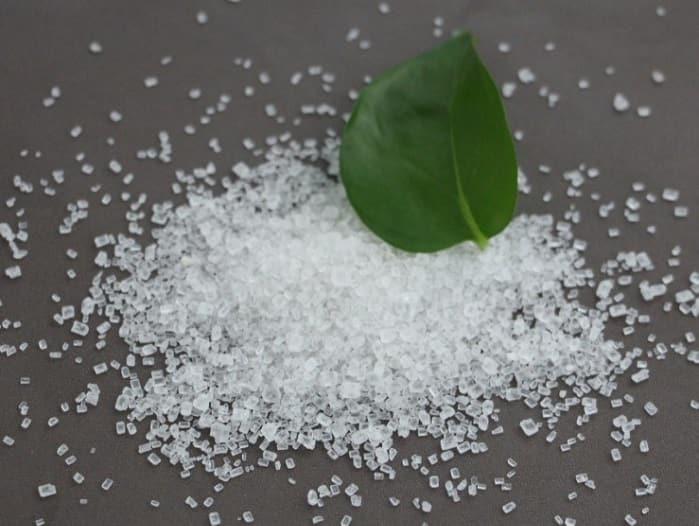
Ammonium sulfate crystal (fertilizer), Dnipropetrovsk region.
Region:all of Ukraine,
Dnipropetrovsk region.
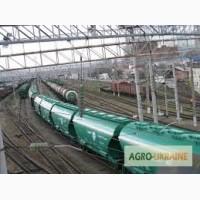
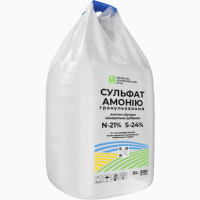
Packing bags, big bags, machine and wagon norms
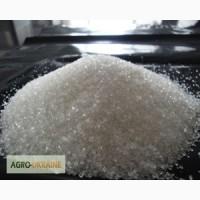
Ammonium synthetic sulfate (ammonium sulfuric acid) (NH4)2SO4 is a nitrogen-sulfur mineral fertilizer GOST-9027-82. Ammonium sulfate contains 21% nitrogen and 24% sulfur. It is a chemically neutral crystalline salt of white color, well soluble in water. Its hygroscopicity is weak, therefore, during long-term storage, it does not stick and retains its fluidity. It is difficult to overestimate the importance of nitrogen in the life of plants - it occupies the first place among mineral compounds, so let's focus on the importance of sulfur in the life of plants. Sulfur is the most important element in the nutrition of agricultural crops, like nitrogen, it is a part of proteins and amino acids. According to its physiological role in plant nutrition, sulfur should be ranked third after nitrogen and phosphorus.
A significant part of sulfur in plants is in the form of sulfuric acid salts, so ammonium sulfate is an excellent source of sulfur nutrition. Ammonium contained in ammonium sulfate is readily available to plants, is not very mobile and is not washed out of the soil, which makes it possible to use it widely as a basic fertilizer, as well as a spring top dressing.
The low content of sulfur in soils can be a significant factor limiting the effectiveness of nitrogen, phosphorus and potash fertilizers.
Compared to other crops, rapeseed consumes a large amount of sulfur. Particularly good results are provided by the introduction of ammonium sulfate under cereals, potatoes and vegetables, incl. sugar beet.
Most of the farms receive noticeable increases in productivity and quality, but few manage to achieve the maximum protein content in wheat grain.
Accumulated international experience, including the recommendations of the All-Russian Research Institute of Fertilizer and Agro-Soil Research named after D.N. Pryanishnikova, a deep analysis of scientific research work and production practice of the use of fertilizers allows to talk about additional hidden reserves of grain quality improvement. According to a number of Russian and foreign scientists, grain crops often show signs of sulfur deficiency, which in production conditions are interpreted as nitrogen deficiency.
Practicing agronomists and economists should remember that when usingammonium sulfate at the same time the lack of nitrogen and sulfur in plant nutrition is eliminated, which significantly improves the quality of cultivated products.
On chernozems, the positive effect of ammonium sulfate on the yield of agricultural crops in some cases even surpasses the effect of other forms of nitrogen fertilizers. Taking into account the fact that the retail price of ammonium sulfate is much lower thanammonium nitrate and thereforemore urea, the advantage of the economic efficiency of using ammonium sulfate is obvious.
Of all existing forms of sulfur fertilizers, synthetic ammonium sulfate has the highest sulfur content. Therefore, in the foreseeable future, the most realistic way to replenish sulfur reserves in soils is the use of this fertilizer.
Times, doses and methods of application.
Ammonium sulfate is a highly effective nitrogen fertilizer, the use of which ensures high agronomic and economic efficiency in the cultivation of the main agricultural crops.
Ammonium sulfate is primarily recommended for the following cultures:
· sulfur-demanding (rapeseed, cabbage and other cruciferous crops, buckwheat, winter and spring wheat);
· preferring the ammonium form of nitrate nitrogen (potatoes, sugar beets, fodder crops);
· better growing with a slightly acidic reaction of the soil solution (potatoes, flax, tea, sunflower, carrots, tomatoes, sorrel, parsley, turnips, radishes, pumpkins, zucchini, radishes, gooseberries, raspberries).
It is best to apply ammonium sulfate in the spring as the main application for pre-sowing cultivation, which makes it possible to evenly distribute the fertilizer over the field. Fertilizing agricultural crops with ammonium sulfate is also effective. At the same time, careful work is needed to adjust the machines for applying fertilizers, as well as directly when fertilizing. In addition, ammonium sulfate can be added to a solution of liquid nitrogen fertilizers.
(//tractor-service.com)
In the fertilization system, the use of ammonium sulfate is recommended:
· when growing potatoes: 80-100 kg/ha of ammonium sulfate d.v. (381-476 kg/ha in physical weight) for pre-planting cultivation on the background of organic, phosphorus and potash fertilizers;
· when growing sugar beets: 100-120 kg/ha of ammonium sulfate d.v. (476-571 kg/ha in physical weight) for pre-sowing cultivation on the background of organic, phosphorus and potash fertilizers + 30-50 kg/ha of ammonium sulfate d.v. (143-238 kg/ha in physical weight) in the stage of 4-6 true leaves under the first inter-row loosening;
· when cultivating spring rapeseed: 60-80 kg/ha of ammonium sulfate d.v. (286-381 kg/ha in physical weight) for pre-sowing cultivation in combination with the use of phosphorus and potassium fertilizers + 30-40 kg/ha of ammonium sulfate (143-190 kg/ha in physical weight) at the stage of budding + 10 kg/ha in physical weight in the form of joint non-root fertilization with trace elements (boron, copper, manganese) at the end budding;
· when cultivating winter rapeseed: 60-80 kg/ha of ammonium sulfate d.v. (286-381 kg/ha in physical weight) in the spring at the beginning of the resumption of vegetation + 30-40 kg/ha (143-190 kg/ha in physical weight) at the stage of budding + 10 kg/ha in physical weight in the form of joint non-root fertilization with trace elements (boron, copper, manganese) at the end of budding;
· when growing buckwheat: 60-80 kg/ha of ammonium sulfate d.v. (286-381 kg/ha in physical weight) for pre-sowing cultivation in combination with phosphorus and potassium fertilizers.
· for fertilizing winter grain crops: 60-80 kg/ha of ammonium sulfate d.v. (286-381 kg/ha in physical weight) in the spring at the beginning of the resumption of vegetation + 20-40 kg/ha of ammonium sulfate d.v. (95-191 kg/ha in physical weight) in the stage of the 1st node;
· for early spring feeding of winter grain crops: N60-70 in the form of KAS + 15 kg/ha of ammonium sulfate in solution;
· for late non-root fertilization of winter and spring wheat at the beginning of earing – 10 kg/ha of ammonium sulfate d.v. (48 kg/ha in physical weight) or 10 kg/ha of ammonium sulfate in physical weight in the form of joint non-root fertilization with copper and manganese in the stage of the last leaf;
· when cultivating fodder root crops: fodder beets - 100-120 kg/ha of ammonium sulfate d.v. (476-571 c/ha in physical weight) for pre-sowing cultivation on the background of organic, phosphorus and potash fertilizers + 30-60 kg/ha of ammonium sulfate d.v. (143-286 kg/ha in physical weight) in the stage of 4-8 true leaves under the first inter-row loosening; Fodder carrots, turnips, turnips - 80-90 kg/ha of ammonium sulfate d.v. (381-429 kg/ha in physical weight) for pre-sowing cultivation on the background of organic, phosphorus and potash fertilizers + 20-40 kg/ha of ammonium sulfate d.v. (95-191 kg/ha in physical weight) for the first inter-row loosening;
· when cultivating fodder cruciferous crops (turnip, mustard, oil radish): 60-80 kg/ha of ammonium sulfate d.v. (286-381 kg/ha in physical weight) for pre-sowing cultivation in combination with phosphorus and potassium fertilizers;
· on hayfields and pastures: 60-80 kg/ha of ammonium sulfate d.v. (286-381 kg/ha in physical weight) in the spring at the beginning of the resumption of vegetation and after each mowing;
· when growing corn: 100-120 kg/ha of ammonium sulfate d.v. (476-571 t/ha in physical weight) for pre-sowing cultivation on the background of organic, phosphorus and potash fertilizers + 30-50 kg/ha of ammonium sulfate d.v. (143-238 kg/ha in physical weight) in the stage of 6-8 true leaves under interrow loosening;
· when growing spring grain crops (wheat, triticale, barley, oats, millet): 60-80 kg/ha of ammonium sulfate d.v. (286-381 kg/ha in physical weight) for pre-sowing cultivation in combination with phosphorus and potassium fertilizers;
· when growing annual grasses: leguminous-cereal grass mixtures - 50-60 kg/ha of ammonium sulfate d.v. (238-286 kg/ha in physical weight), cereal grasses - 70-90 kg/ha of ammonium sulfate d.v. (333-429 kg/ha in physical weight) for pre-sowing cultivation on the background of phosphorus and potassium fertilizers;
· when growing perennial grasses: leguminous-cereal grass mixtures - 50-60 kg/ha of ammonium sulfate d.v. (238-286 kg/ha in physical weight), cereal grasses - 60-70 kg/ha of ammonium sulfate d.v. (286-333 kg/ha in physical weight) in the spring at the beginning of the resumption of vegetation and after each mowing;
· in vegetable growing (in physical weight): white cabbage - 60 g/m2, cauliflower - 45 g/m2, broccoli - 45 g/m2, red cabbage - 75 g/m2, Brussels sprouts - 60 g/m2, kohlrabi - 40 g/m2, radish - 30 g/m2, radish - 35 g/m2, turnip - 25 g/m2, sorrel - 40 g/m2; carrots - 30-40 g/m2, parsley - 30-40 g/m2, pumpkin and zucchini - 30-40 g/m2, tomatoes - 30-45 g/m2, other vegetables - 30-50 g/m2;
· in fruit growing (in physical weight): gooseberry and raspberry - 50-60 g/m2, other fruit and berry crops - 40-50 g/m2.
Ammonium synthetic sulfate (ammonium sulfuric acid) (NH4)2SO4 is a nitrogen-sulfur mineral fertilizer GOST-9027-82. Ammonium sulfate contains 21% nitrogen and 24% sulfur. It is a chemically neutral crystalline salt of white color, well soluble in water. Its hygroscopicity is weak, therefore, during long-term storage, it does not stick and retains its fluidity. It is difficult to overestimate the importance of nitrogen in the life of plants - it occupies the first place among mineral compounds, so let's focus on the importance of sulfur in the life of plants. Sulfur is the most important element in the nutrition of agricultural crops, like nitrogen, it is a part of proteins and amino acids. According to its physiological role in plant nutrition, sulfur should be ranked third after nitrogen and phosphorus.
A significant part of sulfur in plants is in the form of sulfuric acid salts, so ammonium sulfate is an excellent source of sulfur nutrition. Ammonium contained in ammonium sulfate is readily available to plants, is not very mobile and is not washed out of the soil, which makes it possible to use it widely as a basic fertilizer, as well as a spring top dressing.
The low content of sulfur in soils can be a significant factor limiting the effectiveness of nitrogen, phosphorus and potash fertilizers.
Compared to other crops, rapeseed consumes a large amount of sulfur. Particularly good results are provided by the introduction of ammonium sulfate under cereals, potatoes and vegetables, incl. sugar beet.
Most of the farms receive noticeable increases in productivity and quality, but few manage to achieve the maximum protein content in wheat grain.
Accumulated international experience, including the recommendations of the All-Russian Research Institute of Fertilizer and Agro-Soil Research named after D.N. Pryanishnikova, a deep analysis of scientific research work and production practice of the use of fertilizers allows to talk about additional hidden reserves of grain quality improvement. According to a number of Russian and foreign scientists, grain crops often show signs of sulfur deficiency, which in production conditions are interpreted as nitrogen deficiency.
Practicing agronomists and economists should remember that when usingammonium sulfate at the same time the lack of nitrogen and sulfur in plant nutrition is eliminated, which significantly improves the quality of cultivated products.
On chernozems, the positive effect of ammonium sulfate on the yield of agricultural crops in some cases even surpasses the effect of other forms of nitrogen fertilizers. Taking into account the fact that the retail price of ammonium sulfate is much lower thanammonium nitrate and thereforemore urea, the advantage of the economic efficiency of using ammonium sulfate is obvious.
Of all existing forms of sulfur fertilizers, synthetic ammonium sulfate has the highest sulfur content. Therefore, in the foreseeable future, the most realistic way to replenish sulfur reserves in soils is the use of this fertilizer.
Times, doses and methods of application.
Ammonium sulfate is a highly effective nitrogen fertilizer, the use of which ensures high agronomic and economic efficiency in the cultivation of the main agricultural crops.
Ammonium sulfate is primarily recommended for the following cultures:
· sulfur-demanding (rapeseed, cabbage and other cruciferous crops, buckwheat, winter and spring wheat);
· preferring the ammonium form of nitrate nitrogen (potatoes, sugar beets, fodder crops);
· better growing with a slightly acidic reaction of the soil solution (potatoes, flax, tea, sunflower, carrots, tomatoes, sorrel, parsley, turnips, radishes, pumpkins, zucchini, radishes, gooseberries, raspberries).
It is best to apply ammonium sulfate in the spring as the main application for pre-sowing cultivation, which makes it possible to evenly distribute the fertilizer over the field. Fertilizing agricultural crops with ammonium sulfate is also effective. At the same time, careful work is needed to adjust the machines for applying fertilizers, as well as directly when fertilizing. In addition, ammonium sulfate can be added to a solution of liquid nitrogen fertilizers.
(//tractor-service.com)
In the fertilization system, the use of ammonium sulfate is recommended:
· when growing potatoes: 80-100 kg/ha of ammonium sulfate d.v. (381-476 kg/ha in physical weight) for pre-planting cultivation on the background of organic, phosphorus and potash fertilizers;
· when growing sugar beets: 100-120 kg/ha of ammonium sulfate d.v. (476-571 kg/ha in physical weight) for pre-sowing cultivation on the background of organic, phosphorus and potash fertilizers + 30-50 kg/ha of ammonium sulfate d.v. (143-238 kg/ha in physical weight) in the stage of 4-6 true leaves under the first inter-row loosening;
· when cultivating spring rapeseed: 60-80 kg/ha of ammonium sulfate d.v. (286-381 kg/ha in physical weight) for pre-sowing cultivation in combination with the use of phosphorus and potassium fertilizers + 30-40 kg/ha of ammonium sulfate (143-190 kg/ha in physical weight) at the stage of budding + 10 kg/ha in physical weight in the form of joint non-root fertilization with trace elements (boron, copper, manganese) at the end budding;
· when cultivating winter rapeseed: 60-80 kg/ha of ammonium sulfate d.v. (286-381 kg/ha in physical weight) in the spring at the beginning of the resumption of vegetation + 30-40 kg/ha (143-190 kg/ha in physical weight) at the stage of budding + 10 kg/ha in physical weight in the form of joint non-root fertilization with trace elements (boron, copper, manganese) at the end of budding;
· when growing buckwheat: 60-80 kg/ha of ammonium sulfate d.v. (286-381 kg/ha in physical weight) for pre-sowing cultivation in combination with phosphorus and potassium fertilizers.
· for fertilizing winter grain crops: 60-80 kg/ha of ammonium sulfate d.v. (286-381 kg/ha in physical weight) in the spring at the beginning of the resumption of vegetation + 20-40 kg/ha of ammonium sulfate d.v. (95-191 kg/ha in physical weight) in the stage of the 1st node;
· for early spring feeding of winter grain crops: N60-70 in the form of KAS + 15 kg/ha of ammonium sulfate in solution;
· for late non-root fertilization of winter and spring wheat at the beginning of earing – 10 kg/ha of ammonium sulfate d.v. (48 kg/ha in physical weight) or 10 kg/ha of ammonium sulfate in physical weight in the form of joint non-root fertilization with copper and manganese in the stage of the last leaf;
· when cultivating fodder root crops: fodder beets - 100-120 kg/ha of ammonium sulfate d.v. (476-571 c/ha in physical weight) for pre-sowing cultivation on the background of organic, phosphorus and potash fertilizers + 30-60 kg/ha of ammonium sulfate d.v. (143-286 kg/ha in physical weight) in the stage of 4-8 true leaves under the first inter-row loosening; Fodder carrots, turnips, turnips - 80-90 kg/ha of ammonium sulfate d.v. (381-429 kg/ha in physical weight) for pre-sowing cultivation on the background of organic, phosphorus and potash fertilizers + 20-40 kg/ha of ammonium sulfate d.v. (95-191 kg/ha in physical weight) for the first inter-row loosening;
· when cultivating fodder cruciferous crops (turnip, mustard, oil radish): 60-80 kg/ha of ammonium sulfate d.v. (286-381 kg/ha in physical weight) for pre-sowing cultivation in combination with phosphorus and potassium fertilizers;
· on hayfields and pastures: 60-80 kg/ha of ammonium sulfate d.v. (286-381 kg/ha in physical weight) in the spring at the beginning of the resumption of vegetation and after each mowing;
· when growing corn: 100-120 kg/ha of ammonium sulfate d.v. (476-571 t/ha in physical weight) for pre-sowing cultivation on the background of organic, phosphorus and potash fertilizers + 30-50 kg/ha of ammonium sulfate d.v. (143-238 kg/ha in physical weight) in the stage of 6-8 true leaves under interrow loosening;
· when growing spring grain crops (wheat, triticale, barley, oats, millet): 60-80 kg/ha of ammonium sulfate d.v. (286-381 kg/ha in physical weight) for pre-sowing cultivation in combination with phosphorus and potassium fertilizers;
· when growing annual grasses: leguminous-cereal grass mixtures - 50-60 kg/ha of ammonium sulfate d.v. (238-286 kg/ha in physical weight), cereal grasses - 70-90 kg/ha of ammonium sulfate d.v. (333-429 kg/ha in physical weight) for pre-sowing cultivation on the background of phosphorus and potassium fertilizers;
· when growing perennial grasses: leguminous-cereal grass mixtures - 50-60 kg/ha of ammonium sulfate d.v. (238-286 kg/ha in physical weight), cereal grasses - 60-70 kg/ha of ammonium sulfate d.v. (286-333 kg/ha in physical weight) in the spring at the beginning of the resumption of vegetation and after each mowing;
· in vegetable growing (in physical weight): white cabbage - 60 g/m2, cauliflower - 45 g/m2, broccoli - 45 g/m2, red cabbage - 75 g/m2, Brussels sprouts - 60 g/m2, kohlrabi - 40 g/m2, radish - 30 g/m2, radish - 35 g/m2, turnip - 25 g/m2, sorrel - 40 g/m2; carrots - 30-40 g/m2, parsley - 30-40 g/m2, pumpkin and zucchini - 30-40 g/m2, tomatoes - 30-45 g/m2, other vegetables - 30-50 g/m2;
· in fruit growing (in physical weight): gooseberry and raspberry - 50-60 g/m2, other fruit and berry crops - 40-50 g/m2.
Ad ID: #1177978
(added by a registered user)
Permanent Ad Address:
Impressions / views for today: ?, total: ?
Similar recent ads
There are many interesting ones among them...