/ Agricultural machinery, equipment, inventory / Fertilizer (machinery) / Liquid spreaders fertilizers / Unit for injection application of liquid fertilizers vulkan...
Sell / buy
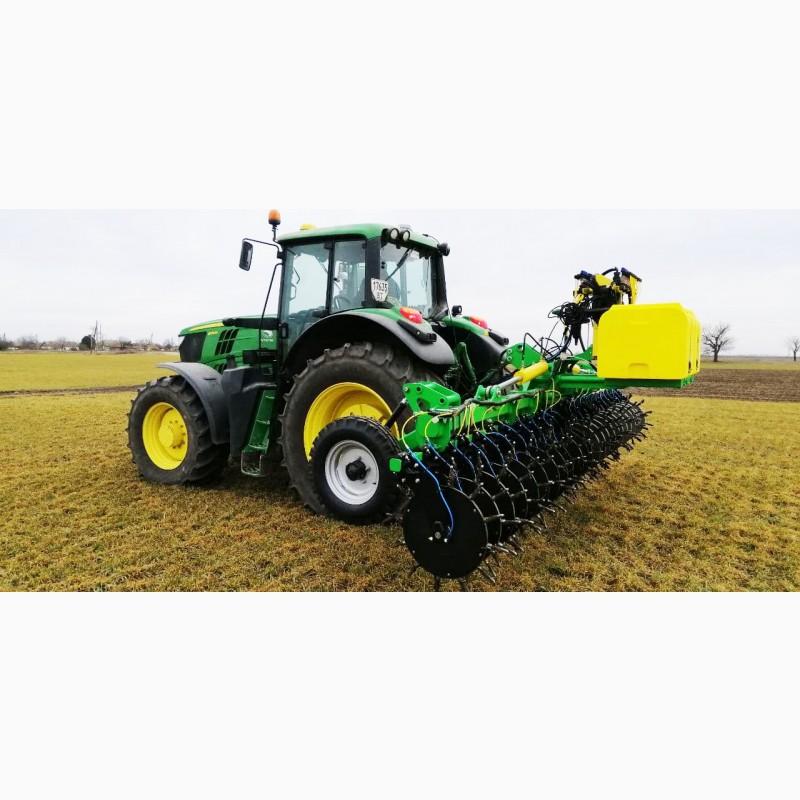
Vulkan 6 liquid fertilizer injection unit (mounted), Vinnytsia region.
Region:all of Ukraine,
Vinnytsia region.
(Vinnytsia)
*The price is without VAT and DISCOUNT (additional 25%-40% of compensation)
VULKAN liquid fertilizer injection unit
Plants are supplied with nitrogen fertilizers at the expense of ammonia nitrogen fertilizer reserves. We are talking mainly about liquid fertilizers applied to the soil using a fertilizer application machine with injectorwheels, which allows the plant to additionally consume ammonium.
Agriculture does not stand still - developments and research offer a new type, process and perspective on the application of fertilizers. But why give up NITRATE and why is it better to use AMMONIA? Ammonium, unlike nitrate, is a sorbent, it is deposited in the soil and is not washed away. Ammonium reserves inside have an inhibitory effect on plant roots and microorganisms. Therefore, it is relatively stable, so that the tips of the roots assimilate the reserves of fertilizer from the outside slowly or as needed. The effect, unlike nitrate fertilizers, is long-lasting, the plant's need for nitrogen fertilizer can usually be satisfied thanks to ammonium reserves during the entire assimilation period.
Important in this regard is the optimal time of application; the time interval in this case is less than when applying nitrate fertilizer. Targeted use of straw, as well as fixation of predecessors and subsequent crops, are important prerequisites for abandoning nitrate fertilizer. Thanks to ammonium reserves, the plant's need for nitrogen fertilizer can be satisfied during the entire assimilation period.
Video about the work of VULKAN
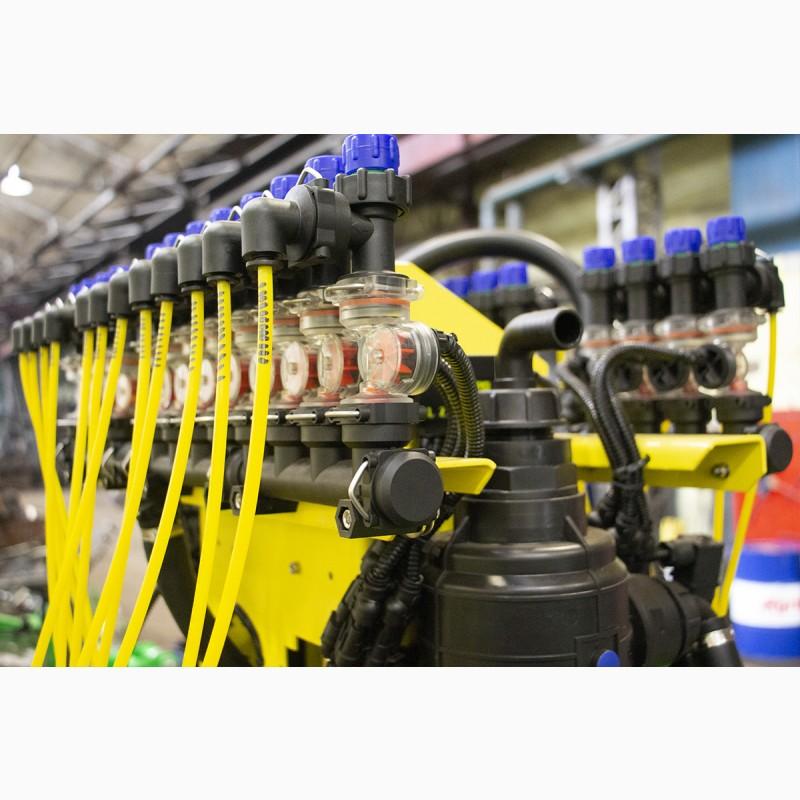
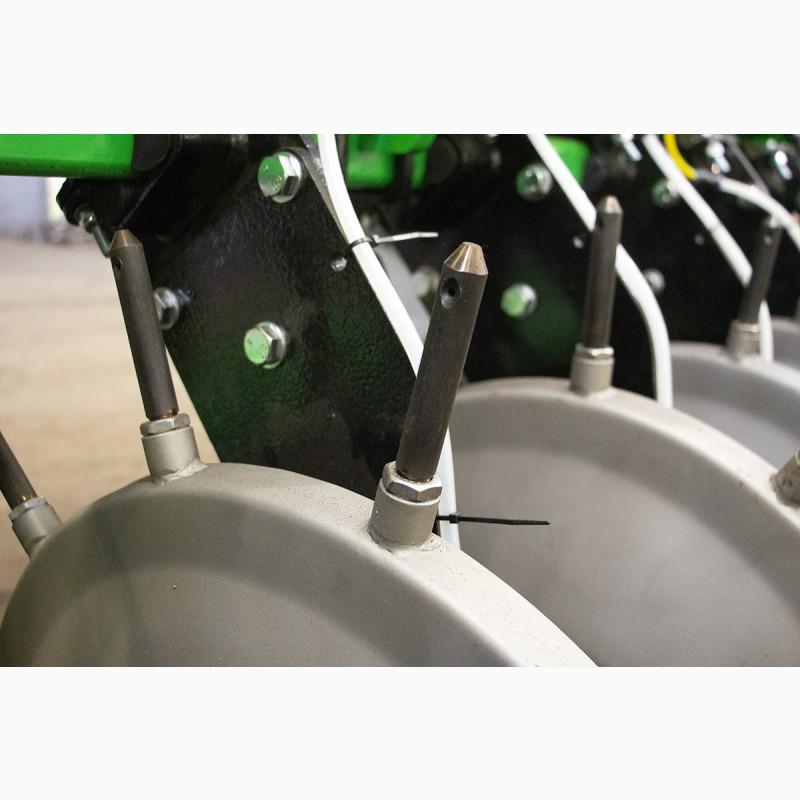
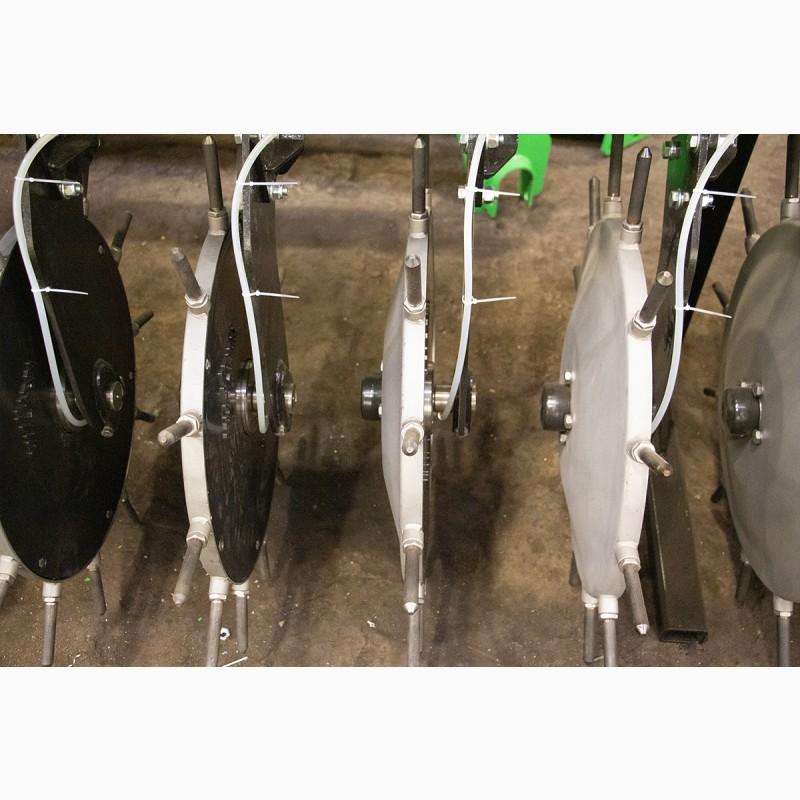
Details of the working body of the VULKAN liquid fertilizer injection unit are made of high-quality stainless steel, which allows it to work freely in conditions of contact with an aggressive environment. It is equipped with 12 applicators (needles) made of hard alloy, which inject fertilizers every 13 cm. Thanks to rubber shock absorbers, in'ejection wheels repeat the topography of the field, so fertilizers penetrate evenly in every part of the field. Three bearings in the hub of the working body guarantee long-term operation of the unit. Unlike analogues, the injection working body, manufactured by VELES AGRO, has a protective plastic casing to prevent damage to the pressure lines when working on such predecessors as sunflower,corn, rapeseed, etc.
Advantages of liquid fertilizer injection technology:
1. High efficiency of application in any climatic zones, in particular arid ones.
• Fertilizer injections made by the VULKAN method and device require less than 5% of the volume of moisture in the upper soil layer. Relatively small plant roots absorb ammonium, regardless of the water content in the soil. As a result, drought resistance is improved and the root system is more developed.
• Liquid fertilizers do not need additional moisture for dissolution, so they are immediately available to the plant after application.
2. More uniform application and precisely dosed distribution over the area.
• Special injection wheels are made of stainless steel. They are equipped with 12 spokes (needles) made of hard alloy, which inject nitrogen every 13 cm. The distance between the wheels is 25 cm, that is, 31 injections of equal portions are carried out per 1 m².
• Thanks to rubber shock absorbers, the injection wheels follow the topography of the field, so fertilizers penetrate evenly in every part of the field.
3. Quick penetration into the soil
(//tractor-service.com)
• This technology of applying liquid fertilizers does not require additional processing in the field, since the dose of fertilizer is immediately placed at a depth.
• Plant residues do not prevent the penetration of fertilizers into the soil and do not take part of nitrogen.
• High adaptability to mini-till, no-till, strip-till, verti-till technologies.
4. Duration of action and quality of nutrition at the start.
• One application is enough to provide plants with nitrogen fertilizer throughout the growing season.
• The applied liquid fertilizer does not evaporate and remains longer in the soil. Ammonium reserves are absorbed by the soil substance, and therefore they behave relatively stably. Leaching or gaseous losses, as occurs in the case of nitrates, are absent.
• Due to the location of stockpiles, ammonium nitrogen is more available to crops than to germinating weeds, at least in the early stages of development. In such a scheme, this happens without harming soil organisms.
5. Absence of plant burns caused by application rate, phase, vegetation feature, as well as weather conditions
• In the process of application, the fertilizer does not come into contact with the surface of the plant, but immediately reaches its roots.
• Unlike nitrate fertilizers, the principle of counterflow of nutrient solutions from the roots to the leaves and vice versa occurs in the reserves of ammonium fertilizer, which has a positive effect on plant development.
6. Unveiling the full potential of soil and plants
• Ammonium absorption by plant roots is controlled, depending on the current productivity of leaf mass. And the mutually high need for nutrients in roots and leaves leads to intensive growth, without excessive deposition of nitrates in leaves and roots. Consequently, plants become less susceptible to diseases, and nitrate residues in products are much lower.
• Nutrient residues such as straw with VULKAN last longer and remain available to earthworms as a food source. Thus, the reproduction of microorganisms has a positive effect on the soil structure and precipitation infiltration. Therefore, to promote the exchange of organic matter, nitrate fertilizers do not fit into the VULKAN concept.
7. Cost optimization and a high level of profitability.
• Reduction of the total number of passes and no blockage — lower fuel costs.
• It is possible to use cheaper fertilizers than traditional mineral fertilizers. For example: instead of adding ammonium nitrate in VULKAN technology, you can use ammonia water, which is 30-40% cheaper per unit of active substance.
• Reduction of fertilizer application rates, as there are no losses due to evaporation and leaching.
VULKAN liquid fertilizer injection unit
Plants are supplied with nitrogen fertilizers at the expense of ammonia nitrogen fertilizer reserves. We are talking mainly about liquid fertilizers applied to the soil using a fertilizer application machine with injectorwheels, which allows the plant to additionally consume ammonium.
Agriculture does not stand still - developments and research offer a new type, process and perspective on the application of fertilizers. But why give up NITRATE and why is it better to use AMMONIA? Ammonium, unlike nitrate, is a sorbent, it is deposited in the soil and is not washed away. Ammonium reserves inside have an inhibitory effect on plant roots and microorganisms. Therefore, it is relatively stable, so that the tips of the roots assimilate the reserves of fertilizer from the outside slowly or as needed. The effect, unlike nitrate fertilizers, is long-lasting, the plant's need for nitrogen fertilizer can usually be satisfied thanks to ammonium reserves during the entire assimilation period.
Important in this regard is the optimal time of application; the time interval in this case is less than when applying nitrate fertilizer. Targeted use of straw, as well as fixation of predecessors and subsequent crops, are important prerequisites for abandoning nitrate fertilizer. Thanks to ammonium reserves, the plant's need for nitrogen fertilizer can be satisfied during the entire assimilation period.
Video about the work of VULKAN
Details of the working body of the VULKAN liquid fertilizer injection unit are made of high-quality stainless steel, which allows it to work freely in conditions of contact with an aggressive environment. It is equipped with 12 applicators (needles) made of hard alloy, which inject fertilizers every 13 cm. Thanks to rubber shock absorbers, in'ejection wheels repeat the topography of the field, so fertilizers penetrate evenly in every part of the field. Three bearings in the hub of the working body guarantee long-term operation of the unit. Unlike analogues, the injection working body, manufactured by VELES AGRO, has a protective plastic casing to prevent damage to the pressure lines when working on such predecessors as sunflower,corn, rapeseed, etc.
Advantages of liquid fertilizer injection technology:
1. High efficiency of application in any climatic zones, in particular arid ones.
• Fertilizer injections made by the VULKAN method and device require less than 5% of the volume of moisture in the upper soil layer. Relatively small plant roots absorb ammonium, regardless of the water content in the soil. As a result, drought resistance is improved and the root system is more developed.
• Liquid fertilizers do not need additional moisture for dissolution, so they are immediately available to the plant after application.
2. More uniform application and precisely dosed distribution over the area.
• Special injection wheels are made of stainless steel. They are equipped with 12 spokes (needles) made of hard alloy, which inject nitrogen every 13 cm. The distance between the wheels is 25 cm, that is, 31 injections of equal portions are carried out per 1 m².
• Thanks to rubber shock absorbers, the injection wheels follow the topography of the field, so fertilizers penetrate evenly in every part of the field.
3. Quick penetration into the soil
(//tractor-service.com)
• This technology of applying liquid fertilizers does not require additional processing in the field, since the dose of fertilizer is immediately placed at a depth.
• Plant residues do not prevent the penetration of fertilizers into the soil and do not take part of nitrogen.
• High adaptability to mini-till, no-till, strip-till, verti-till technologies.
4. Duration of action and quality of nutrition at the start.
• One application is enough to provide plants with nitrogen fertilizer throughout the growing season.
• The applied liquid fertilizer does not evaporate and remains longer in the soil. Ammonium reserves are absorbed by the soil substance, and therefore they behave relatively stably. Leaching or gaseous losses, as occurs in the case of nitrates, are absent.
• Due to the location of stockpiles, ammonium nitrogen is more available to crops than to germinating weeds, at least in the early stages of development. In such a scheme, this happens without harming soil organisms.
5. Absence of plant burns caused by application rate, phase, vegetation feature, as well as weather conditions
• In the process of application, the fertilizer does not come into contact with the surface of the plant, but immediately reaches its roots.
• Unlike nitrate fertilizers, the principle of counterflow of nutrient solutions from the roots to the leaves and vice versa occurs in the reserves of ammonium fertilizer, which has a positive effect on plant development.
6. Unveiling the full potential of soil and plants
• Ammonium absorption by plant roots is controlled, depending on the current productivity of leaf mass. And the mutually high need for nutrients in roots and leaves leads to intensive growth, without excessive deposition of nitrates in leaves and roots. Consequently, plants become less susceptible to diseases, and nitrate residues in products are much lower.
• Nutrient residues such as straw with VULKAN last longer and remain available to earthworms as a food source. Thus, the reproduction of microorganisms has a positive effect on the soil structure and precipitation infiltration. Therefore, to promote the exchange of organic matter, nitrate fertilizers do not fit into the VULKAN concept.
7. Cost optimization and a high level of profitability.
• Reduction of the total number of passes and no blockage — lower fuel costs.
• It is possible to use cheaper fertilizers than traditional mineral fertilizers. For example: instead of adding ammonium nitrate in VULKAN technology, you can use ammonia water, which is 30-40% cheaper per unit of active substance.
• Reduction of fertilizer application rates, as there are no losses due to evaporation and leaching.
Ad ID: #1146912
(added registered user)
Permanent Ad Address:
Impressions / views for today: ?, total: ?
Similar ads
Total44 similar adsв рубриці «Розкидачі рідких добрив»
Вся Україна: Сільгосптехніка, обладнання, інвентар 45603 / Добрива (техника) 685 / Spreaders of liquid fertilizers 44
Vinnytsia region: Agricultural machinery, equipment, inventory 591 / Fertilizers (technique) 8 / Spreaders of liquid fertilizers 0