/ Fertilizers and plant protection products / Fungicides / Cambalio Prime 20 SC, KS - innovative system...
For sale / buy
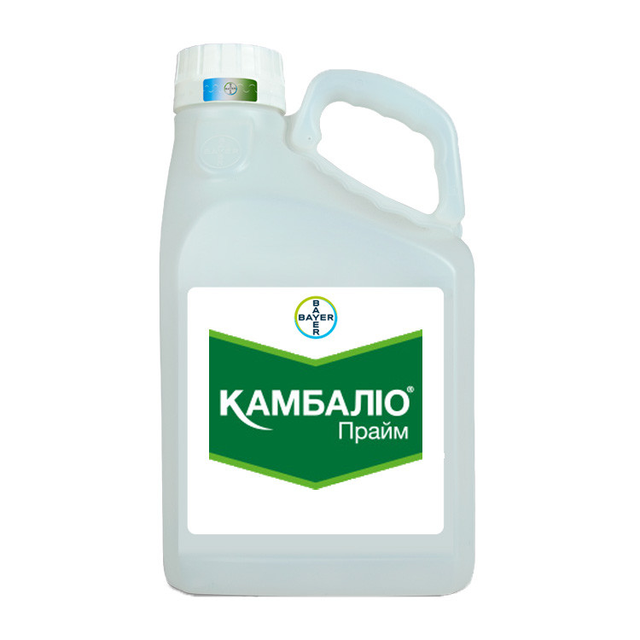
Kambalio Prime 20 SC, KS - innovative systemic fungicide against plant diseases, Kyiv region.
Price4500 UAH.
Region:all Ukraine,
Kyiv region.
(Vyshhorodok)
Updated:
Cambalio® Prime
Control is in your hands - upgrade your protection against late blight.
Active ingredient:
Fluoxapiproline, 20 g/l
Preparative form: suspension concentrate
Packaging: 20l box, 4 canisters of 5l each, the price is per canister.
Mechanism of action:
Cambalio® Prime 20 SC, KS is an innovative systemic fungicide designed to control late blight of potatoes, downy mildew of vegetables and downy mildew of grapes.
The active substance - fluoxapiproline - is characterized by high systemicity, which ensures protection of the parts of the plant that are formed already after treatment, an extremely low rate of consumption (15-20 g per year per 1 ha), effectiveness against all phases of pathogen development and the highest level of control among all market standards.
Cambalio® Prime 20 SC, CS is intended for processing crops in phases characterized by a rapid increase in vegetative mass. This does not prohibit the use of the drug in the later phases of culture development, but it must comply with the general principles of the strategy of fighting against the relevant pathogens.
Regulations of application:
Potatoes
Disease: late blight.
Consumption rate, l/ha: 0.8–1.0
Multiplicity: 3
Last processing period (in days beforeharvest): 14
Open ground tomato
Disease: late blight.
Consumption rate, l/ha: 0.6–0.75
Multiplicity: 3
Last processing period (in days before harvesting): 35
Onion-bulk
Disease: powdery mildew
Consumption rate, l/ha: 0.6–0.75
Multiplicity: 3
Last processing period (in days before harvesting): 30
Grapes
Disease: downy mildew
Consumption rate, l/ha: 0.6–1.0
Multiplicity: 3
Last processing period (in days before harvesting): 50
Features:
The nature of the evolution of the causative agent of the relevant pathogens during the last decades requires careful attention to the composition of defense systems, the alternation of active substances of different chemical classes and different mechanisms of action. Therefore, the maximum number of treatments is not a practical recommendation. In practice, the frequency of treatments with one drug depends on the total number of treatments and the mechanisms of action of other products used.
To prevent the emergence of resistance, tank mixtures of Cambalio® Prime 20 SC, CS with other drugs of the same spectrum, mainly of contact action (for example, Antrakol®) are recommended. In the case ofpotatoes this recommendation is mandatory.
Benefits:
// Preventive, curative and antisporulant action.
// Long-lasting protection.(//tractor-service.com)
// Protection of newly formed plant parts.
// A perfect component for creating a complete system of protection of relevant crops — from the initial stages of vegetation to harvesting.
Compatibility:
Cambalio® Prime 20 SC, CS is compatible with most insecticidal and fungicidal drugs registered on the respective crops. When preparing tank mixes, the general rules for mixing should be followed, or specific exceptions, if any (for example, with Allette®). It is recommended to use Mero® or organosilicone products as an adhesive for hard-to-wet cultures.
Callatic fungicide - effectively protects and stimulates the growth of plants!
Active substance: cyproconazole, 80 g/l + azoxystrobin, 200 g/l
Preparative form: suspension concentrate
Mode of action: systemic
Manufacturer: SUMMIT-AGRO UKRAINE
5 l canister packaging, the price is for 1 l.
ADVANTAGES OF THE DRUG:
due to the combination of two active substances from different classes and with different mechanisms of action, the use of KALLATIS provides high and stable efficiency, an extended spectrum of action on diseases and a reduced risk of resistance;
KALLATIS not only reliably controls diseases, but also has a stable physiological effect, which contributes to the formation of a maximum yield;
when applied to sunflower, provides control of downy mildew, which is not affected by fungicides from the class of triazoles, benzimidazoles and SDHI;
has a preventive and curative effect;
in the case of late processing, it has a positive effect on the structure and quality of the crop;
high thermal and photostability and resistance to being washed away by rainfall.
MECHANISM OF ACTION:
Azoxystrobin - according to the international FRAC classification, belongs to the group of oxidoreductase inhibitors of complex III (FRAC code C3). Inhibits the mitochondrial respiration of fungi by disrupting the activity of the electron transport chain, as a result of which ATP synthesis is blocked. It is an inhibitor of sporulation, spore germination and mycelium growth in susceptible fungi. Azoxystrobin is highly systemic, being transported through the xylem, evenly distributed throughout the plant acropetally, including with leaf growth, protecting new growth. It also moves translaminarly, which allows protection of the underside of the leaf.
Cyproconazole is a systemic fungicide belonging to the chemical class of triazoles, the mechanism of action is inhibition of C14-demethylase in the biosynthesis of ergosterol (DMI fungicides FRAC code G1). It has a protective and healing effect on the plant. Actively moves along the xylem, protecting, including those parts of the plant that grew already after processing.
Regulation of application::
Culture - Disease - Application rate, l/ha - Method and time of treatment - Multiplicity of treatments - Term of the last treatment (days before harvest)
= Cereal ear crops
Septoriosis, powdery mildew, brown leaf rust, fusarium and ear septoriosis, alternariosis
0.5-0.75
Spraying during the growing season
1
30
= Sunflower
Peronosporosis, fomosis, phomopsis, alternaria, septoriosis, rust, powdery mildew
0.75-1.0
Spraying during the growing season
1
30
The consumption rate of the working solution is 150-200 l/ha.
APPLICATION FEATURES:
the best effect of KALLATIS is observed when used preventively or at the initial stages of disease development;
the drug affects the physiological processes of the plant by regulating the hormonal balance, activating antioxidant protection, optimizing water exchange and improving nitrogen assimilation. All this ensures the so-called "green effect" and the extension of vegetation up to 7 days, as well as contributes to a more complete realization of its potential by the culture;
on wheat, in the case of processing during the tillering period of the crop, an increase in productivity is observed due to an increase in the number of productive stems, and processing in the phase of the flag leaf - milky ripeness contributes to an increase in the weight of 1000 seeds and improvement of other quality indicators of the harvest;
the optimal time of application to sunflower is the phase of 4-10 leaves. During this period, there is a high risk of masssunflower damage diseases, incl. peronosporosis;
Control is in your hands - upgrade your protection against late blight.
Active ingredient:
Fluoxapiproline, 20 g/l
Preparative form: suspension concentrate
Packaging: 20l box, 4 canisters of 5l each, the price is per canister.
Mechanism of action:
Cambalio® Prime 20 SC, KS is an innovative systemic fungicide designed to control late blight of potatoes, downy mildew of vegetables and downy mildew of grapes.
The active substance - fluoxapiproline - is characterized by high systemicity, which ensures protection of the parts of the plant that are formed already after treatment, an extremely low rate of consumption (15-20 g per year per 1 ha), effectiveness against all phases of pathogen development and the highest level of control among all market standards.
Cambalio® Prime 20 SC, CS is intended for processing crops in phases characterized by a rapid increase in vegetative mass. This does not prohibit the use of the drug in the later phases of culture development, but it must comply with the general principles of the strategy of fighting against the relevant pathogens.
Regulations of application:
Potatoes
Disease: late blight.
Consumption rate, l/ha: 0.8–1.0
Multiplicity: 3
Last processing period (in days beforeharvest): 14
Open ground tomato
Disease: late blight.
Consumption rate, l/ha: 0.6–0.75
Multiplicity: 3
Last processing period (in days before harvesting): 35
Onion-bulk
Disease: powdery mildew
Consumption rate, l/ha: 0.6–0.75
Multiplicity: 3
Last processing period (in days before harvesting): 30
Grapes
Disease: downy mildew
Consumption rate, l/ha: 0.6–1.0
Multiplicity: 3
Last processing period (in days before harvesting): 50
Features:
The nature of the evolution of the causative agent of the relevant pathogens during the last decades requires careful attention to the composition of defense systems, the alternation of active substances of different chemical classes and different mechanisms of action. Therefore, the maximum number of treatments is not a practical recommendation. In practice, the frequency of treatments with one drug depends on the total number of treatments and the mechanisms of action of other products used.
To prevent the emergence of resistance, tank mixtures of Cambalio® Prime 20 SC, CS with other drugs of the same spectrum, mainly of contact action (for example, Antrakol®) are recommended. In the case ofpotatoes this recommendation is mandatory.
Benefits:
// Preventive, curative and antisporulant action.
// Long-lasting protection.(//tractor-service.com)
// Protection of newly formed plant parts.
// A perfect component for creating a complete system of protection of relevant crops — from the initial stages of vegetation to harvesting.
Compatibility:
Cambalio® Prime 20 SC, CS is compatible with most insecticidal and fungicidal drugs registered on the respective crops. When preparing tank mixes, the general rules for mixing should be followed, or specific exceptions, if any (for example, with Allette®). It is recommended to use Mero® or organosilicone products as an adhesive for hard-to-wet cultures.
Callatic fungicide - effectively protects and stimulates the growth of plants!
Active substance: cyproconazole, 80 g/l + azoxystrobin, 200 g/l
Preparative form: suspension concentrate
Mode of action: systemic
Manufacturer: SUMMIT-AGRO UKRAINE
5 l canister packaging, the price is for 1 l.
ADVANTAGES OF THE DRUG:
due to the combination of two active substances from different classes and with different mechanisms of action, the use of KALLATIS provides high and stable efficiency, an extended spectrum of action on diseases and a reduced risk of resistance;
KALLATIS not only reliably controls diseases, but also has a stable physiological effect, which contributes to the formation of a maximum yield;
when applied to sunflower, provides control of downy mildew, which is not affected by fungicides from the class of triazoles, benzimidazoles and SDHI;
has a preventive and curative effect;
in the case of late processing, it has a positive effect on the structure and quality of the crop;
high thermal and photostability and resistance to being washed away by rainfall.
MECHANISM OF ACTION:
Azoxystrobin - according to the international FRAC classification, belongs to the group of oxidoreductase inhibitors of complex III (FRAC code C3). Inhibits the mitochondrial respiration of fungi by disrupting the activity of the electron transport chain, as a result of which ATP synthesis is blocked. It is an inhibitor of sporulation, spore germination and mycelium growth in susceptible fungi. Azoxystrobin is highly systemic, being transported through the xylem, evenly distributed throughout the plant acropetally, including with leaf growth, protecting new growth. It also moves translaminarly, which allows protection of the underside of the leaf.
Cyproconazole is a systemic fungicide belonging to the chemical class of triazoles, the mechanism of action is inhibition of C14-demethylase in the biosynthesis of ergosterol (DMI fungicides FRAC code G1). It has a protective and healing effect on the plant. Actively moves along the xylem, protecting, including those parts of the plant that grew already after processing.
Regulation of application::
Culture - Disease - Application rate, l/ha - Method and time of treatment - Multiplicity of treatments - Term of the last treatment (days before harvest)
= Cereal ear crops
Septoriosis, powdery mildew, brown leaf rust, fusarium and ear septoriosis, alternariosis
0.5-0.75
Spraying during the growing season
1
30
= Sunflower
Peronosporosis, fomosis, phomopsis, alternaria, septoriosis, rust, powdery mildew
0.75-1.0
Spraying during the growing season
1
30
The consumption rate of the working solution is 150-200 l/ha.
APPLICATION FEATURES:
the best effect of KALLATIS is observed when used preventively or at the initial stages of disease development;
the drug affects the physiological processes of the plant by regulating the hormonal balance, activating antioxidant protection, optimizing water exchange and improving nitrogen assimilation. All this ensures the so-called "green effect" and the extension of vegetation up to 7 days, as well as contributes to a more complete realization of its potential by the culture;
on wheat, in the case of processing during the tillering period of the crop, an increase in productivity is observed due to an increase in the number of productive stems, and processing in the phase of the flag leaf - milky ripeness contributes to an increase in the weight of 1000 seeds and improvement of other quality indicators of the harvest;
the optimal time of application to sunflower is the phase of 4-10 leaves. During this period, there is a high risk of masssunflower damage diseases, incl. peronosporosis;
|
Store, contacts | |
Yuriy / feedback, info. / evaluation of activity | |
|
Phone:
+38(xxxxxx
show
| |
All ads user ~1000 | |
Ad ID: #1124770
(added by registered user, registration date: 2016-08-10)
Added / Updated: 2026-09-21 09:23 (current, until: 09-21-2027)
Permanent Ad Address:
Impressions / views for today: ?, total: ?
Similar ads
Among them there are many interesting ones...