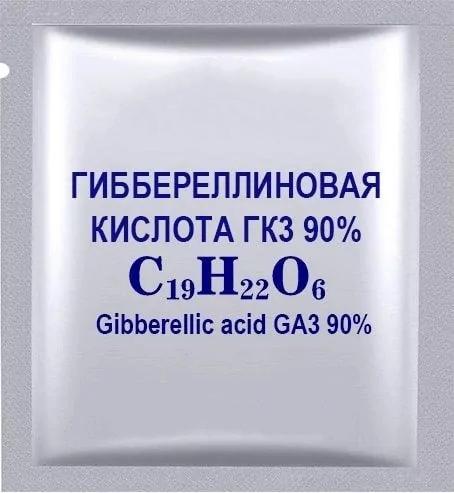
/ Fertilizers and plant protection products / Plant growth regulators / Gibberellin GA3 - 90% ( 1g )
Sell / buy
Gibberellin GA3 - 90% ( 1g ), Zaporizhia region.
Region:all Ukraine,
Zaporizka region.
(Melitopol)
Gibberellin
Gibberellic acid GK3 is a powerful plant growth hormone of natural origin. Gibberellin A3 [gibberellic acid (HK3)] is the most well-known and mainly used. This is explained by the fact thatmushroom Gibberella fujikuroi mainly synthesizes precisely this gibberellin, which is the main component of commercial preparations. Gibberellins affect the morphogenesis of plants together with auxins, but, unlike the latter, they are concentrated in fast-growing organs: ripening seeds and fruits, hypocotyls, seedlings, cotyledons and unfolding true leaves. Figuratively speaking, if auxins are hormones of vigor for plants, then gibberellins are hormones of youth. Gibberellins activate stem growth; interrupt the rest of the seeds; induce flowering; stimulate the formation of parthenocarpic fruits; in some cases, they are able to delay the aging of leaves and fruits. The main place of synthesis of gibberellins is in young leaves, and in the cell - plastids. However, they are found in all parts of plants - shoots, roots, leaves, buds, pistils, stamens, seeds. Gibberellins are essential participants in seed germination. When the seed swells, gibberellins are formed in its embryo. They move to the aleurone layer of the seed, in which they induce the formation of alpha-amylase. She, in turn, splitsstarch resulting in the formation of simplesugar, which are consumed by the embryo. Such a mechanism of action of gibberellins opens up the possibility of using them for practical purposes. In particular, treatment of old seeds or seeds of hard-to-germinate plants with gibberellins significantly accelerates their germination.
Nature of impact:
contributes to the elongation of cells and stems, increasing the height of plants;
promotes the acceleration of the growth of physiological processes of plants;(//tractor-service.com)
stimulates the process of awakening and germination of seeds, bulbs and tubers;
stimulates the beginning of flowering;
prevents the laying of cereal crops;
increases the yield of herbs;
promotes fruit formation and fruit development;
contributes to the preservation of fruits;
improves the development of plants in unfavorable conditions (at low temperature, drought, insufficient lighting, in conditions of short days, etc.);
slows down the aging of plants and preserves the freshness of fruits after harvesting.
Ad ID: #1092997
(added by a registered user)
Permanent Ad Address:
Impressions / views for today: ?, total: ?


