/ Seeds, seedlings and seeding materials / Seedlings of fruit and berry bushes / Blackberry seedlings / Blackberry seedlings
For sale / buy
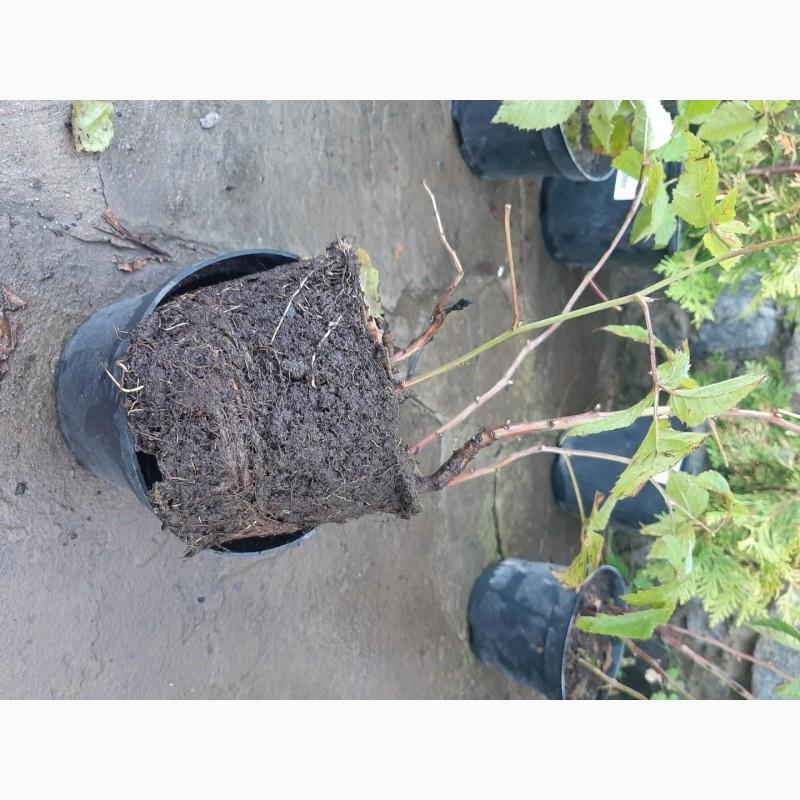
Blackberry seedlings, Dnipropetrovsk region.
Region:all of Ukraine,
Dnipropetrovsk region.
(Dnipropetrovsk region. city of Dnipro w/m Topolya-2)
Updated:
Blackberry seedlings of 60 grams, Nebesa they can wait, Oushito, and many other varieties.
1 Natchez The Natchez blackberry variety is a creeping, thornless shrub. Profuse growth was noted immediately after planting, i.e. the branches grow upwards, however, the crop somehow bends the branches to the ground, the shoots are mostly 5 meters long. The flowering period is the end of May, the flower is white, large, with 5-6 petals. In good weather, it ripens at the end of June and bears fruit for 1.5 months. When fully ripened, the blackberry holds well on the branches and does not fall off for a long time. Frost resistance is low. the first berry reaches a length of 3.5 centimeters and weighs 14 grams and gradually increases to 5 cm and 22 grams. The shape of the berries is elongated-cylindrical, the color is dark blue with a pronounced shine. . The taste is sweet with sourness,small seeds. The berries are collected in clusters of 10-30 pieces, and they come off well when they are fully ripe, the sepals noticeably dry. transportability is excellent, taste and attractive appearance are preserved for 2 weeks. The branches are fragile and weak, which requires additional support. It requires a sunny color, in its absence it may not fully ripen.
2 Небеса Магут Подождат, thornless The "Heaven Can Wait" blackberry variety has an early ripening period (June). A medium-sized berry, dense with a shine, a very tasty blackberry variety. The bush is compact, the vertical growth of shoots is inherent, the height of which reaches more than 1 meter in height, and some even reach a height of up to 2 meters. without spikes The variety is highly adaptable to cultivation, very resistant to fungal diseases. The taste of the berry is sweet-sour, weighing up to 7 grams, the color of the berry is black, the ripening period is early. Fertilization lasts about a month, the yield is very high. The growth of the bush is upright, the height of the shoots is 2.3 - 2.9 m, there are no thorns. This variety must be grown on a trellis. Winter hardiness is average, shelter will be needed for the winter. Resistance to fungal diseases.
3 Loch Tay, thornless The Loch Tay blackberry variety is a medium-early maturing Scottish selection, fruiting in July-September, thornless. The growth of the bush is great, the branches are elastic, the length of which reaches up to 5 meters. There are no spikes on the shoots, which makes cleaning easierseedlings. The berries are large in size, black in color, the berries are shiny in appearance with a harmonious taste, a rich sweet and sour taste without bitterness. The berry is juicy, dense, does not crumple when fully ripened, perfectly withstands machine assembly and long transportation, maintaining an attractive appearance. The transportability of this variety is very high, it is noticed that the yield at the first ripening is much less than at the subsequent ones. In the following, high productivity, low yield, the peak of productivity comes in 4-5 hours. This variety is a favorite among high-yielding varieties, from 6 to 12 kg of berries can be collected from one bush. Resistance to fungal diseases is super.
4 Fridom, besshipov, remontantnaya Beautiful fluffy flowers with the greenhouse method of cultivation will appear already at the end of February, berries will begin to ripen in April. Such a scenario is possible if last year's shoots were not cut in autumn. However, many gardeners practice the second agricultural technique: in the fall, they cut absolutely all the shoots under the root, and in the spring they wait for the appearance of new stems. Thus, the plant will produce a harvest only at the end of autumn, but it will be much larger than each of the harvest waves that are formed on last year's shoots and annuals. The main problem is that when growing the variety in an annual culture, most of the crop may simply not have time to ripen before frost. If you care for the variety as for a regular garden blackberry, then the first flower can be lost due to repeated spring frosts, and the second wave of fruiting will remain due to the first autumn frosts. Hence the numerous recommendations for cultivating the variety ingreenhouses and other closed ground structures.
5 Тройная Корона Description of the variety The Triple Crown variety is mid-late - the fruits ripen massively by the end of July - the beginning of August. The plant forms a large, very powerful bush with half-growing shoots that are directed either to the sides or upwards. The leaves are toothed, decorative, bright green in color. The blackberry bush is capable of forming whips up to 3 m long. It is noteworthy that even in the first hour after planting, the shoots can grow up to 2 m. The culture bears large berries that are collected in numerous brushes. Fruits are resistant to direct sunlight - they do not bake, except in the absence of irrigation or at excessively high temperatures. The description of the resistance to frost of the Triple Crown is standard for all blackberry varieties - it is very low, the plant necessarily needs shelter for the winter.
6 Traveller, remontant New variety of American selection, bred in 2007, remontant form, bears fruit on the shoots of the current year. The peculiarity of the variety is that the entire harvest is concentrated on the branches of the current year, which are completely cut off in winter. And, therefore, there is no need to cover the bushes. Winter variety without problems. It is recommended for regions where other varieties freeze. The feature is dense, transportable. With a high sugar content, with very low acidity, very dense, the continuation of the line of Arkansas blackberry renovators Traveller, aka Prime Ark Traveler, a novelty that broke into the market and made a lot of noise in the circles of blackberry connoisseurs. Berries are large and medium in size, juicy, sweet. The taste is very original, with an amazing apple aftertaste. The elongated shape of the berries makes them convenient for packaging. Bushes with vertically oriented shoots can reach a height of 2 m. In order for the shoots not to fall under the weight of the berries, they need to build a support. The variety is suitable for commercial cultivation 7 Polar, thornless The popular variety of frost-resistant blackberry Polar was registered by the Poles in 2008. Specialists of the Institute of Horticulture in Brzezno have been engaged in improving the varietal characteristics of blackberries for about 30 years. As a result of this work, there was a variety distinguished by large-fruitedness, frost resistance, the absence of thorns and the high quality of berries - Polar. This variety has upright, powerful shoots that reach a height of 2.6-2.7 m. Serrated leaves are painted bright green. The variety does not produce root growth, so reproduction is carried out by the tops of shoots. The plant blooms in the first half of May. The flowers are quite large, painted white. The berries are oval, large, each weight is from 9 to 11 g. The color of the berries is black, with a good gloss. The taste is pleasant, sweet with a weak hint of sourness, there is no astringency. When grown in open ground, the average yield from 1 bush is about 5 kg. The indicator of frost resistance is good, blackberry withstands frosts up to -25 °C. If there is little snow in the winter, the fruit buds may freeze, which will affect the yield. Without shelter for the winter, you can lose up to 1/2 of the harvest. Good immunity to diseases and resistance to pests. Large-fruited, berry weight reaches 9–11 g. High yield - up to 5 kg per bush. Absence of spikes. Frost resistance - up to -25 °C. Good transportability and portability. Resistance to pests and diseases. Long fruiting period. The crop is harvested from July to mid-September. Fruit dessert taste. Universal use of the crop. Berries are eaten fresh, covered for the winter, frozen.(//tractor-service.com)
8 Ruben, remontant Blackberry "Ruben" is the first remontant variety, which bears fruit on the shoots of the current year. This is the newest high-yielding variety. The "Ruben" blackberry grows like a raspberry, a compact, vertically directed bush, it is not tall, it does not weave, so it can be grown without a trellis. Plants are not broken by the wind. Thanks to the fact that after the end of fruiting, the shoots are mowed, the blackberry is not afraid of severe frosts, it does not need to be insulated. The fruits ripen from the end of August to the end of October (this is for those planted this year), last year's - from the end of June to the end of July. Blackberry berries are large, very sweet, and can be easily transported even over long distances. The fruits are up to 4.5 cm long, the average weight is 10 g, and up to 14.5 kg can be harvested from an adult bush. Blackberry "Ruben" has a well-developed root system, so it grows well on any soil, easily tolerates drought. It grows well near fences and tolerates half-light without problems.
9 Chief Joseph (Chief Joseph) is spikeless. Blackberry Chief Joseph (Chief Joseph) - a unique variety that was named in honor of the leader of the Ne-Perse Indian tribe - Chief Joseph. Blackberry Chief Joseph (Chief Joseph) - a unique variety that was named in honor of the leader of the Ne-Perse Indian tribe - Chief Joseph.
Chief Joseph is a modern variety of thornless, large-fruited, high-yielding blackberry. It ripens from the beginning of August and the berry collection continues for 5 weeks.
Chief Joseph is a powerful thornless bush with long branches. It requires supporting devices. Not demanding on care, easy to grow, drought resistant. Frost resistance is average, it is recommended to shelter for the winter.
Blackberry Chief Joseph (Chief Joseph) differs in density and large size up to 25 grams, shiny bright black color. The taste is sweet without acid, aromatic, with a taste of wild blackberry. High commercial and taste quality.
Suitable for fresh consumption and processing.
10 Doyle, thornless Shrubs that do not have thorns are most popular among gardeners. One of the newest thornless varieties can be called Doyle, which was bred by American breeders.
1 Natchez The Natchez blackberry variety is a creeping, thornless shrub. Profuse growth was noted immediately after planting, i.e. the branches grow upwards, however, the crop somehow bends the branches to the ground, the shoots are mostly 5 meters long. The flowering period is the end of May, the flower is white, large, with 5-6 petals. In good weather, it ripens at the end of June and bears fruit for 1.5 months. When fully ripened, the blackberry holds well on the branches and does not fall off for a long time. Frost resistance is low. the first berry reaches a length of 3.5 centimeters and weighs 14 grams and gradually increases to 5 cm and 22 grams. The shape of the berries is elongated-cylindrical, the color is dark blue with a pronounced shine. . The taste is sweet with sourness,small seeds. The berries are collected in clusters of 10-30 pieces, and they come off well when they are fully ripe, the sepals noticeably dry. transportability is excellent, taste and attractive appearance are preserved for 2 weeks. The branches are fragile and weak, which requires additional support. It requires a sunny color, in its absence it may not fully ripen.
2 Небеса Магут Подождат, thornless The "Heaven Can Wait" blackberry variety has an early ripening period (June). A medium-sized berry, dense with a shine, a very tasty blackberry variety. The bush is compact, the vertical growth of shoots is inherent, the height of which reaches more than 1 meter in height, and some even reach a height of up to 2 meters. without spikes The variety is highly adaptable to cultivation, very resistant to fungal diseases. The taste of the berry is sweet-sour, weighing up to 7 grams, the color of the berry is black, the ripening period is early. Fertilization lasts about a month, the yield is very high. The growth of the bush is upright, the height of the shoots is 2.3 - 2.9 m, there are no thorns. This variety must be grown on a trellis. Winter hardiness is average, shelter will be needed for the winter. Resistance to fungal diseases.
3 Loch Tay, thornless The Loch Tay blackberry variety is a medium-early maturing Scottish selection, fruiting in July-September, thornless. The growth of the bush is great, the branches are elastic, the length of which reaches up to 5 meters. There are no spikes on the shoots, which makes cleaning easierseedlings. The berries are large in size, black in color, the berries are shiny in appearance with a harmonious taste, a rich sweet and sour taste without bitterness. The berry is juicy, dense, does not crumple when fully ripened, perfectly withstands machine assembly and long transportation, maintaining an attractive appearance. The transportability of this variety is very high, it is noticed that the yield at the first ripening is much less than at the subsequent ones. In the following, high productivity, low yield, the peak of productivity comes in 4-5 hours. This variety is a favorite among high-yielding varieties, from 6 to 12 kg of berries can be collected from one bush. Resistance to fungal diseases is super.
4 Fridom, besshipov, remontantnaya Beautiful fluffy flowers with the greenhouse method of cultivation will appear already at the end of February, berries will begin to ripen in April. Such a scenario is possible if last year's shoots were not cut in autumn. However, many gardeners practice the second agricultural technique: in the fall, they cut absolutely all the shoots under the root, and in the spring they wait for the appearance of new stems. Thus, the plant will produce a harvest only at the end of autumn, but it will be much larger than each of the harvest waves that are formed on last year's shoots and annuals. The main problem is that when growing the variety in an annual culture, most of the crop may simply not have time to ripen before frost. If you care for the variety as for a regular garden blackberry, then the first flower can be lost due to repeated spring frosts, and the second wave of fruiting will remain due to the first autumn frosts. Hence the numerous recommendations for cultivating the variety ingreenhouses and other closed ground structures.
5 Тройная Корона Description of the variety The Triple Crown variety is mid-late - the fruits ripen massively by the end of July - the beginning of August. The plant forms a large, very powerful bush with half-growing shoots that are directed either to the sides or upwards. The leaves are toothed, decorative, bright green in color. The blackberry bush is capable of forming whips up to 3 m long. It is noteworthy that even in the first hour after planting, the shoots can grow up to 2 m. The culture bears large berries that are collected in numerous brushes. Fruits are resistant to direct sunlight - they do not bake, except in the absence of irrigation or at excessively high temperatures. The description of the resistance to frost of the Triple Crown is standard for all blackberry varieties - it is very low, the plant necessarily needs shelter for the winter.
6 Traveller, remontant New variety of American selection, bred in 2007, remontant form, bears fruit on the shoots of the current year. The peculiarity of the variety is that the entire harvest is concentrated on the branches of the current year, which are completely cut off in winter. And, therefore, there is no need to cover the bushes. Winter variety without problems. It is recommended for regions where other varieties freeze. The feature is dense, transportable. With a high sugar content, with very low acidity, very dense, the continuation of the line of Arkansas blackberry renovators Traveller, aka Prime Ark Traveler, a novelty that broke into the market and made a lot of noise in the circles of blackberry connoisseurs. Berries are large and medium in size, juicy, sweet. The taste is very original, with an amazing apple aftertaste. The elongated shape of the berries makes them convenient for packaging. Bushes with vertically oriented shoots can reach a height of 2 m. In order for the shoots not to fall under the weight of the berries, they need to build a support. The variety is suitable for commercial cultivation 7 Polar, thornless The popular variety of frost-resistant blackberry Polar was registered by the Poles in 2008. Specialists of the Institute of Horticulture in Brzezno have been engaged in improving the varietal characteristics of blackberries for about 30 years. As a result of this work, there was a variety distinguished by large-fruitedness, frost resistance, the absence of thorns and the high quality of berries - Polar. This variety has upright, powerful shoots that reach a height of 2.6-2.7 m. Serrated leaves are painted bright green. The variety does not produce root growth, so reproduction is carried out by the tops of shoots. The plant blooms in the first half of May. The flowers are quite large, painted white. The berries are oval, large, each weight is from 9 to 11 g. The color of the berries is black, with a good gloss. The taste is pleasant, sweet with a weak hint of sourness, there is no astringency. When grown in open ground, the average yield from 1 bush is about 5 kg. The indicator of frost resistance is good, blackberry withstands frosts up to -25 °C. If there is little snow in the winter, the fruit buds may freeze, which will affect the yield. Without shelter for the winter, you can lose up to 1/2 of the harvest. Good immunity to diseases and resistance to pests. Large-fruited, berry weight reaches 9–11 g. High yield - up to 5 kg per bush. Absence of spikes. Frost resistance - up to -25 °C. Good transportability and portability. Resistance to pests and diseases. Long fruiting period. The crop is harvested from July to mid-September. Fruit dessert taste. Universal use of the crop. Berries are eaten fresh, covered for the winter, frozen.(//tractor-service.com)
8 Ruben, remontant Blackberry "Ruben" is the first remontant variety, which bears fruit on the shoots of the current year. This is the newest high-yielding variety. The "Ruben" blackberry grows like a raspberry, a compact, vertically directed bush, it is not tall, it does not weave, so it can be grown without a trellis. Plants are not broken by the wind. Thanks to the fact that after the end of fruiting, the shoots are mowed, the blackberry is not afraid of severe frosts, it does not need to be insulated. The fruits ripen from the end of August to the end of October (this is for those planted this year), last year's - from the end of June to the end of July. Blackberry berries are large, very sweet, and can be easily transported even over long distances. The fruits are up to 4.5 cm long, the average weight is 10 g, and up to 14.5 kg can be harvested from an adult bush. Blackberry "Ruben" has a well-developed root system, so it grows well on any soil, easily tolerates drought. It grows well near fences and tolerates half-light without problems.
9 Chief Joseph (Chief Joseph) is spikeless. Blackberry Chief Joseph (Chief Joseph) - a unique variety that was named in honor of the leader of the Ne-Perse Indian tribe - Chief Joseph. Blackberry Chief Joseph (Chief Joseph) - a unique variety that was named in honor of the leader of the Ne-Perse Indian tribe - Chief Joseph.
Chief Joseph is a modern variety of thornless, large-fruited, high-yielding blackberry. It ripens from the beginning of August and the berry collection continues for 5 weeks.
Chief Joseph is a powerful thornless bush with long branches. It requires supporting devices. Not demanding on care, easy to grow, drought resistant. Frost resistance is average, it is recommended to shelter for the winter.
Blackberry Chief Joseph (Chief Joseph) differs in density and large size up to 25 grams, shiny bright black color. The taste is sweet without acid, aromatic, with a taste of wild blackberry. High commercial and taste quality.
Suitable for fresh consumption and processing.
10 Doyle, thornless Shrubs that do not have thorns are most popular among gardeners. One of the newest thornless varieties can be called Doyle, which was bred by American breeders.
|
Shop, contacts | |
Svetlana Nikolaevna/ reviews, info. | |
|
Phone:
0962xxxxxx
show
| |
Ad ID: #1072188
(added by registered user)
Added / Updated: 2025-10-20 13:11 (current, until: 10-20-2026)
Permanent Ad Address:
Impressions / views for today: ?, total: ?
Similar ads



Total8 similar adsin the section "Blackberry seedlings"
All Ukraine: Seeds, seedlings and seedlings materials 1218 / Seedlings of fruit and berry bushes 191 / Seedlings blackberries 8
Dnipropetrovsk Region:Seeds, seedlings and sowing materials 138 / Seedlings of fruit and berries bushes 25 / Blackberry seedlings 2