/ Fertilizers and plant protection products / Herbicides / Trinity - three-component herbicide for autumn...
Sell / buy
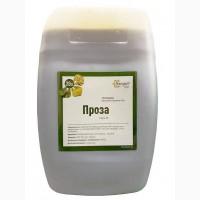
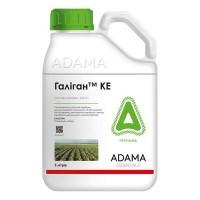
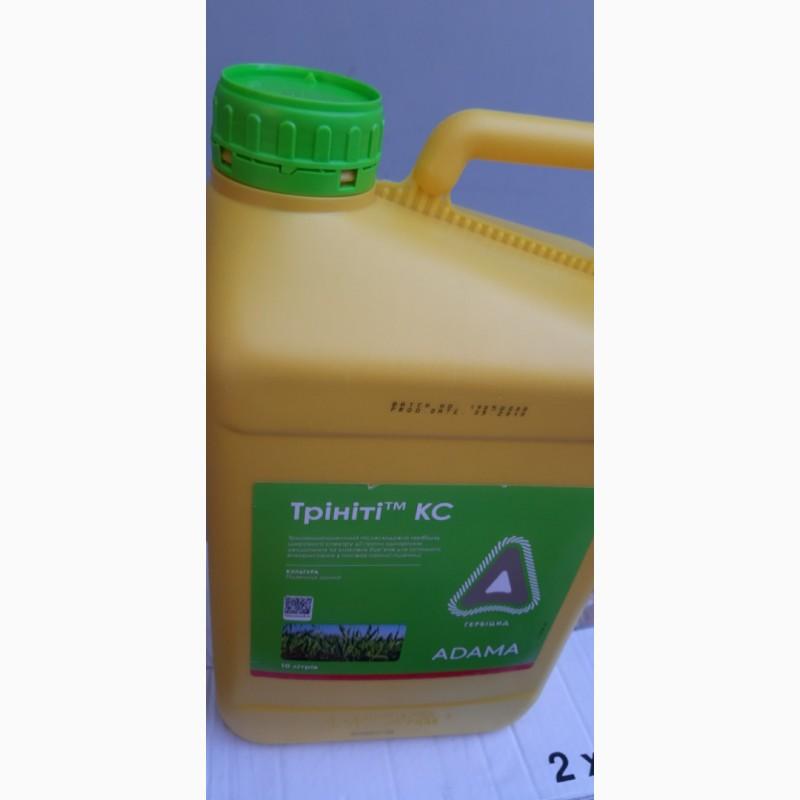
Trinity - three-component herbicide for autumn use in sowing of winter wheat, Kyiv region.
Price12$
Region:
Kyiv region.
(Vyshhorodok)
Updated:
Trinity - unique a three-component post-emergence herbicide for autumn use in winter wheat crops, which has a wide spectrum of activity against annual dicotyledonous and cereal weeds, has both soil and foliar action.
Active substance content: pendimethalin, 300g/l + chlortoluron, 250g/l + diflufenican, 40g/l
Preparative form: suspension concentrate
Mode of action: contact-system.
Chemical group: dinitroanilines, phenylureas, nicotinanilides
The consumption rate of the working solution: 150 - 300 l/ha
Manufacturer: Adama (Adama)
Packaging: 10 l, the price is for 1 l.
Advantages of the drug:
the synergism of three active substances provides the widest spectrum of herbicidal action against grass and dicotyledonous weeds;
highly effective against carrionrape;
retains its effective effect at low temperatures (from +5°С);
a long period of protective action;
effective combination of soil and foliar action;(//tractor-service.com)
lack of phytotoxic effect on cultivated plants.
Application of the drug:
*Winter wheat
Consumption rate - 2.0 l/ha
Harmful object - Annual dicotyledonous and grass weeds
Method and time of processing - Spraying of crops in autumn in the phase of 1-3 leaves in crops
The maximum number of treatments is 1
Waiting period before entering the field (mechanized/manual work) - 3/- days
General information:
The typical period for applying TRINITY herbicide is the 1-3 leaf phase in winter wheat. It is during this period, as a rule, that weeds are in the initial stage of development (cotyledons or the first pair of leaves) and are most vulnerable to the action ofherbicides.
When using this herbicide, the main point to pay attention to is the phase of weed development (cotyledons or the first pair of leaves for dicotyledons), not the phase of winter wheat development.
The drug exerts a herbicidal effect throughout autumn and spring. Usually, repeated herbicide treatments after applying TRINITY are not required until harvest.
Pendimethalin has mainly soil action, controls a wide range of monocotyledonous and dicotyledonous weeds. Enters plants through roots and sprouts.
Chlortoluron disrupts the process of photosynthesis by inhibiting the transfer of electrons in photosystem II. Absorbed by plants of sensitive weeds mainly through the roots, partially through the leaves. Suppresses monocotyledonous and some dicotyledonous weeds. It mainly has a soil effect.
Diflufenican has a contact and soil effect, enters the plant mainly through the hypocotyl of germinating weeds during its contact with the herbicide "screen" on the soil surface, as well as through the roots and leaves of weeds. Highly effective against a wide range of dicotyledonous weeds.
Active substance content: pendimethalin, 300g/l + chlortoluron, 250g/l + diflufenican, 40g/l
Preparative form: suspension concentrate
Mode of action: contact-system.
Chemical group: dinitroanilines, phenylureas, nicotinanilides
The consumption rate of the working solution: 150 - 300 l/ha
Manufacturer: Adama (Adama)
Packaging: 10 l, the price is for 1 l.
Advantages of the drug:
the synergism of three active substances provides the widest spectrum of herbicidal action against grass and dicotyledonous weeds;
highly effective against carrionrape;
retains its effective effect at low temperatures (from +5°С);
a long period of protective action;
effective combination of soil and foliar action;(//tractor-service.com)
lack of phytotoxic effect on cultivated plants.
Application of the drug:
*Winter wheat
Consumption rate - 2.0 l/ha
Harmful object - Annual dicotyledonous and grass weeds
Method and time of processing - Spraying of crops in autumn in the phase of 1-3 leaves in crops
The maximum number of treatments is 1
Waiting period before entering the field (mechanized/manual work) - 3/- days
General information:
The typical period for applying TRINITY herbicide is the 1-3 leaf phase in winter wheat. It is during this period, as a rule, that weeds are in the initial stage of development (cotyledons or the first pair of leaves) and are most vulnerable to the action ofherbicides.
When using this herbicide, the main point to pay attention to is the phase of weed development (cotyledons or the first pair of leaves for dicotyledons), not the phase of winter wheat development.
The drug exerts a herbicidal effect throughout autumn and spring. Usually, repeated herbicide treatments after applying TRINITY are not required until harvest.
Pendimethalin has mainly soil action, controls a wide range of monocotyledonous and dicotyledonous weeds. Enters plants through roots and sprouts.
Chlortoluron disrupts the process of photosynthesis by inhibiting the transfer of electrons in photosystem II. Absorbed by plants of sensitive weeds mainly through the roots, partially through the leaves. Suppresses monocotyledonous and some dicotyledonous weeds. It mainly has a soil effect.
Diflufenican has a contact and soil effect, enters the plant mainly through the hypocotyl of germinating weeds during its contact with the herbicide "screen" on the soil surface, as well as through the roots and leaves of weeds. Highly effective against a wide range of dicotyledonous weeds.
|
Store, contacts | |
Yuriy / reviews, info. / evaluation of activity | |
|
Phone:
+38(xxxxxx
show
| |
All ads user ~1000 | |
Ad ID: #1071827
(added by a registered user, registration date: 2016-08-10)
Added / Updated: 12-17-2025 09:05 (current, until: 17-12-2026)
Permanent Ad Address:
Impressions / views for today: ?, total: ?
Similar ads
There are many interesting ones among them...