I will provide a service.
Commercial offers from a railway company from Ukraine, Volyn region.
Region:all of Ukraine,
Volyn region.
Updated:
Commercial offer. From the railway transport company. There are covered wagons with windows and hatches. My phone numbers are +380969351156 Viber and +380502711484 WhatsApp Aleksandr.
The design of the wagons of the freight fleet affects the safety of cargo, the speed of cargo operations, the efficiency of transportation, the safety of train traffic, the safety of cargo, the maximum use of cargo capacity and capacity, the provision of complex mechanization of loading and unloading operations, and the reduction of downtime of wagons during cargo operations. The fleet of freight cars consists of universal (covered, platform, semi-cars) and specialized ones. Practically all cargo can be transported in universal wagons, only those for which they are intended in specialized wagons.
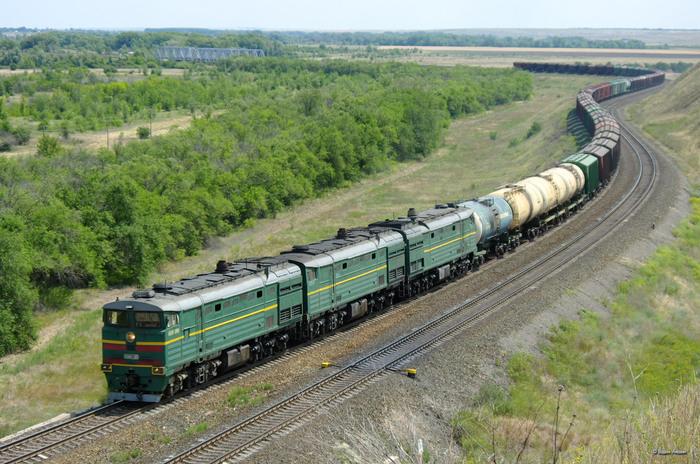
Specialized wagons includecisterns, isothermal,grain wagons, bag trucks, cement trucks, dump trucks, hoppers for the transportation of cement, mineral fertilizers, grain, special tanks for the transportation of cement, flour, caustic soda, alcohol, liquefied gases, viscous substances, double-decker platforms for passenger cars, transporters for heavy goods and others. According to the method of loading, the wagons are divided into open and closed. Open-type wagons have significant advantages over covered ones: a wider possibility of mechanization of loading and unloading operations, lower idleness of wagons due to faster loading and unloading, lower costs for construction, repair, maintenance, transportation of long, bulky cargo is possible.
One of the important characteristics of a freight car is its carrying capacity, which is understood as the maximum allowable load of the car, set by the MPS, taking into account the full security of train traffic.
The specific carrying capacity of a wagon is the number of tons of carrying capacity per 1 m' of the geometric volume of the body (t/m').(//tractor-service.com)
The carrying capacity and capacity of the wagon can be fully used with a specific carrying capacity equal to the density of the cargo, i.e., the mass of 1 m of cargo in the form and condition in which it is transported on railways. If the density of the cargo is less than the specific carrying capacity of the wagon, the capacity of the wagon is used in full, and the carrying capacity is not in full, with a high density, the opposite is true.
When developing plans for the transportation of goods by railways, the indicators of the technical loading rate and the static load of the wagon are used.
The technical norm of loading a wagon is a mandatory amount of cargo that must be loaded into a given type of wagon when the capacity or carrying capacity is fully used. This norm is established for each specific type of wagon when it is loaded with a specific cargo (for wagons - in tons, for containers in kilograms). Network technical norms for loading wagons are developed and established by MPS, local road loading.
The static load of a wagon is the number of tons of loaded cargo, which is suitable on average for one wagon.
The rolling stock numbering system made it possible to combine in an eight-digit number the non-repeating inventory number assigned to this unit of rolling stock, its main characteristic and coded protection of the reliability of reading the number.
The first digit characterizes the type of rolling stock: 2 — covered freight cars, 4 — platforms, 6 — semi-cars, 7 — tanks, 8 — isothermal cars, 3 and 9 — other cars (specialized, etc.).
The axle coding is common to all freight wagons (except for the numbers of other wagons starting with the number 3). The second sign of the number characterizes the basis and main characteristics of the car. Numbers 0-8 indicate four-axle cars, number 9 - eight-axle cars. All six-axle wagons and conveyors are classified as other wagons, the numbers of which begin with the number 3 (for six-axle wagons, the second digit of the number is 6, for conveyors - 9). In addition to the axle, the second number determines: for covered wagons - body volume (0 - up to 120 m', 1 - more than 120 m', 4 - more than 120 m' with widened doorways), for platforms - frame length (0 - up to 13.4 m, 2 - 13.4 m and more), for four-axle semi-wagons - presence of hatches in the floor and end doors (0 - with hatches and with end doors, 4 — with hatches without end doors, 8 — with a hollow body), forcistern — specialization, for refrigerated wagons and glaciers — design features. The fourth, fifth and sixth characters in the car number determine their serial number and do not contain characteristics. In the seventh sign, the number 9 indicates that the wagon (except for refrigerators) has a transition platform. The eighth digit is the control number. With its help, the correctness of reading (transmitting) the number is checked. It is applied together with the other digits of the number.
|
Shop, contacts | |
Alexander / feedback, info.: 24 / activity evaluation Attention! The user has a lot ofnegative reviews | |
|
Phone:
+380xxxxxx
show
| |
| Skype: potapsan | |
All user ads ~322 | |
Ad ID: #1059323
(added by a registered user, registration date: 08-14-2012)
Added / Updated: 08-23-2026 18:22 (current, until: 08-23-2027)
Permanent Ad Address:
Impressions / views for today: ?, total: ?