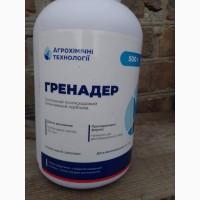
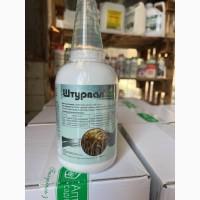
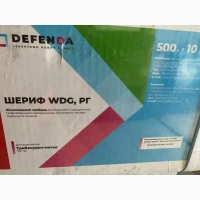
/ Fertilizers and plant protection products / Herbicides / Herbicide HERSOTYL (similar to Granstar) 0, 500kg...
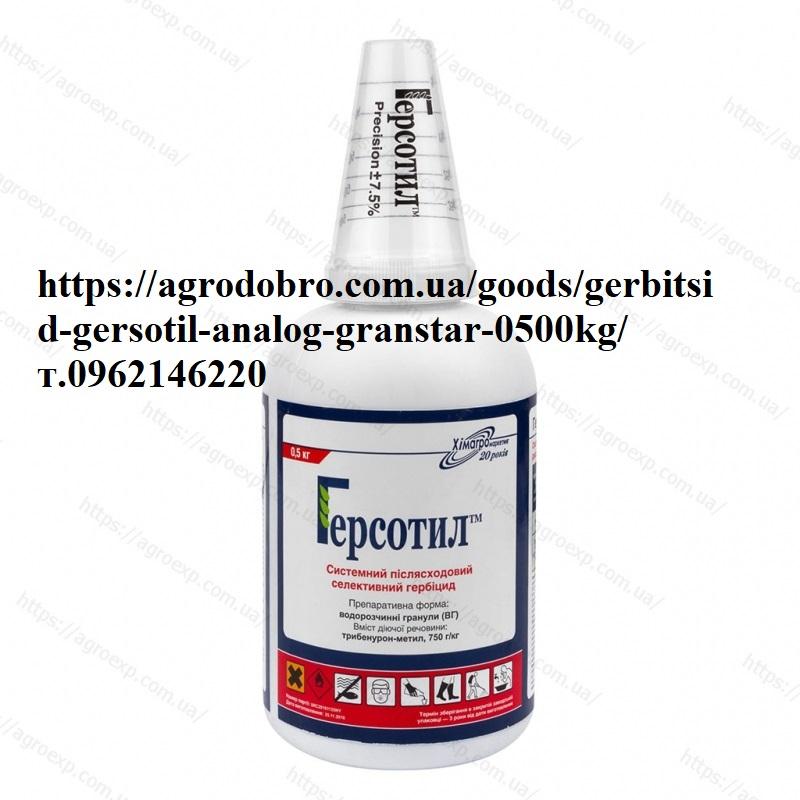
Sale / buy
Herbicide HERSOTIL (analogue of Granstar) 0, 500kg resistant to 2, 4-D weeds in grain crops, Dnipropetrovsk region.
Region:all of Ukraine,
Dnipropetrovsk region.
(Dnipropetrovsk region. city of Dnipro w/m Topolya-2)
Registration of the drug:
Culture Object Rate of consumption, drug g/ha Rate of consumption of working fluid, l/ha
Winter wheat annual and perennial dicot 20.0-25.0 200 — 400
Spring wheat 15.0 200-400
Winter barley annual and perennial dicots 20.0-25.0 200-400
Application practice:
Culture Object Rate of consumption, drug g/ha Rate of consumption of working fluid, l/ha
Annual and perennial dicotyledonous rye 20.0-25.0 200 — 400
Spring barley, oats 15.0
Features of the use of the herbicide HERSOTIL:
Stops the growth and development of weeds 2-3 hours after application. Visible symptoms appear after 5-8 days, and the death of weeds occurs after 15-20 days.
The mechanism of action of the herbicide HERSOTIL(//tractor-service.com)
The drug is mainly absorbed by the leaves and moves to the point of growth, where it suppresses the enzyme acetolactate synthase, which stops cell division and weed growth.
Properties and advantages of the herbicide HERSOTYL
Highly effective post-emergence herbicide of systemic action for the control of broad-leaved weeds, including those resistant to 2,4-D in crops of winter andspring cereals ear crops;
Gersotil is allowed to be used by air method;
Selection of the time of application from the phase of 2-3 leaves to the appearance of the flag leaf inclusively;
It is effective against thistles and tenacious weevils;
Compatible with most pesticides, which makes it possible to use the drug in complex protection;
There are no restrictions on crop rotation;
Two hours after processing, it is not washed away by atmospheric precipitation;
It completely decomposes at the time ofharvest;
One of the strongest advantages of HERSOTYL is the reduction of the amount of active substance applied per unit area. It is convenient to use (convenient packaging), beneficial and ecologically safe for the environment;
HERSOTYL affects enzymes that only plants have, so it is practically harmless to animals and people;
HERSOTYL has a wide time period of application, unlike hormonal herbicides;
HERSOTYL is used onsunflower hybrids resistant to tribenuron-methyl.
Culture Object Rate of consumption, drug g/ha Rate of consumption of working fluid, l/ha
Winter wheat annual and perennial dicot 20.0-25.0 200 — 400
Spring wheat 15.0 200-400
Winter barley annual and perennial dicots 20.0-25.0 200-400
Application practice:
Culture Object Rate of consumption, drug g/ha Rate of consumption of working fluid, l/ha
Annual and perennial dicotyledonous rye 20.0-25.0 200 — 400
Spring barley, oats 15.0
Features of the use of the herbicide HERSOTIL:
Stops the growth and development of weeds 2-3 hours after application. Visible symptoms appear after 5-8 days, and the death of weeds occurs after 15-20 days.
The mechanism of action of the herbicide HERSOTIL(//tractor-service.com)
The drug is mainly absorbed by the leaves and moves to the point of growth, where it suppresses the enzyme acetolactate synthase, which stops cell division and weed growth.
Properties and advantages of the herbicide HERSOTYL
Highly effective post-emergence herbicide of systemic action for the control of broad-leaved weeds, including those resistant to 2,4-D in crops of winter andspring cereals ear crops;
Gersotil is allowed to be used by air method;
Selection of the time of application from the phase of 2-3 leaves to the appearance of the flag leaf inclusively;
It is effective against thistles and tenacious weevils;
Compatible with most pesticides, which makes it possible to use the drug in complex protection;
There are no restrictions on crop rotation;
Two hours after processing, it is not washed away by atmospheric precipitation;
It completely decomposes at the time ofharvest;
One of the strongest advantages of HERSOTYL is the reduction of the amount of active substance applied per unit area. It is convenient to use (convenient packaging), beneficial and ecologically safe for the environment;
HERSOTYL affects enzymes that only plants have, so it is practically harmless to animals and people;
HERSOTYL has a wide time period of application, unlike hormonal herbicides;
HERSOTYL is used onsunflower hybrids resistant to tribenuron-methyl.
Ad ID: #1035330
(added by a registered user)
Permanent Ad Address:
Impressions / views for today: ?, total: ?
Similar recent ads
Among them there are many interesting ones...