/ Fertilizers and plant protection products / Herbicides / Hebicide Kratos KE (Acetochlor 900 g/l), analog...
For sale / buy
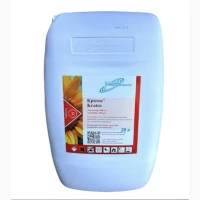
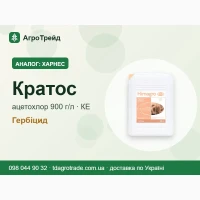
Hepbicide Kratos KE (Acetochlor 900 g/l), analog Harness, Mykolaiv region.
Region:all Ukraine,
Mykolaivska region.
(G. Nikolaev, Novozavodskaya Street, 17)
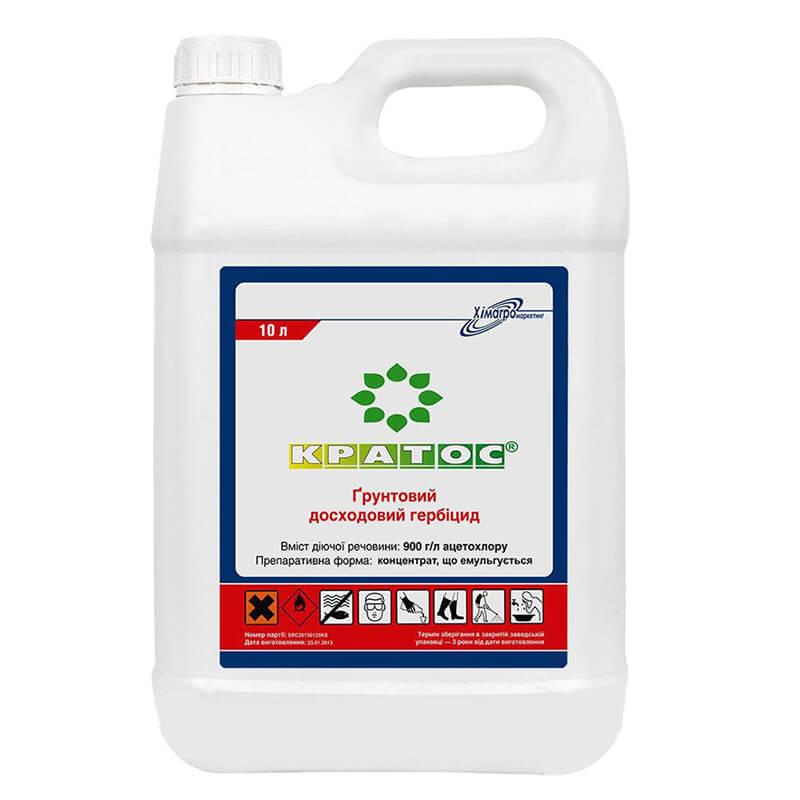
Hepbicide Kratos KE (Acetochlor 900 g/l), analogue of Harness
Soil pre-emergence herbicide for the control of annual cereal and dicotyledonous weeds insunflower crops,corn, soybeans and other economically important crops.
Upload the certificate
Active substance: acetochlor, 900 g/l
Chemical class: chloracetonilides
Preparative form: emulsion concentrate (KE)
Packaging:
10 l canisters
20 l canisters
Speed and period of protective action: 165
действие гербицида начинается сразу после его внесения. Период защитного действия ацетохлора продолжается около 60 дней (в зависимости от степени влажности верхнего слоя почвы, равномерности распределения рабочей жидкости, времени появления всходов культуры).
Mechanism of action:
The active substance, acetochlor, is absorbed from the soil mainly through the shoots of weeds and their roots. Inhibits protein synthesis in weeds. The effect of the drug begins immediately after application and lasts throughout the vegetation period.
Properties and advantages
(//tractor-service.com)
Kratos is a herbicide that gets rid of most weeds in agricultural crops that cannot be eliminated mechanically.
The use of the drug makes it possible to sow crops earlier, which contributes to more effective use of winter and spring moisture by cultivated plants.
Kratos creates favorable conditions for more vigorous crop growth by ensuring the absence of competition with weeds.
Under the condition of wet soil, as well as expected artificial or natural precipitation, it is not necessary to embed the preparation in the soil, which contributes to the preservation of the soil structure and productive moisture. Under the condition of drought, the application of the drug is mandatory.
Eliminates the need for inter-row tillage, which allows to reduce costs for additional labor, fuel and technical resources.
It decomposes in the soil during one growing season and does not affect the following crops in the crop rotation.
Caution:
Attention! It is forbidden to apply it to areas that have already been treated earlier, it can lead to the death of cultivated plants!
WHO classification, toxicological characteristics: II class.
Shelf life and storage conditions of the drug:
Three years in closed factory packaging at a temperature from +5 °C to +35 °C.
Harmful objects:
Highly sensitive and moderately sensitive:
common oat, mountain viburnum, knotted mountain mountain, mountain mountain passerine, Theophrastus' rope, white swan, bristly (species), pink thistle (with seeds), annual sedge, common blackberry, garden purslane, field daisies, chamomile (species), sundews (species), tuberous plantain, white sedge, hybrid sedge, sedge common, lobular-shaped, creeping anchors.
Weakly sensitive:
ambrosia (species),field mustard, common dorsum, medium star, field eye flower, hybrid swan, milkweed, gorse (species), dogwood tenacious, wild radish, medicinal smoke, sunflower.
Soil pre-emergence herbicide for the control of annual cereal and dicotyledonous weeds insunflower crops,corn, soybeans and other economically important crops.
Upload the certificate
Active substance: acetochlor, 900 g/l
Chemical class: chloracetonilides
Preparative form: emulsion concentrate (KE)
Packaging:
10 l canisters
20 l canisters
Speed and period of protective action: 165
действие гербицида начинается сразу после его внесения. Период защитного действия ацетохлора продолжается около 60 дней (в зависимости от степени влажности верхнего слоя почвы, равномерности распределения рабочей жидкости, времени появления всходов культуры).
Mechanism of action:
The active substance, acetochlor, is absorbed from the soil mainly through the shoots of weeds and their roots. Inhibits protein synthesis in weeds. The effect of the drug begins immediately after application and lasts throughout the vegetation period.
Properties and advantages
(//tractor-service.com)
Kratos is a herbicide that gets rid of most weeds in agricultural crops that cannot be eliminated mechanically.
The use of the drug makes it possible to sow crops earlier, which contributes to more effective use of winter and spring moisture by cultivated plants.
Kratos creates favorable conditions for more vigorous crop growth by ensuring the absence of competition with weeds.
Under the condition of wet soil, as well as expected artificial or natural precipitation, it is not necessary to embed the preparation in the soil, which contributes to the preservation of the soil structure and productive moisture. Under the condition of drought, the application of the drug is mandatory.
Eliminates the need for inter-row tillage, which allows to reduce costs for additional labor, fuel and technical resources.
It decomposes in the soil during one growing season and does not affect the following crops in the crop rotation.
Caution:
Attention! It is forbidden to apply it to areas that have already been treated earlier, it can lead to the death of cultivated plants!
WHO classification, toxicological characteristics: II class.
Shelf life and storage conditions of the drug:
Three years in closed factory packaging at a temperature from +5 °C to +35 °C.
Harmful objects:
Highly sensitive and moderately sensitive:
common oat, mountain viburnum, knotted mountain mountain, mountain mountain passerine, Theophrastus' rope, white swan, bristly (species), pink thistle (with seeds), annual sedge, common blackberry, garden purslane, field daisies, chamomile (species), sundews (species), tuberous plantain, white sedge, hybrid sedge, sedge common, lobular-shaped, creeping anchors.
Weakly sensitive:
ambrosia (species),field mustard, common dorsum, medium star, field eye flower, hybrid swan, milkweed, gorse (species), dogwood tenacious, wild radish, medicinal smoke, sunflower.
Ad ID: #1014482
(added by a registered user)
Permanent Ad Address:
Impressions / views for today: ?, total: ?
Similar recent ads
There are many interesting ones among them...