/ Fertilizers and plant protection products / Insecticides / Insecticides Kanonir Duo Agrochemical technologies 5...
Sell / buy
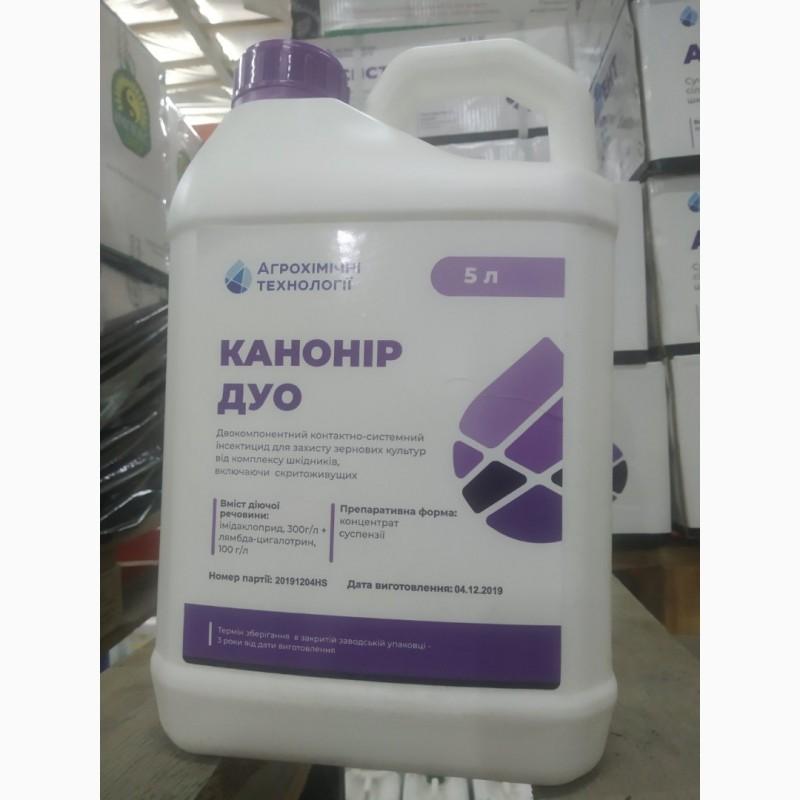
Insecticides Kanonir Duo Agrochemical technologies 5 l (analogue of Uppercoat Akro IL 200), Mykolaiv region.
Region:all Ukraine,
Mykolaivska region.
Insecticide of systemic, contact and contact-intestinal action
Active ingredient: imidacloprid, 300 g/l + lambda-cyhalothrin, 100 g/l
Preparative form: suspension concentrate
General information about the drug:
Highly effective contact-systemic insecticide for combating a wide range of sucking and leaf-gnawing pests, including cryptic ones, with maximum initial activity and a long period of protective action.
Mechanism of action of the drug:
Imidacloprid works systemically and translaminarly, acts as an antagonist of the binding of postsynaptic receptors in the nervous system of pests. Penetrating into plants, it is distributed throughout the parenchyma and moves through the xylem. Lambda-cyhalothrin is an inhibitor of oxidative phosphorylation of contact action. It remains outside on the processed surface of the plants. A few minutes after the drug enters the body, the pests stop feeding and die.
General recommendations for the use of the drug:
For high-quality application of Kanonir Duo insecticide, it is first necessary to prepare a mother solution. The calculated dose (for one refillsprayer) of the drug must be mixed with water in a separate container to obtain a homogeneous suspension. At the same time, the concentration should not exceed 1: 5 (20% solution). The consumption of the working fluid during step processing is 100-200 l/ha, in other cases - 200-400 l/ha. When using the Kanonir Duo insecticide in unstable weather conditions, as well as for the destruction of bread beetles and hidden pests, it is necessary to use the consumption rate of the drug - 0.10-0.15 l / ha. The optimal air temperature for processing is from + 10 ° C to + 25 ° C.
Attention! Kanonir Duo KS insecticide is highly toxic for bees (protection zone - 4-5 km, flight restriction of bees - at least 5 days).
Winter wheat
Harmful turtle bug, leeches, thrips, aphids, grain flies
Drug consumption rate, l/ha: 0.05-0.12
Rate of consumption of working solution, l/ha: 200-400
Bread bugs, bread sawfly
Drug consumption rate, l/ha: 0.10
Rate of consumption of working solution, l/ha: 200-400
Cereals, seed intoxication
Cereal flies, beetles, aphids, leafhoppers
Drug consumption rate, l/ha: 0.20-0.40
Rate of consumption of working solution, l/ha: 10
Winter wheat
Harmful cockroach bug, thrips, aphid, grain flies, bread beetles, leeches, bread sawfly
Drug consumption rate, l/ha: 0.05-0.10
Rate of consumption of working solution, l/ha: 200-400
Rapak
Flower eater, cruciferous flea, aphid, hidden octopus, sawfly, leaf eater, gallica
Drug consumption rate, l/ha: 0.05-0.15
Rate of consumption of working solution, l/ha: 250-300
Peas
Aphids, thrips, pea weevil, weevils, pea mosquito.(//tractor-service.com)
Drug consumption rate, l/ha: 0.05-0.10
Rate of consumption of working solution, l/ha: 200-400
Alfalfa
Bedbugs, yellow tychius, weevils, alfalfa gall
Drug consumption rate, l/ha: 0.05-0.10
Rate of consumption of working solution, l/ha: 200-400
Sorghum
Aphids, leafhoppers
Drug consumption rate, l/ha: 0.05-0.10
Consumption rate of working solution, l/ha: 200-400 Aphids, melon flies, bedbugs
Баштанні культури
Попелиця, динна муха, клопи
Drug consumption rate, l/ha: 0.05-0.10
Rate of consumption of working solution, l/ha: 200-400
Onion
Tobacco thrips, onion fly
Drug consumption rate, l/ha: 0.20-0.40
Rate of consumption of working solution, l/ha: 200-400
Tomatoes andeggplants
Colorado beetle, aphids, thrips, greenhouse whitefly
Drug consumption rate, l/ha: 0.05-0.10
Rate of consumption of working solution, l/ha: 200-400
Fruits
Complex of pests
Drug consumption rate, l/ha: 0.10
Rate of consumption of working solution, l/ha: 800-1500
Advantages of using Kanonir Duo insecticide, CS:
The total effect of the speed of action ("knockdown effect") with a protective period for 14-25 days;
Triple effect of the drug: contact, intestinal and systemic;
Canonir Duo is effective for destroying pests that live in hiding and feed on the underside of leaves;
Low consumption rate and convenient preparation form;
Reliably protects plants in conditions of high temperatures and prolonged solar insolation.
Active ingredient: imidacloprid, 300 g/l + lambda-cyhalothrin, 100 g/l
Preparative form: suspension concentrate
General information about the drug:
Highly effective contact-systemic insecticide for combating a wide range of sucking and leaf-gnawing pests, including cryptic ones, with maximum initial activity and a long period of protective action.
Mechanism of action of the drug:
Imidacloprid works systemically and translaminarly, acts as an antagonist of the binding of postsynaptic receptors in the nervous system of pests. Penetrating into plants, it is distributed throughout the parenchyma and moves through the xylem. Lambda-cyhalothrin is an inhibitor of oxidative phosphorylation of contact action. It remains outside on the processed surface of the plants. A few minutes after the drug enters the body, the pests stop feeding and die.
General recommendations for the use of the drug:
For high-quality application of Kanonir Duo insecticide, it is first necessary to prepare a mother solution. The calculated dose (for one refillsprayer) of the drug must be mixed with water in a separate container to obtain a homogeneous suspension. At the same time, the concentration should not exceed 1: 5 (20% solution). The consumption of the working fluid during step processing is 100-200 l/ha, in other cases - 200-400 l/ha. When using the Kanonir Duo insecticide in unstable weather conditions, as well as for the destruction of bread beetles and hidden pests, it is necessary to use the consumption rate of the drug - 0.10-0.15 l / ha. The optimal air temperature for processing is from + 10 ° C to + 25 ° C.
Attention! Kanonir Duo KS insecticide is highly toxic for bees (protection zone - 4-5 km, flight restriction of bees - at least 5 days).
Winter wheat
Harmful turtle bug, leeches, thrips, aphids, grain flies
Drug consumption rate, l/ha: 0.05-0.12
Rate of consumption of working solution, l/ha: 200-400
Bread bugs, bread sawfly
Drug consumption rate, l/ha: 0.10
Rate of consumption of working solution, l/ha: 200-400
Cereals, seed intoxication
Cereal flies, beetles, aphids, leafhoppers
Drug consumption rate, l/ha: 0.20-0.40
Rate of consumption of working solution, l/ha: 10
Winter wheat
Harmful cockroach bug, thrips, aphid, grain flies, bread beetles, leeches, bread sawfly
Drug consumption rate, l/ha: 0.05-0.10
Rate of consumption of working solution, l/ha: 200-400
Rapak
Flower eater, cruciferous flea, aphid, hidden octopus, sawfly, leaf eater, gallica
Drug consumption rate, l/ha: 0.05-0.15
Rate of consumption of working solution, l/ha: 250-300
Peas
Aphids, thrips, pea weevil, weevils, pea mosquito.(//tractor-service.com)
Drug consumption rate, l/ha: 0.05-0.10
Rate of consumption of working solution, l/ha: 200-400
Alfalfa
Bedbugs, yellow tychius, weevils, alfalfa gall
Drug consumption rate, l/ha: 0.05-0.10
Rate of consumption of working solution, l/ha: 200-400
Sorghum
Aphids, leafhoppers
Drug consumption rate, l/ha: 0.05-0.10
Consumption rate of working solution, l/ha: 200-400 Aphids, melon flies, bedbugs
Баштанні культури
Попелиця, динна муха, клопи
Drug consumption rate, l/ha: 0.05-0.10
Rate of consumption of working solution, l/ha: 200-400
Onion
Tobacco thrips, onion fly
Drug consumption rate, l/ha: 0.20-0.40
Rate of consumption of working solution, l/ha: 200-400
Tomatoes andeggplants
Colorado beetle, aphids, thrips, greenhouse whitefly
Drug consumption rate, l/ha: 0.05-0.10
Rate of consumption of working solution, l/ha: 200-400
Fruits
Complex of pests
Drug consumption rate, l/ha: 0.10
Rate of consumption of working solution, l/ha: 800-1500
Advantages of using Kanonir Duo insecticide, CS:
The total effect of the speed of action ("knockdown effect") with a protective period for 14-25 days;
Triple effect of the drug: contact, intestinal and systemic;
Canonir Duo is effective for destroying pests that live in hiding and feed on the underside of leaves;
Low consumption rate and convenient preparation form;
Reliably protects plants in conditions of high temperatures and prolonged solar insolation.
Ad ID: #1013716
(added by a registered user)
Permanent Ad Address:
Impressions / views for today: ?, total: ?
Similar recent ads
Among them there are many interesting ones...