What should be paid attention to when choosing a tractor on the secondary market
An important reserve for preserving the technical potential in the agricultural sector of Ukraine is the secondary markettractors. The need for used tractors is primarily due to the high cost of new machines, as well as the shortage of available funds among domestic farmers.
For most farmers in developed countries, buying used tractors is quite common. In particular, in the farms of the USA, Canada and the countries of the European Union, tractors purchased on the secondary market make up about 40% of the tractor fleet for the agricultural sector.
Having purchased an agricultural tractor on the secondary market, Ukrainian farmers must be sure that it will function without fail and reliably for a long time until its remaining resource is fully used.
In the conditions of aging and decreasing reliability of used tractors, there is a special consumers of used equipment should focus on a number of important issues. The technical condition of the tractor can be checked by using a certain set of diagnostic and repair technological equipment. If it is not there, then you should use separate recommendations. Let's focus on the most important ones.
Technical condition of the engine
Checking the technical condition of a used tractor should begin with the engine - the most complex and important unit, on the condition of which many technical and economic performance indicators of the machine depend. During the operation of the tractor, various malfunctions and failures occur in the engine, mainly in the crank and connecting rod and gas distribution mechanisms, as well as in the lubrication, power and cooling systems. In the specified mechanisms and systems, malfunctions are very common, which lead to a decrease in power, an increase in fuel and oil consumption, the appearance of knocking and vibration.
During an external inspection, the engine must be clean, without traces of fuel, oil and coolant leaks. Leakage of technical fluids can be well manifested on clean or slightly dirty engine surfaces.
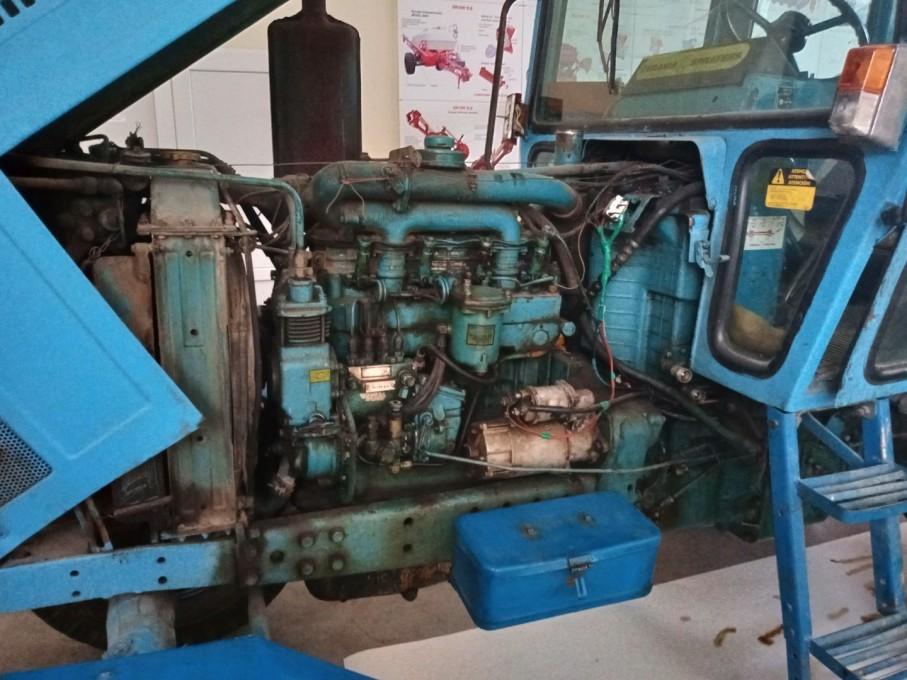
Open space under the hood: problem areas can be identified at a glance
The general technical condition of the engine can be assessed by the maximum power that develops at a certain frequency of rotation of the crankshaft. It is worth starting and listening to the engine at different speeds.
Crank-and-connecting mechanism
Signs of a working state of the crank-and-connecting mechanism are a normally warmed-up, loaded engine, which runs at nominal revolutions without extraneous knocks. It should be remembered that during long-term operation of the engine, the parts of the connecting rod-piston group naturally work, fastenings and adjustments are broken, which over time can lead to a decrease in engine power and the occurrence of a whole series of malfunctions. All of these indicate the need to restore the engine to serviceability.
Gas distribution mechanism
The gas distribution mechanism is functioning normally if the valves work according to the engine timing diagram. In the process of operation, hot gases destroy the chamfers of the valves and their seats, violate the tightness of the valves, and this can cause a possible breakthrough of gases in the combustion chamber and burnout of the valve.
The friction surfaces of the gas distribution mechanism gradually wear out, breaking the gap between the valve and the valve seat, between the valve and the valve drive, between the valve and the rocker arm. When assessing the technical condition of the gas distribution mechanism, check the clearance between the camshaft and bearings, the amount of operation of the valve guide bushings.
Crankshaft and connecting rod and gas distribution mechanisms are evaluated by noise and vibrations, crankcase oil parameters, tightness of the superpiston space of the engine cylinders. Knocking and noise in the engine can be determined using a stethoscope. Diagnosis of compression can be carried out using a compressimeter. Noises in a running engine are caused by knocking of main and connecting rod bearings, piston fingers and pistons. The most noticeable external sign of a malfunction of the gas distribution mechanism is knocking in the area where the valves, camshaft, and gears are located.
Lubrication systems
One of the main conditions for the reliability of the engine is the high efficiency of the lubrication system, the malfunctions of which are detected by the indicators of the devices or the corresponding alarms. The oil level is assessed, which is then checked not only before starting work, but periodically. After stopping the engine, the noise of the centrifuge rotor rotating by inertia should be heard for at least 30 seconds. Before purchasing a tractor, it is necessary to clarify or check whether the motor oil poured into the engine corresponds to the manufacturer's passport.
Cooling system
When checking the engine cooling system, it is necessary to assess its tightness, the tension of the drive belt of the water pump and fan; serviceability of the thermostat and other parts of the system. Overheating or hypocooling of the tractor engine can be a sign of a malfunction of the cooling system. Therefore, before starting work, you should check the amount of coolant and the condition of the radiator core. The tightness of the cooling system is determined visually, in the presence of leakage of coolant. The deflection of the water pump drive belt should be within 10-20 mm under a tension of 30-40 N.
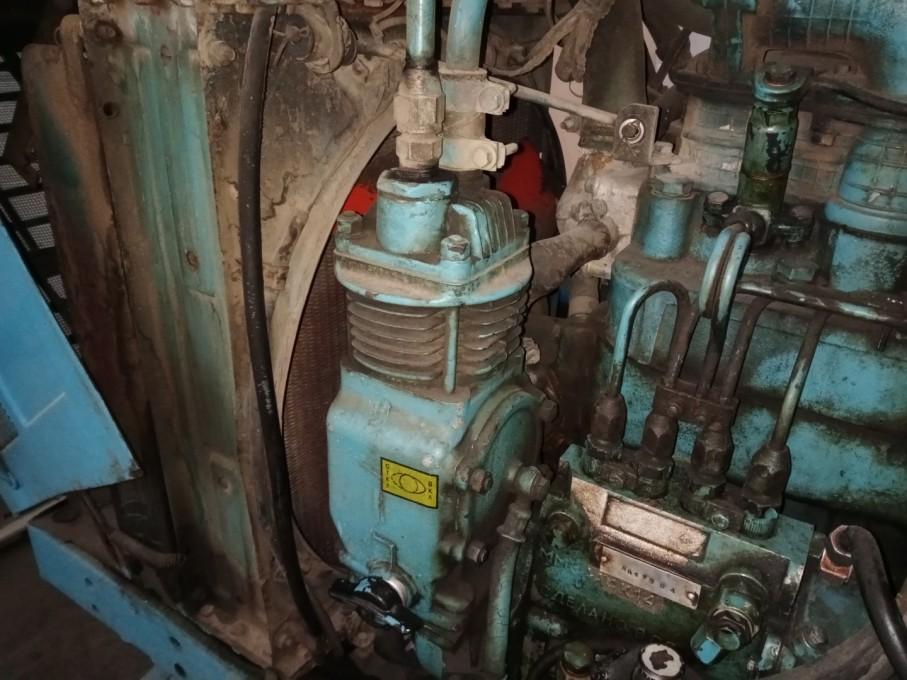
High pressure fuel pump and cooling system: outwardly everything is fine. But dust on a working machine "settles" nicely in places where lubricant or other technical fluids "sneeze"
Overheating of the engine leads to a decrease in the filling of the cylinders with the fuel mixture, causes detonation and hot ignition and the formation of soot, increases oil consumption and cylinder activation, can cause bearings to melt and pistons to jam in the cylinders. Overcooling of the engine can lead to the following consequences: complicated formation of the working mixture; dilution of motor oil with fuel; increase in oil viscosity; an increase in gaps between parts due to metal compression from low temperatures.
Power supply system
Regarding the power supply system, you should check whether there is no fuel leakage and air suction through leaks. It is necessary to monitor the color of the exhaust gases. Checking the efficiency of the air cleaning system of engines equipped with a turbocharger has not only certain features, but also requirements. It is necessary to check the tightness of the intake tract, which may be disturbed due to the use of rubber hoses with cracks and breaks, loosening or breakage of clamps, peeling of rubber seals from the covers of cardboard filter elements.
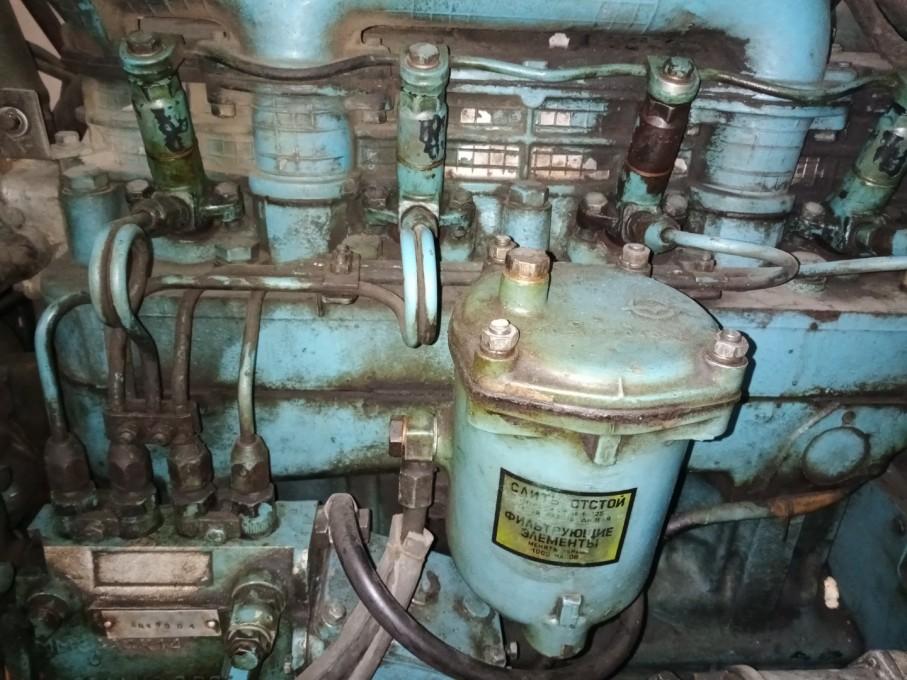
Head and crankcase gaskets "snot" a little. But for this tractor, this is rather the norm. There is no problem with the fuel on the outside.
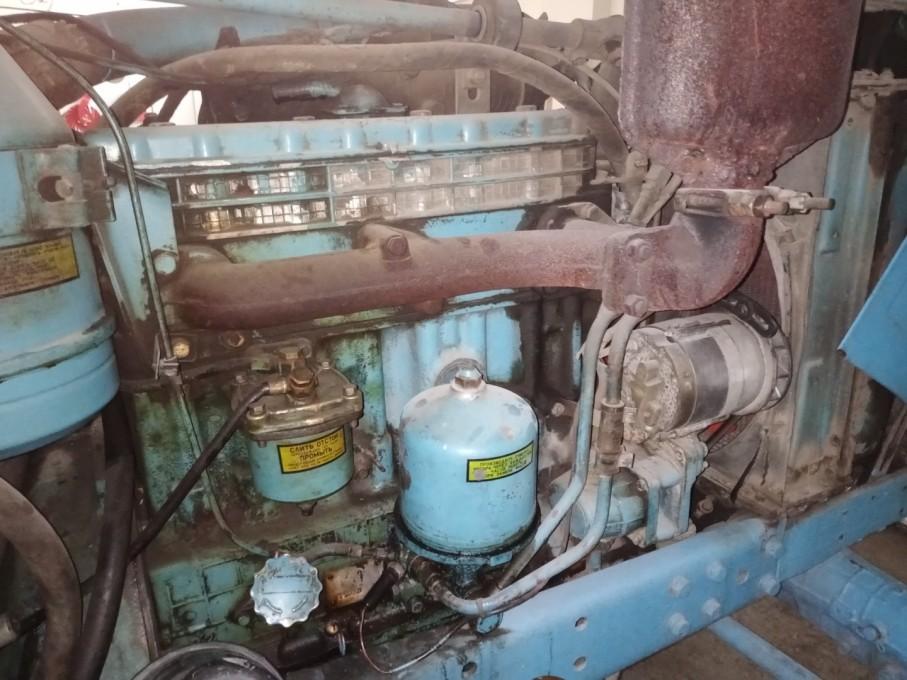
Similar situation on the other side of the engine.
External signs of the operation of the cylinder-piston group from dust may be increased oil consumption, excessive smoke, engine operation with a metallic knock. But in addition to the tightness of the intake tract, it is desirable to check the condition of the filter element of the air cleaner, especially if the tractor was operated in conditions of increased dust.
Checking the transmission
After checking the tractor engine, you should pay attention to its transmission.
The most characteristic malfunctions of the tractor clutch are: incomplete disengagement, accompanied by a grinding noise when switching gears; insufficient disengagement of the clutch; disc slippage, accompanied by the smell of burnt friction linings; an excessively large force that must be applied to disengage the clutch, the cause of which is a malfunction of the drive amplifier.
Noise, heating, knocking, vibration and jerking occur as a result of the destruction of the engagement clutch bearing, loosening of the rivets of the disk linings, violation of the position of the release levers.
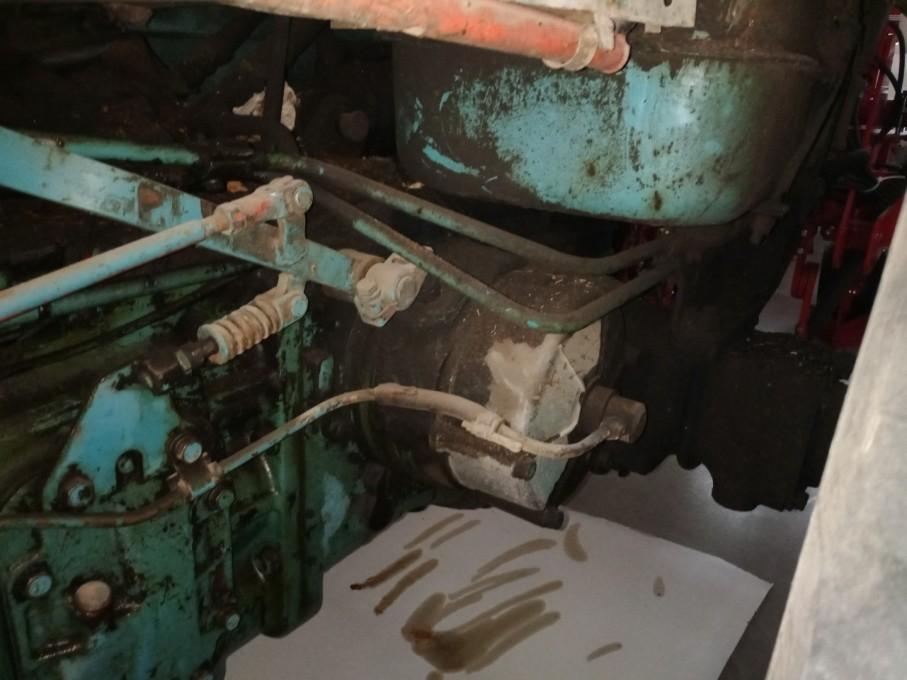
Suspension in grease. Photos were taken in the box. Pay attention. that cardboard was thrown on the floor to prevent contamination. It is probably worth paying attention to the soil under the tractor in potentially problematic places at the parking lot as well. This can say a lot about the technical condition.
Failures of gearboxes are characterized by certain signs: increased noise during operation and switching; self-disengagement of gears; excessive body heating and vibration. The working condition of the gearbox is confirmed by: the absence of knocks and oil leakage; operation without noise and grinding of gears and clutches, which are easily engaged and fixed in the on or off position.
The drive axle is in good condition, if the noise and heating of the axle crankcase do not exceed the set level during tractor movement, there is no oil leakage through the seal. Characteristic signs of a drive axle malfunction are increased noise during movement, which can be caused by an increase in backlash in the bearings, engagement of gear teeth, wear or crumpling of splines of semi-axles or semi-axle gears, activation of the satellite axis or surfaces under the satellite axis and adjusting washers, and increased mounting clearances.
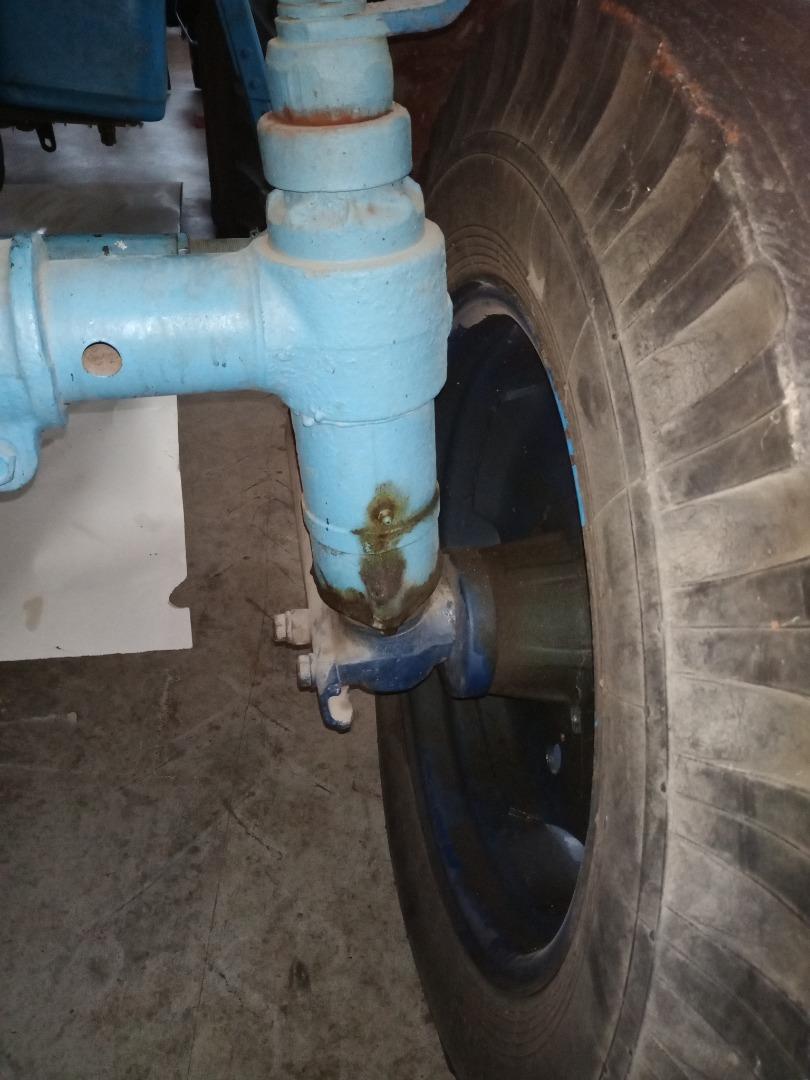
Everything is fine with the undercarriage on the left side. There is only minor fogging.
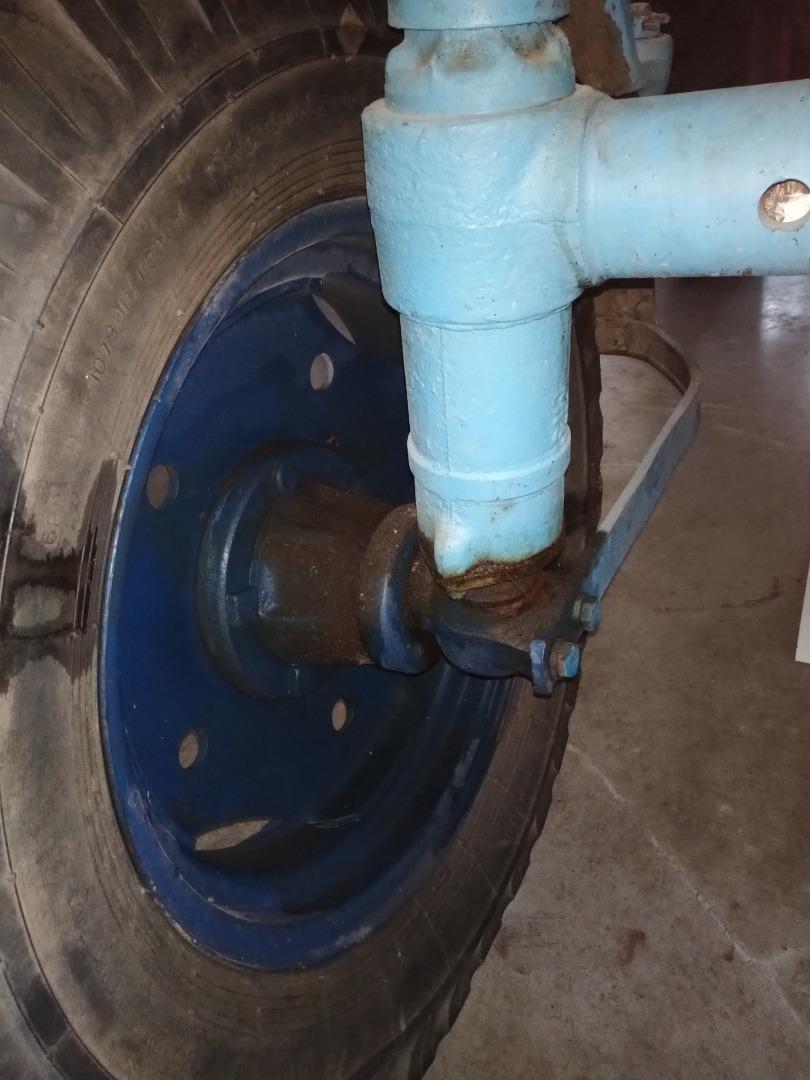
Same with the right side.
The front axles need to be checked for possible malfunctions such as beam deformation; activation of pivot joints, bearings, wheel hubs; sharply increased tire wear. The efficiency of the driving axles of tracked tractors is characterized by the stability of straight-line movement and the ability to make turns with little effort by the tractor driver.
Braking system
The technical condition of the braking system is an important component of traffic safety and work performance. It is determined by the minimum system activation time and the minimum braking path, the uniformity of wheel braking, and the smoothness of the increase in braking force. The efficiency of the brake system is characterized by its tightness.
In a system with a hydraulic drive, leakage of brake fluid is not allowed. In a system with a pneumatic drive, the pressure gauge must work: it is allowed to reduce the air pressure by 0.05 MPa no faster than in 30 minutes with the brake controls in a free position. A working parking brake must reliably hold the tractor regardless of its load on a slope with a steepness of at least 16%.
Steering
The main signs of a working condition of the steering of wheeled tractors are: free movement of the steering wheel within normal limits; rotation of the steering wheel without increased resistance and jamming. The free play of the steering wheel should be checked, which may increase due to an increase in the gap in the wheel bearings and steering rod joints. The steering mechanism requires constant monitoring and adjustment.
Hydraulic attachment system
The working condition of the hydraulic attachment system is determined by the following signs: all units of the attachment mechanism are securely fixed; there are no traces of oil leakage from the hydraulic injection line and units of the hydraulic attachment system; permissible temperature of system units and oil in the tank during operation; the duration of raising the attached machine and its forced lowering within the limits of technical requirements.
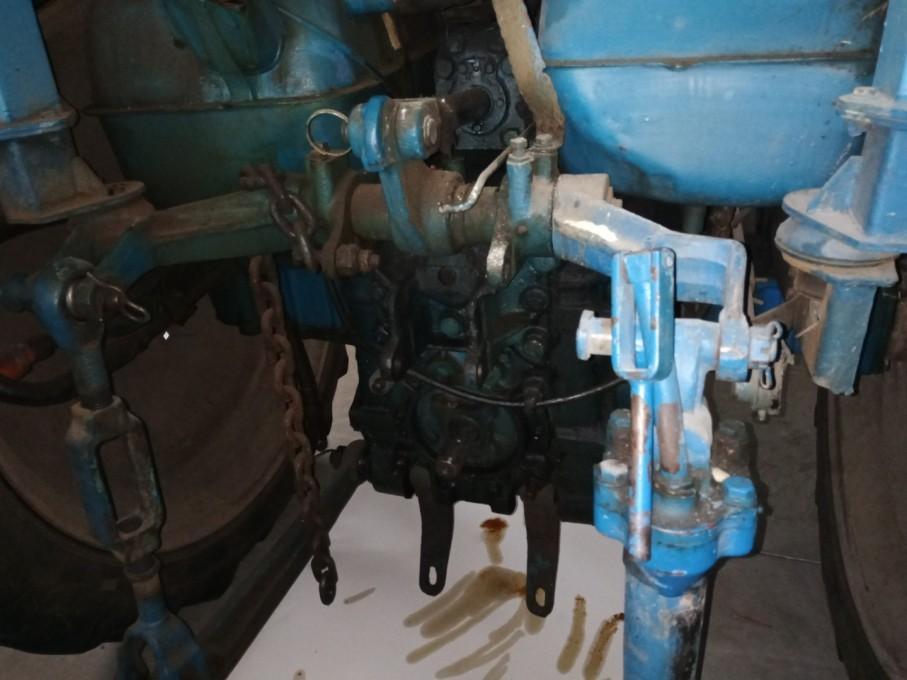
Rear coupling
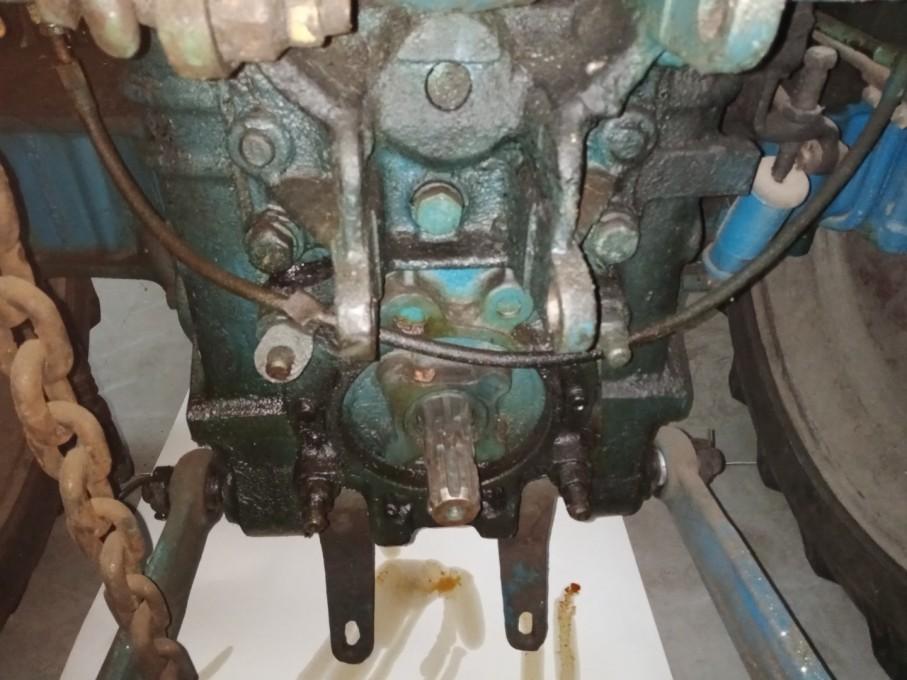
Power take-off shaft without critical flow.
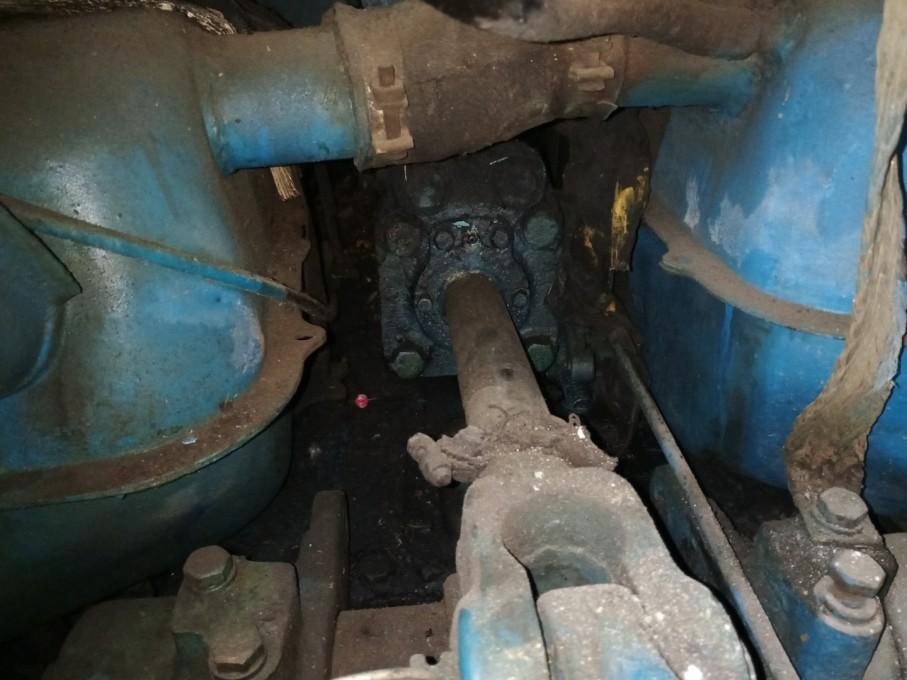
Hydraulic cylinder of the coupling...
Electrical equipment
It is imperative to check the operation of the tractor's electrical equipment. The battery is operational if it provides the cranking of the engine crankshaft by the starter during start-up. The generator fully fulfills its functions if it ensures the operation of the consumers connected to it and the charging of the battery. It is necessary to pay attention to the operation of lighting and light signaling equipment, which is evaluated and confirmed by the trouble-free operation of all tractor devices and devices.
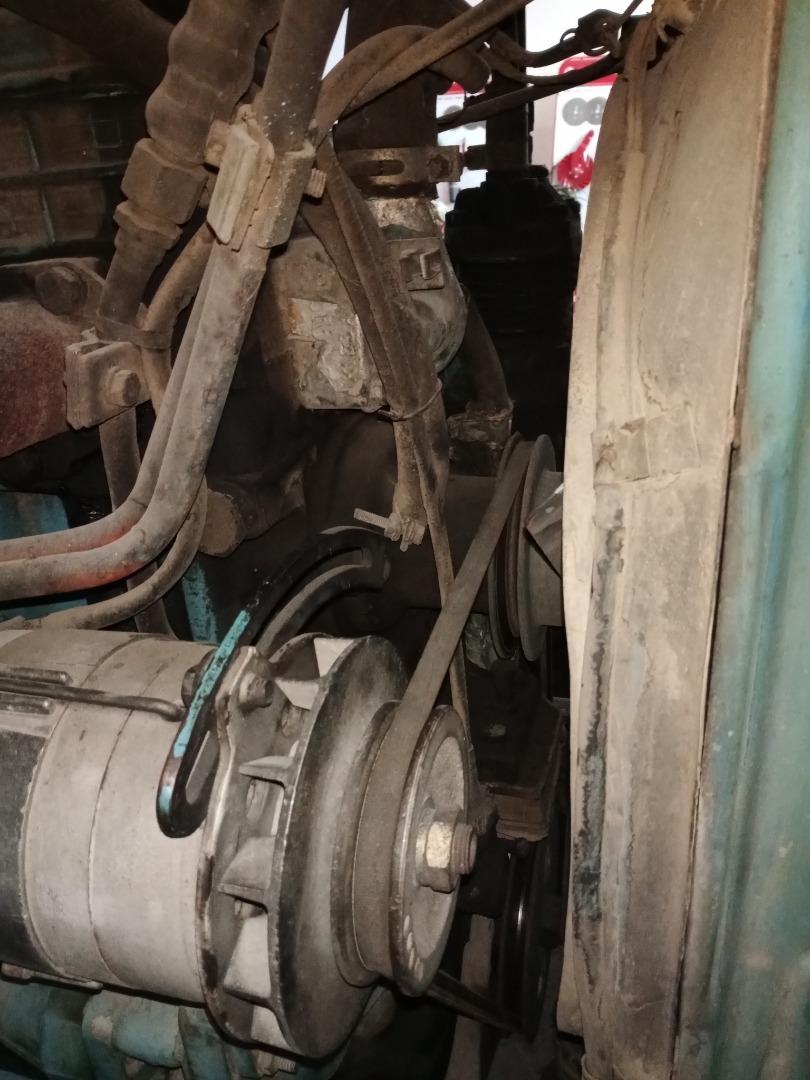
Generator drive. There is no visible oil spillage.
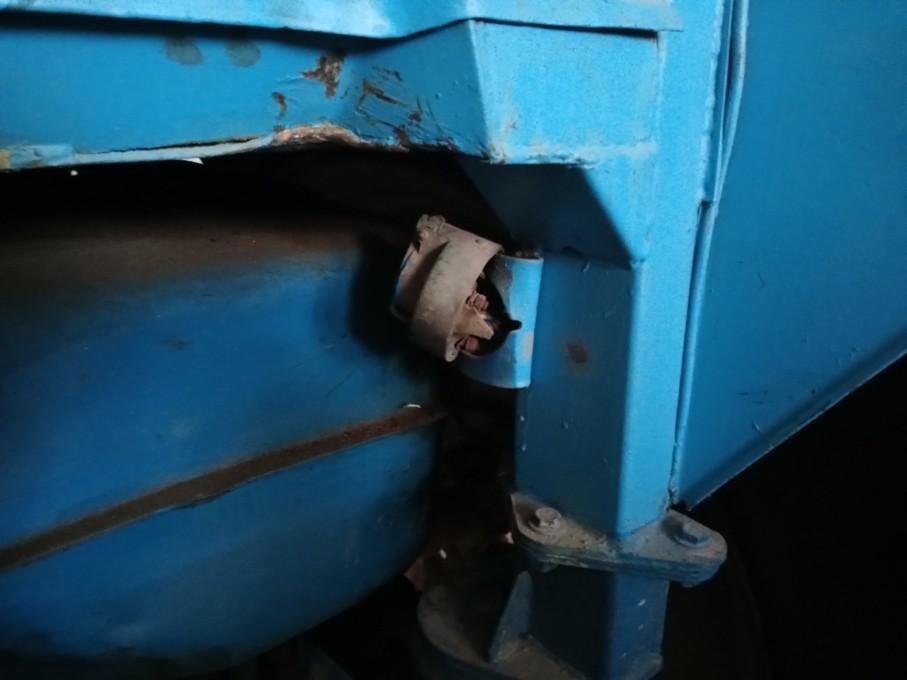
The contact group on the trailer or hitch is out of order.
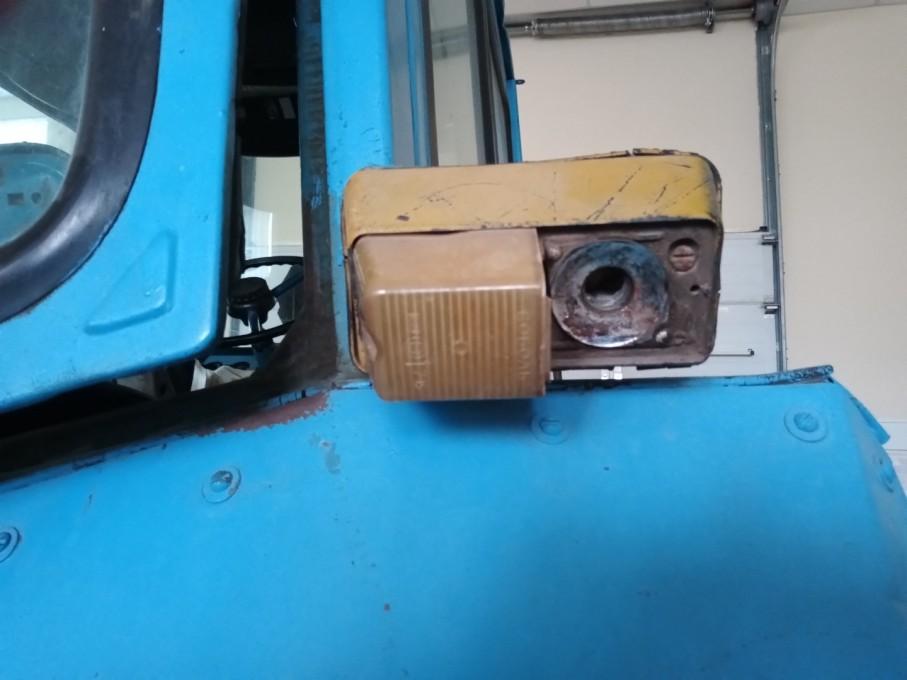
The rear right lamp is damaged. It is not only dangerous on general purpose roads, but also threatens with a fine.
It is worth noting that the presented recommendations are only a small part of the measures and requirements that should be followed when purchasing tractors on the secondary market, so that their operation is effective, long-term and trouble-free.