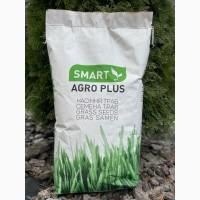
Sell / buy
Kostrets bezostiy/Stokolos, Volyn region.
Price75 UAH.
Region:all Ukraine,
Volyn region.
(Lutsk)
Updated:
Bromopsis inermis Holub is a perennial high-growing cereal, which occupies one of the first places in terms of fodder quality and distribution among perennial cereal fodder grasses.
Contains an average of 12.5% crude protein, about 50 feed. unit (in 100 kg of hay).
St. John's wort is a beautiful hay and pasture plant as one of the components of grass mixtures. It is of great value for permanent pastures and flooded meadows. It is well eaten, especially before earing, by all kinds of animals, but better than others -large horned cattle and horses.
All things being equal, thornless sedge gives a higher yield than other perennial grasses. The inclusion of ego in grass mixtures with legumes increases the yield of hay and pasture fodder, creates conditions for better grass growth.
Botanical and biological features:
The root system is rhizome, capable of rooting in nodes, which leads to the formation of new bushes. The roots penetrate the soil to a depth of up to 2 m. Owing to its highly developed root system, the thornless sedge tolerates drought well.
The stems are straight, well leafy, up to 180–200 cm high. The leaves are broad-linear, flat. Inflorescence is a panicle of various shapes (downward, spreading, semi-compressed, compressed, compact, single-crested). The fruit is a grain in dark gray flower scales. The weight of 1000 seeds is 3.5 g.
There are many varieties of the thornless pine tree, which can be reduced to three groups related to the regions of their cultivation.
The meadow group, confined to a humid climate - to the taiga-forest zone, the non-chernozem zone, to the northern regions, floodplain meadows; it is distinguished by its high foliage, yield and good fodder qualities.
The steppe group is widespread in the arid steppe regions of the southeast. Compared to the meadow, the leafy one is weaker, it is inferior to it in fodder quality and productivity, but it is superior in drought resistance.
The forest-steppe group occupies an intermediate position between the two previous groups, but it is closer to the steppe group in terms of its main characteristics. It grows in forest-steppe and steppe zones, on medium-moistened soils, along steppe estuaries, streams.
(//tractor-service.com)
Spiny sedge can grow on a wide variety of soils, but the best for it are loose alluvial soils of river floodplains, as well as chernozem sandy or loamy soils. It grows poorly on heavy chestnut, clay soils and does not tolerate waterlogged and saline ones.
It is characterized by high winter resistance and drought resistance. It grows in one place for 12–14 years, and with the use of fertilized floodplain lands - up to 20 years. A good harvest is produced within 4–5 years, but the highest productivity is reached in the second and third years of life.
Agrotechnics:
Boneless kostrets Boneless kostrets is a good precursor for grain crops, in particular for wheat. In grass mixtures with leguminous perennial grasses, it significantly increases the yield of cereals.
As a rhizomatous grain, thornless thorn was not recommended for field crop rotations for fear of clogging the fields. However, the data of experimental institutions, as well as a number of farms in different regions, show that with deep plowing (at 25-27 cm), the rhizomes do not grow and do not create a threat of clogging of subsequent grain crops.
Cultivation of the soil under the thornless gorse begins with the husking of the stubble and deep plowing. Snow retention and melt water retention are carried out on the finches. In early spring, finches are plowed in 2–3 tracks.
Fertilizer gives good results. The main fertilizer (mineral and organic) should be applied before cutting, and top dressing should be applied after mowing.
The optimal time for sowing grass mixtures of thornless sedge and leguminous grasses is early spring and late summer. The best method of sowing is inter-row sowing.
The seeding rate for row sowing is 20–25 kg/ha, and for wide-row sowing - 15 kg/ha. The seeding rate of the alfalfa-breast mixture is 12 kg of thornless bracken and 5–6 kg ofalfalfa. The depth of seed sowing is 4–5 cm, and in grass mixtures – 3–4 cm.
In the tillering phase, crops are fed with organic and mineral fertilizers; harrowing and fertilizing are carried out after the first mowing. It is possible to apply fertilizers in the fall after the last mowing.
You should mow the grass stand for hay in the phase of the panicle sweepers. For better preservation of nutrients, drying of hay in swathes and rolls should be completed within 2–3 days.
It is expedient to plant seed crops of the thornless boletus in a wide-row manner. For seed purposes, the best plots of the third and fourth years of use are selected from continuous grass stands in the fall. These crops are fertilized with mineral fertilizers in autumn after mowing, and snow retention is carried out in winter. Additional pollination helps to increase seed yield (by 50 kg or more from 1 ha). The yield ofseeds of kostretsa boneless can reach 6-7t/ha.
Contains an average of 12.5% crude protein, about 50 feed. unit (in 100 kg of hay).
St. John's wort is a beautiful hay and pasture plant as one of the components of grass mixtures. It is of great value for permanent pastures and flooded meadows. It is well eaten, especially before earing, by all kinds of animals, but better than others -large horned cattle and horses.
All things being equal, thornless sedge gives a higher yield than other perennial grasses. The inclusion of ego in grass mixtures with legumes increases the yield of hay and pasture fodder, creates conditions for better grass growth.
Botanical and biological features:
The root system is rhizome, capable of rooting in nodes, which leads to the formation of new bushes. The roots penetrate the soil to a depth of up to 2 m. Owing to its highly developed root system, the thornless sedge tolerates drought well.
The stems are straight, well leafy, up to 180–200 cm high. The leaves are broad-linear, flat. Inflorescence is a panicle of various shapes (downward, spreading, semi-compressed, compressed, compact, single-crested). The fruit is a grain in dark gray flower scales. The weight of 1000 seeds is 3.5 g.
There are many varieties of the thornless pine tree, which can be reduced to three groups related to the regions of their cultivation.
The meadow group, confined to a humid climate - to the taiga-forest zone, the non-chernozem zone, to the northern regions, floodplain meadows; it is distinguished by its high foliage, yield and good fodder qualities.
The steppe group is widespread in the arid steppe regions of the southeast. Compared to the meadow, the leafy one is weaker, it is inferior to it in fodder quality and productivity, but it is superior in drought resistance.
The forest-steppe group occupies an intermediate position between the two previous groups, but it is closer to the steppe group in terms of its main characteristics. It grows in forest-steppe and steppe zones, on medium-moistened soils, along steppe estuaries, streams.
(//tractor-service.com)
Spiny sedge can grow on a wide variety of soils, but the best for it are loose alluvial soils of river floodplains, as well as chernozem sandy or loamy soils. It grows poorly on heavy chestnut, clay soils and does not tolerate waterlogged and saline ones.
It is characterized by high winter resistance and drought resistance. It grows in one place for 12–14 years, and with the use of fertilized floodplain lands - up to 20 years. A good harvest is produced within 4–5 years, but the highest productivity is reached in the second and third years of life.
Agrotechnics:
Boneless kostrets Boneless kostrets is a good precursor for grain crops, in particular for wheat. In grass mixtures with leguminous perennial grasses, it significantly increases the yield of cereals.
As a rhizomatous grain, thornless thorn was not recommended for field crop rotations for fear of clogging the fields. However, the data of experimental institutions, as well as a number of farms in different regions, show that with deep plowing (at 25-27 cm), the rhizomes do not grow and do not create a threat of clogging of subsequent grain crops.
Cultivation of the soil under the thornless gorse begins with the husking of the stubble and deep plowing. Snow retention and melt water retention are carried out on the finches. In early spring, finches are plowed in 2–3 tracks.
Fertilizer gives good results. The main fertilizer (mineral and organic) should be applied before cutting, and top dressing should be applied after mowing.
The optimal time for sowing grass mixtures of thornless sedge and leguminous grasses is early spring and late summer. The best method of sowing is inter-row sowing.
The seeding rate for row sowing is 20–25 kg/ha, and for wide-row sowing - 15 kg/ha. The seeding rate of the alfalfa-breast mixture is 12 kg of thornless bracken and 5–6 kg ofalfalfa. The depth of seed sowing is 4–5 cm, and in grass mixtures – 3–4 cm.
In the tillering phase, crops are fed with organic and mineral fertilizers; harrowing and fertilizing are carried out after the first mowing. It is possible to apply fertilizers in the fall after the last mowing.
You should mow the grass stand for hay in the phase of the panicle sweepers. For better preservation of nutrients, drying of hay in swathes and rolls should be completed within 2–3 days.
It is expedient to plant seed crops of the thornless boletus in a wide-row manner. For seed purposes, the best plots of the third and fourth years of use are selected from continuous grass stands in the fall. These crops are fertilized with mineral fertilizers in autumn after mowing, and snow retention is carried out in winter. Additional pollination helps to increase seed yield (by 50 kg or more from 1 ha). The yield ofseeds of kostretsa boneless can reach 6-7t/ha.
|
Author, contacts | |
Lutsksemena / отзывы, инфо. / evaluation activities | |
|
Telephone:
+380xxxxxx
show
| |
All user ads ~10 | |
Ad ID: #985245
(added by a registered user, registration date: 06-12-2019)
Added/Updated: 10-12-2025 07:20 (relevant, until: 10-12-2026)
Permanent ad address:
Showed / watched for today: ?, total: ?