/ Seeds, seedlings and sowing materials / Seeds of forage grasses / Ezha sbornaya/ Collected gorse. Possible sale...


For sale / buy
Ezha sbornaya/ Pre-assembled hryastytsia. Possible sale with VAT, Volyn region.
Price55 UAH.
Region:all of Ukraine,
Volyn region.
(Lutsk)
Updated:
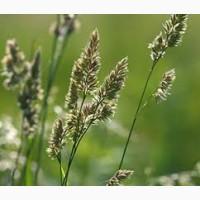
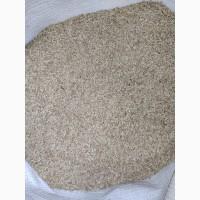
Hedgehog (Dactylis glomerata L.) is a loose-bush cereal that forms a multi-stemmed bush with a large number of basal leaves. A powerfully developed root system penetrates the soil to a depth of up to 100 cm, but the main mass of roots is located in the upper layer of the soil. The stems are erect, up to 150 cm high. The leaves are wide, long. When resting, the stems become coarse. Inflorescence is a compressed panicle. Fruits are filmy, triangular in shape, gray in color.
At the time of sowing, it grows and develops slowly, but in the second and third years of life it is the most productive and under favorable conditions can give from two to four cuttings per hour.
Hay and green mass, mowed in the earing phase, have high fodder qualities (hay contains up to 10% protein, 40 feed units per 100 kg). Collected hedgehog is well eaten by all types of animals. With timely cleaning, it grows back quickly. It can last up to eight years in grass stands.
Drought resistance and winter resistance are low. Very sensitive to temperature drops, frosts, in winter with weak snow cover it can freeze. It does not tolerate prolonged flooding. Undemanding to the soil. The best crops are obtained on loamy soils, rich in humus, on well-drained peatlands, but not on strongly acidic and saline soils.(//tractor-service.com)
As a component of grass mixtures of field crop rotations, it is possible to grow ergot in the non-chernozem zone, in Central Asia, in the North Caucasus, and in Transcaucasia. Common hedgehog accompaniestimofeivke in the central and western regions of the Non-Black Earth zone, serves as a valuable component of alfalfa mixtures in cotton crop rotations of Central Asia. It can be included in clover mixes. At the Field Farming Experimental Station of the TSHA, a mixture of clover and hedgehog combined yielded 450 kg more hay than a mixture of clover andовсяницы.
Семена ежи сборнойНа формирование 1ц сена ежа сборная потребляет из почвы 2,3–2,5кг азота, 0,4–0.5кг P2O5 и 3,6–3,8кг K2O. Она особенно отзывчива на внесение азотных удобрений. При использовании навозной жижи для подкормки наибольший урожай в центральном районе Нечерноземной зоны получают при двукратном поливе (весной и после первого укоса).
When sowing in its pure form, the seeding rate is 14–15 kg/ha, with the wide-row method (for seeds) – 8–9. In grass mixtures of field crop rotations, it is sown at a rate of 7–8 kg/ha. The weight of 1000 seeds is 1.2 g.
In order to avoid their loss, it is recommended to harvest the seeds in the phase of waxy ripeness. The seed yield is usually 3–4ts/ha, but can reach 7–10ts/ha.
At the time of sowing, it grows and develops slowly, but in the second and third years of life it is the most productive and under favorable conditions can give from two to four cuttings per hour.
Hay and green mass, mowed in the earing phase, have high fodder qualities (hay contains up to 10% protein, 40 feed units per 100 kg). Collected hedgehog is well eaten by all types of animals. With timely cleaning, it grows back quickly. It can last up to eight years in grass stands.
Drought resistance and winter resistance are low. Very sensitive to temperature drops, frosts, in winter with weak snow cover it can freeze. It does not tolerate prolonged flooding. Undemanding to the soil. The best crops are obtained on loamy soils, rich in humus, on well-drained peatlands, but not on strongly acidic and saline soils.(//tractor-service.com)
As a component of grass mixtures of field crop rotations, it is possible to grow ergot in the non-chernozem zone, in Central Asia, in the North Caucasus, and in Transcaucasia. Common hedgehog accompaniestimofeivke in the central and western regions of the Non-Black Earth zone, serves as a valuable component of alfalfa mixtures in cotton crop rotations of Central Asia. It can be included in clover mixes. At the Field Farming Experimental Station of the TSHA, a mixture of clover and hedgehog combined yielded 450 kg more hay than a mixture of clover andовсяницы.
Семена ежи сборнойНа формирование 1ц сена ежа сборная потребляет из почвы 2,3–2,5кг азота, 0,4–0.5кг P2O5 и 3,6–3,8кг K2O. Она особенно отзывчива на внесение азотных удобрений. При использовании навозной жижи для подкормки наибольший урожай в центральном районе Нечерноземной зоны получают при двукратном поливе (весной и после первого укоса).
When sowing in its pure form, the seeding rate is 14–15 kg/ha, with the wide-row method (for seeds) – 8–9. In grass mixtures of field crop rotations, it is sown at a rate of 7–8 kg/ha. The weight of 1000 seeds is 1.2 g.
In order to avoid their loss, it is recommended to harvest the seeds in the phase of waxy ripeness. The seed yield is usually 3–4ts/ha, but can reach 7–10ts/ha.
|
Author, contacts | |
Lutsksemena / отзывы, инфо. / оценка activities | |
|
Phone:
+380xxxxxx
show
| |
All user ads ~10 | |
Ad ID: #985234
(added by a registered user, registration date: 06-12-2019)
Added/Updated: 10-12-2025 07:20 (relevant, until: 10-12-2026)
Permanent ad address:
Showed / watched for today: ?, total: ?
Similar ads
Among them there are many interesting...