For sale / buy
Yellow mustard Medonos, Dnipropetrovsk region.
Region:all of Ukraine,
Dnipropetrovsk region.
(Dnipro)
Yellow mustard wears the title of one of the most famous honey crops in the world. Mustard grows practically everywhere, it is not demanding on soil or climate, which makesseeds honey mustard the most sought-after solution. The honey turns out to be aromatic, slightly spicy, and of a pleasant yellow color.
Honey productivity: From 1 hectare of sowing, up to 40-200 kg of honey is collected, including even on days with cold nights.
Sowing rate: With wide-row sowing, the seed sowing rate is 10-12 kg/ha and with regular sowing - 15-18 kg/ha. Mustard seeds can be planted from mid-March to September. Of course, planting in September is carried out already in winter - mustard will grow in early spring and will be one of the first to start blooming. Seeds of yellow mustard are sown by the row method and by the scattered method. The most acceptable planting depth is 1.5 cm to 2 cm.(//tractor-service.com)
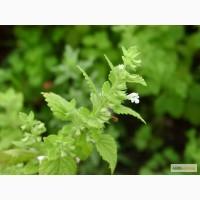
Description of the plant. The height of the stem is up to 1 meter, it is branched, covered with stiff and thick hairs. The flowers are white or pale yellow, collected in a tuft-like multi-flowered inflorescence. The pod has stiff hairs, tuberous. Yellow mustard fruits do not crack. The seeds are creamy, smooth, spherical. The mass of 1 thousand seeds is 5.2-6.0 grams. Seeds begin to germinate at 1-2 C. Seedlings can withstand prolonged frosts up to -6 C. Undemanding to soils.
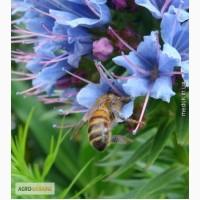
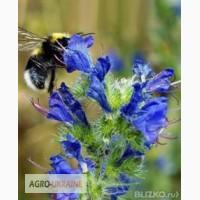
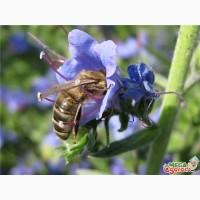
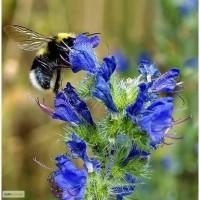
Yellow mustard is one of the most important honey plants, nectar (18% sugar in it) and pollen are obtained from it.
Mustard is a siderate, so it does notrequire fertilizer, but it itself is a siderate.Organic fertilizers are better than what is sufficient for the growth of this plant. Suppresses the growth and development of weed species, cleans the soil from pathogens of agricultural crops. Подробнее: https://medoray.top/p1042061164-gorchitsa-zheltaya.html
Honey productivity: From 1 hectare of sowing, up to 40-200 kg of honey is collected, including even on days with cold nights.
Sowing rate: With wide-row sowing, the seed sowing rate is 10-12 kg/ha and with regular sowing - 15-18 kg/ha. Mustard seeds can be planted from mid-March to September. Of course, planting in September is carried out already in winter - mustard will grow in early spring and will be one of the first to start blooming. Seeds of yellow mustard are sown by the row method and by the scattered method. The most acceptable planting depth is 1.5 cm to 2 cm.(//tractor-service.com)
Description of the plant. The height of the stem is up to 1 meter, it is branched, covered with stiff and thick hairs. The flowers are white or pale yellow, collected in a tuft-like multi-flowered inflorescence. The pod has stiff hairs, tuberous. Yellow mustard fruits do not crack. The seeds are creamy, smooth, spherical. The mass of 1 thousand seeds is 5.2-6.0 grams. Seeds begin to germinate at 1-2 C. Seedlings can withstand prolonged frosts up to -6 C. Undemanding to soils.
Yellow mustard is one of the most important honey plants, nectar (18% sugar in it) and pollen are obtained from it.
Mustard is a siderate, so it does notrequire fertilizer, but it itself is a siderate.Organic fertilizers are better than what is sufficient for the growth of this plant. Suppresses the growth and development of weed species, cleans the soil from pathogens of agricultural crops. Подробнее: https://medoray.top/p1042061164-gorchitsa-zheltaya.html
ID объявления: #979790
(добавлено зарегистрированным пользователем)
Permanent ad address:
Showed / watched for today: ?, total: ?
Похожие свежие объявления
Среди них есть много интересных...