For sale / buy
Upper blueberry from 50 kg, Kiev region.
Region:
Kievskaya region.
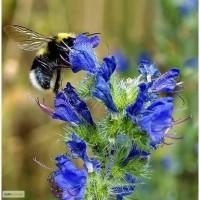
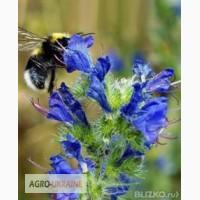
The common blueberry is a biennial plant, reaching 100-180 cm in height. The flowers are large, gathered on elongated peduncles in curls, at the beginning of flowering they are pink, and then with a blue corolla. An elongated spike-shaped inflorescence is formed from numerous curls in the upper part of the stem. The tap root penetrates the soil to a depth of up to 60 cm. The blueberry is an unpretentious plant, black earth soils are especially favorable for its growth, but even on poor soils it shows good results.
After the appearance of seedlings, the common blueberry forms a rosette pressed to the ground, and at the time of planting it forms a taproot. On the second hour of life, 5-7 tall stalks grow from this rosette.
Seeds should be stored at a temperature of 10-28 degrees in a well-ventilated dry room. If the storage conditions are met, the seeds retain their ability to germinate for 3 years. Seeds do not require special preparation for sowing. To ensure sparse sowing, they are sometimes mixed with sand or earth.
(//tractor-service.com)
Common blueberry grows well under a loving cover culture.Phacelia, rapeseed,mustard and other honeydews can also be used as cover crops. Common blueberry is sown in late spring and until mid-July. It is also possible to sow before winter, but so that the seeds do not germinate in winter, otherwise the seedlings will die. The seeding rate per 1 ha with narrow-row sowing is 6-7 kg, with wide-row sowing - 4 kg per 1 ha.
In the first year, it is very important to mow the cover crop in a timely manner at a height of 10 cm. Seed collection begins when the majority of the flower buds turn brown on most stems. Threshing begins a week after the cut mass dries in the rolls.
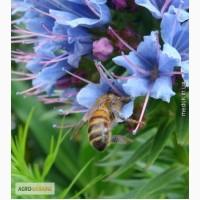
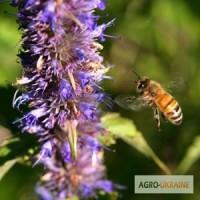
Common blueberry blooms from the beginning of June to the middle (end) of July (massively), the flowering period lasts up to 35 days. Nectar productivity of this plant does not decrease even during drought and cold weather. Its honey productivity is about 300 kg per 1 ha, and in the central and northern regions of Ukraine it reaches even up to 800 kg per 1 ha. Under favorable climatic conditions, the common honeybee can produce up to 8 kg of honey per bee colony. Bees also collect the pollen of common blueberry.
The plant also gives a large yield of green mass, which allows it to be used in the preparation of silage, so common blueberry can bring a double benefit to the economy.
After the appearance of seedlings, the common blueberry forms a rosette pressed to the ground, and at the time of planting it forms a taproot. On the second hour of life, 5-7 tall stalks grow from this rosette.
Seeds should be stored at a temperature of 10-28 degrees in a well-ventilated dry room. If the storage conditions are met, the seeds retain their ability to germinate for 3 years. Seeds do not require special preparation for sowing. To ensure sparse sowing, they are sometimes mixed with sand or earth.
(//tractor-service.com)
Common blueberry grows well under a loving cover culture.Phacelia, rapeseed,mustard and other honeydews can also be used as cover crops. Common blueberry is sown in late spring and until mid-July. It is also possible to sow before winter, but so that the seeds do not germinate in winter, otherwise the seedlings will die. The seeding rate per 1 ha with narrow-row sowing is 6-7 kg, with wide-row sowing - 4 kg per 1 ha.
In the first year, it is very important to mow the cover crop in a timely manner at a height of 10 cm. Seed collection begins when the majority of the flower buds turn brown on most stems. Threshing begins a week after the cut mass dries in the rolls.
Common blueberry blooms from the beginning of June to the middle (end) of July (massively), the flowering period lasts up to 35 days. Nectar productivity of this plant does not decrease even during drought and cold weather. Its honey productivity is about 300 kg per 1 ha, and in the central and northern regions of Ukraine it reaches even up to 800 kg per 1 ha. Under favorable climatic conditions, the common honeybee can produce up to 8 kg of honey per bee colony. Bees also collect the pollen of common blueberry.
The plant also gives a large yield of green mass, which allows it to be used in the preparation of silage, so common blueberry can bring a double benefit to the economy.
Ad ID: #979744
(added by a registered user)
Permanent ad address:
Showed / watched for today: ?, total: ?