/ Fertilizers and plant protection products / Herbicides / Herbicide Miladar Kombi (dr. Nicosulfuron, 600 g/...

For sale / buy
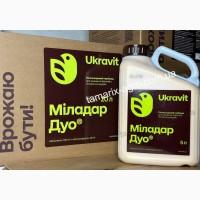
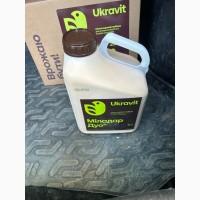
Herbicide Miladar Combi (dr. Nicosulfuron, 600 g/kg + thifensulfuron-methyl, 150 g/kg), Kyiv
Price98.45$
Region:all Ukraine,
Kyiv
Updated:
Post-emergence herbicide of systemic action for the destruction of annual, perennial grass and some dicotyledonous weeds in corn crops.
• highly effective systemic herbicide for controlling grass and broadleaf weeds on corn crops;
• belongs to herbicides of "instant" action;
• the presence of precipitation after 4 hours does not affect the effectiveness of the drug;
• absence of toxic effect on subsequent crops in crop rotation;
• not harmful to the environment.
Active ingredient. Nicosulfuron, 600 g/kg + thifensulfuron-methyl, 150 g/kg.
Preparative form. Granules dispersible in water.
Chemical group. Derivatives of sulfonylureas.
Compatibility Compatible with most pesticides, except alkaline, on appropriate crops. Before preparing the working mixtures, it is advisable to check the compatibility of the drugs (absence of sediment, foam, delamination, clumping, incomplete dissolution of one of the drugs, etc.). It is not recommended to make tank mixtures with preparations from the group of organophosphorus compounds.
Mechanism of action. Systemic herbicide. Nicosulfuron stops cell division by blocking the processes responsible for the biosynthesis of essential amino acids. Treated weeds quickly stop growing and compete with cultivated plants.
Spectrum of action.
Sensitive weeds: common sedge,mustard (species), common buckwheat, medium star, chicken millet, millet (species), mouse's millet (species), glove (species), creeping wheatgrass, garden purslane,radish dill, field romance, chamomile (species), white shrytsia, common shrytsia.
Moderately sensitive weeds: ragweed (species), bitter gorse, bitter gorse (species).
Weeds that are weakly sensitive: bitter gorse, purple nettle, field chicken eye, garden thistle, tenacious nightshade, annual nightshade, marsh sedum, annual sedum, common spergel.
(//tractor-service.com)
Crop:Corn
Drug consumption rate, kg/ha: 0.08-0.09+ adjuvant "Zakhvat Oil" 0.75-1.0 l/ha
Spectrum of action: Annual, perennial cereals and the most common annual dicotyledonous weeds.
Method, time of processing: Spraying in phase 3 - 5 leaves of the culture.
The maximum number of treatments is 1.
There is no waiting period from processing to harvesting.
The consumption rate of the working solution is 200-300 l/ha.
Processing must be carried out during the period of intensive growth of weeds and crops. Within 7 days before or after the application of MILADAR COMBI, do not perform inter-row tillage.
The optimal conditions for the use of MILADAR COMBI are warm weather (15-25°C) with optimal soil and air humidity.
It is not recommended to use the drug under adverse conditions (cold or hot weather, excessive moisture, and a depressed state of weeds). Rain that has passed 3-4 hours after applying the herbicide does not affect its effectiveness. With a high degree of weediness, it is advisable to increase the consumption rate to 95 g/ha + adjuvant "Zakhvat Oil" 0.75-1.0 l/ha.
Toxicity. WHO classification: class 3 (malotoxic).
Time limits for workers to leave the treated areas for mechanized work — 3 days, for manual work — 7 days after treatment.
Packaging. 90 g.
the price is for 1 kg.
• highly effective systemic herbicide for controlling grass and broadleaf weeds on corn crops;
• belongs to herbicides of "instant" action;
• the presence of precipitation after 4 hours does not affect the effectiveness of the drug;
• absence of toxic effect on subsequent crops in crop rotation;
• not harmful to the environment.
Active ingredient. Nicosulfuron, 600 g/kg + thifensulfuron-methyl, 150 g/kg.
Preparative form. Granules dispersible in water.
Chemical group. Derivatives of sulfonylureas.
Compatibility Compatible with most pesticides, except alkaline, on appropriate crops. Before preparing the working mixtures, it is advisable to check the compatibility of the drugs (absence of sediment, foam, delamination, clumping, incomplete dissolution of one of the drugs, etc.). It is not recommended to make tank mixtures with preparations from the group of organophosphorus compounds.
Mechanism of action. Systemic herbicide. Nicosulfuron stops cell division by blocking the processes responsible for the biosynthesis of essential amino acids. Treated weeds quickly stop growing and compete with cultivated plants.
Spectrum of action.
Sensitive weeds: common sedge,mustard (species), common buckwheat, medium star, chicken millet, millet (species), mouse's millet (species), glove (species), creeping wheatgrass, garden purslane,radish dill, field romance, chamomile (species), white shrytsia, common shrytsia.
Moderately sensitive weeds: ragweed (species), bitter gorse, bitter gorse (species).
Weeds that are weakly sensitive: bitter gorse, purple nettle, field chicken eye, garden thistle, tenacious nightshade, annual nightshade, marsh sedum, annual sedum, common spergel.
(//tractor-service.com)
Crop:Corn
Drug consumption rate, kg/ha: 0.08-0.09+ adjuvant "Zakhvat Oil" 0.75-1.0 l/ha
Spectrum of action: Annual, perennial cereals and the most common annual dicotyledonous weeds.
Method, time of processing: Spraying in phase 3 - 5 leaves of the culture.
The maximum number of treatments is 1.
There is no waiting period from processing to harvesting.
The consumption rate of the working solution is 200-300 l/ha.
Processing must be carried out during the period of intensive growth of weeds and crops. Within 7 days before or after the application of MILADAR COMBI, do not perform inter-row tillage.
The optimal conditions for the use of MILADAR COMBI are warm weather (15-25°C) with optimal soil and air humidity.
It is not recommended to use the drug under adverse conditions (cold or hot weather, excessive moisture, and a depressed state of weeds). Rain that has passed 3-4 hours after applying the herbicide does not affect its effectiveness. With a high degree of weediness, it is advisable to increase the consumption rate to 95 g/ha + adjuvant "Zakhvat Oil" 0.75-1.0 l/ha.
Toxicity. WHO classification: class 3 (malotoxic).
Time limits for workers to leave the treated areas for mechanized work — 3 days, for manual work — 7 days after treatment.
Packaging. 90 g.
the price is for 1 kg.
|
Author, contacts | |
Anastasiya Volodymyrivna / отзывы, инфо. / evaluation activities | |
|
Phone:
0961xxxxxx
show
| |
All user ads ~301 | |
Ad ID: #962564
(added by a registered user, registration date: 02-12-2014)
Added/Updated: 02-27-2025 17:28 (current, until: 27-02-2026)
Permanent ad address:
Showed / watched for today: ?, total: ?
Similar ads
Among them there are many interesting ones...