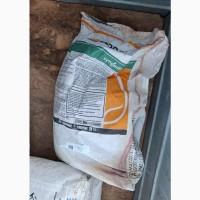
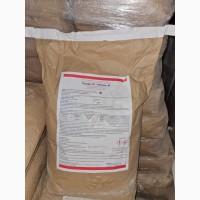
/ Fertilizers and plant protection products / Insecticides / Anders is a universal system contact...
Sell / buy
Anders is a universal system-contact, two-component insecticide from pests, Kiev region.
Price15$
Region:all Ukraine,
Kievskaya region.
(Vyshhorodok)
Updated:
Anders insecticide, (an analogue of the Upperkot Akro insecticide and Kanonir Duo insecticide) is a universal system-contact, two-component insecticide that has a long period of protection against a complex of pests.
Active substance: imidacloprid, 300 g/l + lambda-cyhalothrin, 100 g/l.
Packaging: 5 l plastic container, the price is for 1 l.
Preparative form: Suspension concentrate.
The rate of consumption of the working liquid: 50-300 l/ha (depends on the phase of development and the density of plant standing; on the equipment and type of sprayers).
ZZR is compatible with many insecticides, fungicides, micro- and macro-fertilizers that do not have an alkaline reaction. Toxic to bees and other beneficial insects upon contact. Quite resistant to being washed away by precipitation.
Advantages of using Anders insecticide:
has a pronounced systemic and contact action;
shows high efficiency against gnawing and sucking insects, as well as ticks;
there is no resistance due to different mechanisms of action of active substances;
has reliable protection of new growth due to pronounced systemic action;
Mechanism of action of insecticide Andres
Imidacloprid has a pronounced systemic effect, enters the plant through leaves, stems and roots. In the body of insect pests, it acts on the acetylcholine receptor of the postsynaptic membrane, but as a competitor of acetylcholine. Violates the normal conduction of nerve impulses through the synapse.
Lambda-cyhalothrin belongs to synthetic pyrethroids, and has a contact effect, it is kept externally on the treated part of the plant. It affects the pest's nervous system and disrupts the permeability of cell membranes, blocking sodium channels. Leads to paralysis of the central and peripheral nervous system. As a result, the nervous system of phytophagous insects is affected, and this leads to their death.
Application features
Treatment with Anders insecticide should be started with a large number of pests that exceeds the economic threshold of harmfulness (depending on the type of phytophagus). The pesticide should be applied evenly to the surface of the plant using well-adjusted equipment. The volume of the working solution should be sufficient to completely cover the entire leaf surface of the culture.
The insecticide is toxic to bees. Do not spray during the flowering period. When using on cultures with a dense wax coating, it is worth adding the surface-active substance Kite (0.2-0.25 l/ha) to the working solution. It is not recommended to carry out spraying at a wind speed of more than 3-4 m/s and at an air temperature above +28˚C. Do not allow the working solution to run off the treated sheet surface.
Rate of consumption / dosage
Culture - Objects - Drug consumption rate, l/ha - Processing method - Maximum number of processings
Potato
Colorado beetle
0.05-0.1
Spraying during the growing season when a pest appears.
2
Potatoes, tomatoes in a private farm
1 ml/100 m²
Spraying during the growing season when a pest appears.
Registration is planned.
Corn
Complex of pests(//tractor-service.com)
0.06-0.15
Spraying during the growing season
2
Winter wheat
Harmful cockroach bug, leeches, aphids, grain flies, bread bugs, thrips, bread fleas
0.06-0.15
Spraying during the growing season
Barley is hot
Harmful cockroach bug, grain flies, bread fleas, leeches, grain aphids, thrips, bread bugs
0.05-0.1
Spraying during the growing season
Rapak
Rape flower eater, cruciferous fleas, hidden octopus, rape sawfly
0.05-0.1
Spraying during the growing season
Soya
Acacia firefly, whiteflies, scoop larvae up to the second generation, thrips
0.05-0.1
Spraying during the growing season
Sugar beets
Aphids, aphids
0.1-0.15
Spraying during the growing season
Tomatoes
Colorado beetle, leafhoppers, thrips
0.05-0.1
Spraying during the growing season
Apple tree
Apple fruit eater, leafhoppers, passing moths, green apple aphid, scales
0.15-0.2
Spraying during the growing season
Sunflower
Aphids, sunflower spikewort
0.1-0.2
Spraying during the vegetation period.
Active substance: imidacloprid, 300 g/l + lambda-cyhalothrin, 100 g/l.
Packaging: 5 l plastic container, the price is for 1 l.
Preparative form: Suspension concentrate.
The rate of consumption of the working liquid: 50-300 l/ha (depends on the phase of development and the density of plant standing; on the equipment and type of sprayers).
ZZR is compatible with many insecticides, fungicides, micro- and macro-fertilizers that do not have an alkaline reaction. Toxic to bees and other beneficial insects upon contact. Quite resistant to being washed away by precipitation.
Advantages of using Anders insecticide:
has a pronounced systemic and contact action;
shows high efficiency against gnawing and sucking insects, as well as ticks;
there is no resistance due to different mechanisms of action of active substances;
has reliable protection of new growth due to pronounced systemic action;
Mechanism of action of insecticide Andres
Imidacloprid has a pronounced systemic effect, enters the plant through leaves, stems and roots. In the body of insect pests, it acts on the acetylcholine receptor of the postsynaptic membrane, but as a competitor of acetylcholine. Violates the normal conduction of nerve impulses through the synapse.
Lambda-cyhalothrin belongs to synthetic pyrethroids, and has a contact effect, it is kept externally on the treated part of the plant. It affects the pest's nervous system and disrupts the permeability of cell membranes, blocking sodium channels. Leads to paralysis of the central and peripheral nervous system. As a result, the nervous system of phytophagous insects is affected, and this leads to their death.
Application features
Treatment with Anders insecticide should be started with a large number of pests that exceeds the economic threshold of harmfulness (depending on the type of phytophagus). The pesticide should be applied evenly to the surface of the plant using well-adjusted equipment. The volume of the working solution should be sufficient to completely cover the entire leaf surface of the culture.
The insecticide is toxic to bees. Do not spray during the flowering period. When using on cultures with a dense wax coating, it is worth adding the surface-active substance Kite (0.2-0.25 l/ha) to the working solution. It is not recommended to carry out spraying at a wind speed of more than 3-4 m/s and at an air temperature above +28˚C. Do not allow the working solution to run off the treated sheet surface.
Rate of consumption / dosage
Culture - Objects - Drug consumption rate, l/ha - Processing method - Maximum number of processings
Potato
Colorado beetle
0.05-0.1
Spraying during the growing season when a pest appears.
2
Potatoes, tomatoes in a private farm
1 ml/100 m²
Spraying during the growing season when a pest appears.
Registration is planned.
Corn
Complex of pests(//tractor-service.com)
0.06-0.15
Spraying during the growing season
2
Winter wheat
Harmful cockroach bug, leeches, aphids, grain flies, bread bugs, thrips, bread fleas
0.06-0.15
Spraying during the growing season
Barley is hot
Harmful cockroach bug, grain flies, bread fleas, leeches, grain aphids, thrips, bread bugs
0.05-0.1
Spraying during the growing season
Rapak
Rape flower eater, cruciferous fleas, hidden octopus, rape sawfly
0.05-0.1
Spraying during the growing season
Soya
Acacia firefly, whiteflies, scoop larvae up to the second generation, thrips
0.05-0.1
Spraying during the growing season
Sugar beets
Aphids, aphids
0.1-0.15
Spraying during the growing season
Tomatoes
Colorado beetle, leafhoppers, thrips
0.05-0.1
Spraying during the growing season
Apple tree
Apple fruit eater, leafhoppers, passing moths, green apple aphid, scales
0.15-0.2
Spraying during the growing season
Sunflower
Aphids, sunflower spikewort
0.1-0.2
Spraying during the vegetation period.
|
Shop, contacts | |
Yuriy / отзывы, инфо. / Estimation of activity | |
|
Phone:
+38(xxxxxx
show it
| |
All ads user ~1000 | |
Ad ID: #956206
(added by a registered user, registration date: 08-10-2016)
Added / Updated: 09-22-2026 10:28 (current, until: 09-22-2027)
Permanent ad address:
Showed / watched for today: ?, total: ?
Similar ads
Among them there are many interesting ones...