Sell / buy
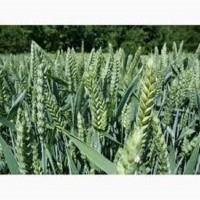
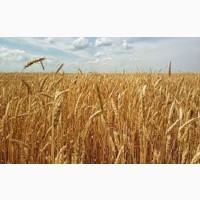
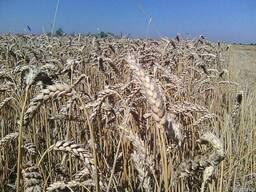
Canadian winter wheat Toledo, Zaporizhia region.
Region:all of Ukraine,
Zaporizhskaya region.
(Vilniansk)
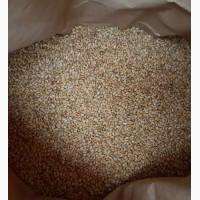
Grain purpose: Sow material
This variety of Canadian transgenic wheat can be sown for 10 years in a row, as it does not lose its qualities.
It is characterized by good frost resistance up to -47 °C in a dry winter, without snow cover in combination with strong wind due to genes isolated from the ocean algae Laminaria angustata, which grows on the bottom of the Arctic Ocean.
Resistant to abiotic stresses - tolerates spring temperature changes well. Withstands frosts in the stage of full development of the plant up to - 35 °C.
It is characterized by good drought resistance up to + 56 C°
due to genes introduced into the DNA structure of wheat T. persivalii Hubbard, T. turgidum L., Sphaerococcum Pers. and a set of genes transformed from camel's thorn into wheat DNA cells.
It is characterized by resistance to soil salinization.
It has stable immunity to all fungal diseases of wheat, as well as to viruses affecting common varieties of wheat. The variety is resistant to such diseases as: root rot, various types and forms of wheat bacteriosis, powdery mildew, snow mold, dwarf rust, reticulated and bordered spotting, dusty and false-dusty, black rot, stone rot, stem melanosis, ergot, septoriosis, ear fusarium, Russian mosaic, etc.(//tractor-service.com)
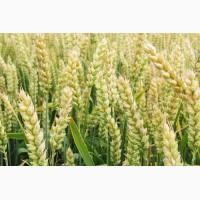
High productivity is achieved primarily due to the coefficient of bushiness and large ears.
This variety of transgenic wheat is resistant to lodging, shedding, and germinationgrains in the ear.
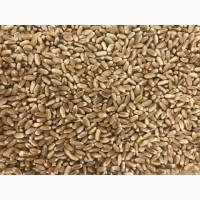
It is distinguished by its golden-yellow color and high gluten content (up to 36%). The weight of 1000 seeds is 52 grams.
The yield of the Canadian transgenic variety of winter wheat reaches 172 cents.
Germination - 98%, Germination energy - 98%, Varietal purity - 99.99%, Moisture - 12%
The seeding rate of transgenic winter wheat per hectare is 80 kg. Can be sowngrains seed drills of our production to the depthseed caps 5 - 6 cm.
Sowing of winter wheat varieties begins on September 10 and continues inclusively until October 30.
It is characterized by good frost resistance up to -47 °C in a dry winter, without snow cover in combination with strong wind due to genes isolated from the ocean algae Laminaria angustata, which grows on the bottom of the Arctic Ocean.
Resistant to abiotic stresses - tolerates spring temperature changes well. Withstands frosts in the stage of full development of the plant up to - 35 °C.
It is characterized by good drought resistance up to + 56 C°
due to genes introduced into the DNA structure of wheat T. persivalii Hubbard, T. turgidum L., Sphaerococcum Pers. and a set of genes transformed from camel's thorn into wheat DNA cells.
It is characterized by resistance to soil salinization.
It has stable immunity to all fungal diseases of wheat, as well as to viruses affecting common varieties of wheat. The variety is resistant to such diseases as: root rot, various types and forms of wheat bacteriosis, powdery mildew, snow mold, dwarf rust, reticulated and bordered spotting, dusty and false-dusty, black rot, stone rot, stem melanosis, ergot, septoriosis, ear fusarium, Russian mosaic, etc.(//tractor-service.com)
High productivity is achieved primarily due to the coefficient of bushiness and large ears.
This variety of transgenic wheat is resistant to lodging, shedding, and germinationgrains in the ear.
It is distinguished by its golden-yellow color and high gluten content (up to 36%). The weight of 1000 seeds is 52 grams.
The yield of the Canadian transgenic variety of winter wheat reaches 172 cents.
Germination - 98%, Germination energy - 98%, Varietal purity - 99.99%, Moisture - 12%
The seeding rate of transgenic winter wheat per hectare is 80 kg. Can be sowngrains seed drills of our production to the depthseed caps 5 - 6 cm.
Sowing of winter wheat varieties begins on September 10 and continues inclusively until October 30.
Ad ID: #950811
(added by a registered user)
Permanent ad address:
Showed / watched for today: ?, total: ?
Similar fresh ads
Among them there are many interesting...