/ Fertilizers and plant protection products / Protraviteli / Vencedor Contact-system fungicide for...

Prodam / buy
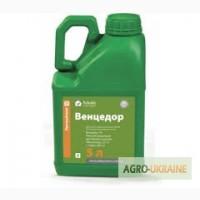
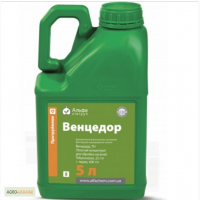
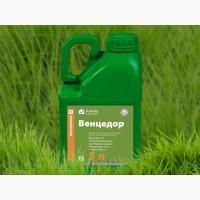
Vencedor Contact-system fungicide for seed treatment, Dnipropetrovsk region.
Region:all Ukraine,
Dnepropetrovsk region
(Synelnikovo)
Vencedor
Active substance
Tebuconazole, 25 g/l + Thiram 400 g/l.
Formulation
Flowing concentrate for seed treatment
Appointment
Reliable two-component contact-system fungicide for treating seeds with re-regulating properties
Tara
5l
Culture
Method of application and cost norms
Culture Diseases Rate of consumption
of the drug, l/t Processing time Maximum
number of treatments
Spring and winter wheat; spring and winter barley
Hard, stony, volatile soot, helminth and fusarium root rot, seed mold, septoriosis, net spot 1.0 – 1.2 Seed treatment with a suspension of the drug (10 liters of working solution per 1 ton of seeds) 1
Preparations with an identical active substance are used on the following cultures.
Oats Volatile, covered with soot, red-brown spotting, seed mold 1.0-1.2
Etching seeds
drug suspension
1
Millet Sazhka panicle, moldy seeds
Flax Anthracnose, spotting, spotting, seed mold
Corn (for grain) Volatile, blistering smut, fusarium root and root rot, seed mold 1,2 Seed poisoning
drug suspension
(10-15 liters of working solution per 1 ton of seeds) 1
Advantages
• The combination of two active substances with fundamentally different mechanisms of fungicidal action prevents the emergence of resistance in pathogens.
• A wide range of biological effectiveness, including pathogens of root rot of bacterial etiology.
• Unsurpassed fungicide against powdery mildew diseases.
• Reliable protection against both seed infection and soil contamination.
• It has a well-expressed re-regulating effect, which contributes to the intensive and uniform growth of the root system.
• When used in recommended rates, it is not phytotoxic for plants.(//tractor-service.com)
• Safe and convenient to use.
Mechanism of action
Thiram belongs to contact active substances. It is a protective fungicide that does not penetrate the plant or seeds, but suppresses the germination of spores and the growth of mycelium located on the surface. The active substance is translocated in the cell of the pathogen, inhibits the activity of enzymes containing copper atoms or sulfohydryl groups. Tebuconazole has a systemic effect, protecting the sprout. The action of tebuconazole is based on the process of inhibiting the biosynthesis of sterol, which is part of the cell wall of the fungus. Suppression of ergosterol biosynthesis leads to disturbances in the process of cell division, and subsequently to the complete death of the fungal organism. In addition, at the initial stages of development, tebuconazole slows down the synthesis of gibberellins and acts as agrowth regulator, that is, inhibits the process of elongation of internodes incereal crops. This mechanism prevents excessive development of the aerial part of the plant and, at the same time, promotes intensive development of the root system.
Properties
Due to the presence of two components, Vencedor destroys the infection on the surface, inside the seed and in the soil. The drug has a wide range of activity against pathogens (powdery mildew, root rot, spotting, septoriosis, powdery mildew (provided early manifestation)), and also shows activity against root rot pathogens of bacterial etiology. The poison does not affect the energy of germination and the similarity of the seed material.
General recommendations
Etching is recommended to be carried out 7-14 days before sowing. The process is carried out on special machines designed for semi-wet etching. Before use, the canister with the drug is thoroughly shaken. Vencedor is used diluted with water, depending on production conditions and the type of machines. Before etching, it is necessary to clean and calibrate the inoculum, since particles of broken grain, dust and impurities can cause binding of a significant amount of the drug.
Rate of consumption of working fluid
Cereal crops - 10 l/t of seeds, flax - 3-5 l/t of seeds.
Harmful objects
Fusarium head blight - Fusarium moniliforme J. Sheld.
Stem smut - Urocystis agropyri Koern., U. Occulta Rabh.
Red rot of cobs - Fusarium graminearum Schwabe.
Dark brown spotting - Bipolaris sorokiniana Shoem., Drechslera tritici-repens Ito.
White rot, or sclerotiniosis - Sclerotinia sclerotiorum (Lib.) de Bary.
Nigrosporosis - Nigrospora orizae (Berk. & Broome) Petch
Hard soot - Tilletia caries Tul., T. tritici Wint., T. secalis Cda, Ustilago hordei Kell.
Gray rot - Botrytis cinerea Pers.
Fusarium stem and root rot - Fusarium moniliforme J. Sheld.
Common root rot - Bipolaris sorokiniana Shoem.
Ash rot of the stem (coal rot) - Sclerotium bataticola Taub.
Fusarium root rot - Fusarium culmorum Sacc., F. graminearum Shwabe, F. gibbosum Appel et Woll, F. oxysporum Schlecht, F. solani Appel et Woll.
Fusariosis – Fusarium oxysporum Schlecht.
White rot, or sclerotiniosis - Sclerotinia sclerotiorum (Lib.) de Bary.
Snow or fusarium mold - Fusarium nivale (Fr.) Ges., F. culmorum Sacc., F. avenaceum Sacc., F. graminearum Schwabe.
Gray rot - Botrytis cinerea Pers. ex Fr.
Dwarf wheat sedge - Tilletia controversa Kuehn.
Alternaria - Alternaria tenuis Nees.
Flying sedge – Ustilago tritici Pers., U. vavilovi Jacz., U. nuda Kell et Sw.
Sphacelotheca reiliana (Kuhn) G.P. Clinton.
Ophiobolus rot - Gaeumannomyces graminis Arx et Ol.
Bubble slag - Ustilago zeae (Beckm.) Unger.
Reticulated helminthosporiosis, or reticulate spotting of barley - Drechslera teres f. sp. maculata.
Blackening of vascular bundles (cephalosporiasis) - Cephalosporium acremonium Corda
Striped spotting of barley - Drechslera graminea Ito.
With respect and hope for further cooperation TD Svarog Agro LLC!
Active substance
Tebuconazole, 25 g/l + Thiram 400 g/l.
Formulation
Flowing concentrate for seed treatment
Appointment
Reliable two-component contact-system fungicide for treating seeds with re-regulating properties
Tara
5l
Culture
Method of application and cost norms
Culture Diseases Rate of consumption
of the drug, l/t Processing time Maximum
number of treatments
Spring and winter wheat; spring and winter barley
Hard, stony, volatile soot, helminth and fusarium root rot, seed mold, septoriosis, net spot 1.0 – 1.2 Seed treatment with a suspension of the drug (10 liters of working solution per 1 ton of seeds) 1
Preparations with an identical active substance are used on the following cultures.
Oats Volatile, covered with soot, red-brown spotting, seed mold 1.0-1.2
Etching seeds
drug suspension
1
Millet Sazhka panicle, moldy seeds
Flax Anthracnose, spotting, spotting, seed mold
Corn (for grain) Volatile, blistering smut, fusarium root and root rot, seed mold 1,2 Seed poisoning
drug suspension
(10-15 liters of working solution per 1 ton of seeds) 1
Advantages
• The combination of two active substances with fundamentally different mechanisms of fungicidal action prevents the emergence of resistance in pathogens.
• A wide range of biological effectiveness, including pathogens of root rot of bacterial etiology.
• Unsurpassed fungicide against powdery mildew diseases.
• Reliable protection against both seed infection and soil contamination.
• It has a well-expressed re-regulating effect, which contributes to the intensive and uniform growth of the root system.
• When used in recommended rates, it is not phytotoxic for plants.(//tractor-service.com)
• Safe and convenient to use.
Mechanism of action
Thiram belongs to contact active substances. It is a protective fungicide that does not penetrate the plant or seeds, but suppresses the germination of spores and the growth of mycelium located on the surface. The active substance is translocated in the cell of the pathogen, inhibits the activity of enzymes containing copper atoms or sulfohydryl groups. Tebuconazole has a systemic effect, protecting the sprout. The action of tebuconazole is based on the process of inhibiting the biosynthesis of sterol, which is part of the cell wall of the fungus. Suppression of ergosterol biosynthesis leads to disturbances in the process of cell division, and subsequently to the complete death of the fungal organism. In addition, at the initial stages of development, tebuconazole slows down the synthesis of gibberellins and acts as agrowth regulator, that is, inhibits the process of elongation of internodes incereal crops. This mechanism prevents excessive development of the aerial part of the plant and, at the same time, promotes intensive development of the root system.
Properties
Due to the presence of two components, Vencedor destroys the infection on the surface, inside the seed and in the soil. The drug has a wide range of activity against pathogens (powdery mildew, root rot, spotting, septoriosis, powdery mildew (provided early manifestation)), and also shows activity against root rot pathogens of bacterial etiology. The poison does not affect the energy of germination and the similarity of the seed material.
General recommendations
Etching is recommended to be carried out 7-14 days before sowing. The process is carried out on special machines designed for semi-wet etching. Before use, the canister with the drug is thoroughly shaken. Vencedor is used diluted with water, depending on production conditions and the type of machines. Before etching, it is necessary to clean and calibrate the inoculum, since particles of broken grain, dust and impurities can cause binding of a significant amount of the drug.
Rate of consumption of working fluid
Cereal crops - 10 l/t of seeds, flax - 3-5 l/t of seeds.
Harmful objects
Fusarium head blight - Fusarium moniliforme J. Sheld.
Stem smut - Urocystis agropyri Koern., U. Occulta Rabh.
Red rot of cobs - Fusarium graminearum Schwabe.
Dark brown spotting - Bipolaris sorokiniana Shoem., Drechslera tritici-repens Ito.
White rot, or sclerotiniosis - Sclerotinia sclerotiorum (Lib.) de Bary.
Nigrosporosis - Nigrospora orizae (Berk. & Broome) Petch
Hard soot - Tilletia caries Tul., T. tritici Wint., T. secalis Cda, Ustilago hordei Kell.
Gray rot - Botrytis cinerea Pers.
Fusarium stem and root rot - Fusarium moniliforme J. Sheld.
Common root rot - Bipolaris sorokiniana Shoem.
Ash rot of the stem (coal rot) - Sclerotium bataticola Taub.
Fusarium root rot - Fusarium culmorum Sacc., F. graminearum Shwabe, F. gibbosum Appel et Woll, F. oxysporum Schlecht, F. solani Appel et Woll.
Fusariosis – Fusarium oxysporum Schlecht.
White rot, or sclerotiniosis - Sclerotinia sclerotiorum (Lib.) de Bary.
Snow or fusarium mold - Fusarium nivale (Fr.) Ges., F. culmorum Sacc., F. avenaceum Sacc., F. graminearum Schwabe.
Gray rot - Botrytis cinerea Pers. ex Fr.
Dwarf wheat sedge - Tilletia controversa Kuehn.
Alternaria - Alternaria tenuis Nees.
Flying sedge – Ustilago tritici Pers., U. vavilovi Jacz., U. nuda Kell et Sw.
Sphacelotheca reiliana (Kuhn) G.P. Clinton.
Ophiobolus rot - Gaeumannomyces graminis Arx et Ol.
Bubble slag - Ustilago zeae (Beckm.) Unger.
Reticulated helminthosporiosis, or reticulate spotting of barley - Drechslera teres f. sp. maculata.
Blackening of vascular bundles (cephalosporiasis) - Cephalosporium acremonium Corda
Striped spotting of barley - Drechslera graminea Ito.
With respect and hope for further cooperation TD Svarog Agro LLC!
Ad ID: #931268
(added by a registered user)
Permanent ad address:
Showed / watched for today: ?, total: ?
Similar fresh ads
Among them there are many interesting ones...