For sale / to buy
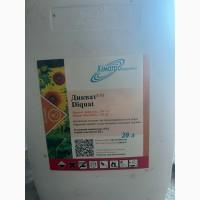
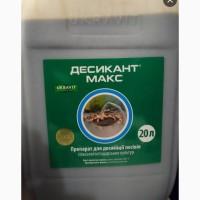
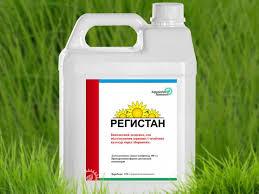
For sale Desiccant, Nikolaev region.
Region:all of Ukraine,
Nikolaev region.
Analog: Reglon. Active substance: diquat, 150 g/l Application rate l, kg/ha 2.0 Registan is a contact desiccant, which is used to protect such crops as:sunflower, peas, cereals, rice, flax, spring and winter rapeseed, sugar beet, table beet, fodder beet, potato, onion, hops and others. It is safe for humans and the environment. Resistant to precipitation, after 10 minutes after treatment, the rain does not wash away and does not reduce the effect of the drug. It is characterized by rapid action already after 5-7 days, the first manifestations of the drug's work are visible. Has no restrictions in crop rotation. Using thisdesiccant reduces the development and spread of diseases. Information about the drug Registan from the Agrochemical Technologies company. The Agrochemical Technologies company created a desiccant called Registan, designed to reduce grain moisture and stop the development and spread of various diseases of cultivated plants due to drying before harvesting. The composition of this drug contains an active substance - diquat. This drug dries out plants due to the destruction of cell membranes and cell death. After 7-12 days after processing, the culture is ready for harvesting. The active substance is quickly absorbed by plants, and that is why the rain after 15 minutes cannot reduce the effectiveness of this drug. Thanks to the Registan desiccant, it is possible to significantly reduce productivity losses due to blocking the development and spread of diseases. Also, due to the rapid disintegration of the active substance in the plant, the use of the Registan drug is safe both on seed crops and on crops intended for food purposes. Recommendations for the use of the drug Registan: It is recommended to process crops during the period of physiological maturity of the seeds. Processing at an earlier stage of the development of cultivated plants can lead to a decrease in yield and a decrease in the sowing quality of seeds. The rate of consumption of the drug depends on the density of the plant stand, weediness of the crop, weather conditions during processing and the period before harvesting. It is best to apply the drug in the evening or during the day in cloudy weather, since hot sunny weather, although it speeds up the process, reduces the effectiveness of desiccation. Crops should be sprayed by ground or aerial application. At the same time, the rate of consumption of the working solution should ensure full and uniform coverage of the entire surface of the plant. Forground sprayers it is 200–300 l/ha with a pressure of 2–3 atm., for aviation treatments — 50–70 l/ha with a pressure of 1.5–2.0 atm. To prepare the working solution, fill the tank of the sprayer with water to 1/3 of the volume, turn on the mixer and add the required amount of the drug. Fill the sprayer tank to full volume with the agitator turned on. When introducing the drug, the stirrer must be constantly turned on to maintain the working solution in a homogeneous state. The working solution should be used within one day.
Ad ID: #927045
(added by registered users) by the user)
Permanent ad address:
Showed / watched for today: ?, total: ?
Similar fresh ads
Among them there are many interesting ones...