For sale / buy
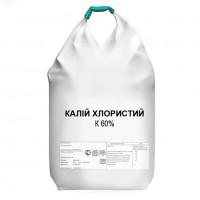
Kaliy Khloristy, Vinnytsia region.
Price10 650 UAH.
Region:
Vinnytsia region.
Updated:
Granulated simple concentrated potassium fertilizer.
Potassium chloride is a crystalline salt or granules of white and pink color with good physical properties. It is low-hygroscopic, does not stick, and disperses easily.
According to the method of processing sylvinite ore, flotation and halurgic are distinguished.
Can be treated with reagents and dust suppressors
In the world, among the entire assortment of potassiumfertilized, it is potassium chloride that is used the most - about 80-90%.
Physico-chemical indicators
The equivalent of potassium oxide, K2O, % min.60
Potassium chloride, KCl, % min.9(//tractor-service.com)
Moisture content, H2O, % max. 0.5
Experiments have proven that potassium is an important element of nutrition, which ensures, with sufficient nitrogen and phosphorus fertilization, an increase in the yield of grain and green mass.
Potassium is a necessary element for all plants, its consumption per unit of the formed crop is much higher than that of other elements of mineral nutrition.
Potassium is a functional element that takes part in the main physiological processes of the plant.
Potassium contributes to the normal course of photosynthesis, increases the flow of carbohydrates from the leaf plates to other organs, helps more efficient absorption of moisture by plants and reduces evaporation. Under the influence of potassium, the leaves acquire the ability to retain water and tolerate short-term drought more easily.
Potassium is considered a "quality element" for crop production, it has a positive effect on production quality: root crops increase sugar content,potatoes -starch content, spinning crops - fiber yield and quality, fodder plants - protein content.
Thus, potassium contributes to the growth of productivity, of course, provided that production technology is followed and other necessary nutrients are used.
Potassium chloride is used for self-application and as a raw material for the production of fat mixes.
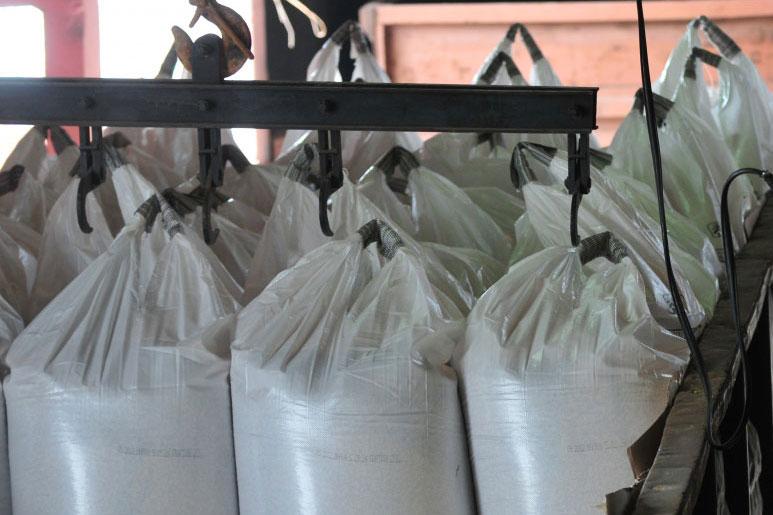
Delivery by railway and motor vehicle is possible.
Potassium chloride is a crystalline salt or granules of white and pink color with good physical properties. It is low-hygroscopic, does not stick, and disperses easily.
According to the method of processing sylvinite ore, flotation and halurgic are distinguished.
Can be treated with reagents and dust suppressors
In the world, among the entire assortment of potassiumfertilized, it is potassium chloride that is used the most - about 80-90%.
Physico-chemical indicators
The equivalent of potassium oxide, K2O, % min.60
Potassium chloride, KCl, % min.9(//tractor-service.com)
Moisture content, H2O, % max. 0.5
Experiments have proven that potassium is an important element of nutrition, which ensures, with sufficient nitrogen and phosphorus fertilization, an increase in the yield of grain and green mass.
Potassium is a necessary element for all plants, its consumption per unit of the formed crop is much higher than that of other elements of mineral nutrition.
Potassium is a functional element that takes part in the main physiological processes of the plant.
Potassium contributes to the normal course of photosynthesis, increases the flow of carbohydrates from the leaf plates to other organs, helps more efficient absorption of moisture by plants and reduces evaporation. Under the influence of potassium, the leaves acquire the ability to retain water and tolerate short-term drought more easily.
Potassium is considered a "quality element" for crop production, it has a positive effect on production quality: root crops increase sugar content,potatoes -starch content, spinning crops - fiber yield and quality, fodder plants - protein content.
Thus, potassium contributes to the growth of productivity, of course, provided that production technology is followed and other necessary nutrients are used.
Potassium chloride is used for self-application and as a raw material for the production of fat mixes.
Delivery by railway and motor vehicle is possible.
|
Author, contacts | |
Agrolyga TD, LLC/ feedback, info. | |
|
Phone:
+38(xxxxxx
show
| |
| Skype: alexey77586 | |
| http://www.agro-liga.com | |
All user ads ~58 | |
Ad ID: #903410
(added by registered by the user)
Added / Updated: 09-21-2026 11:51 (current, until: 09-21-2027)
Permanent ad address:
Showed / watched for today: ?, total: ?
Similar ads