Sell / buy
Buckwheat seeds, seeds of the buckwheat variety florida, Odessa region.
Region:
Odessa region.
Grain purpose: Sowing material
Quantity: 100 tons
SeedsBuckwheats, FLORIDA BUCKWHEAT VARIETY SEEDS
OUR WEBSITE:
http://semena-cernel.com
Weight of 1000 seeds: 47 grams.
Sowing
from June 1 to August 5.
Germination: 98% gr
The weight of 1000 seeds is 47 grams.
Yield: up to 62 cents per hectare.
Moisture — 12%, Germination energy — 98%, Germination — 98%, Varietal purity -100%
Sowing rate: per hectare — 25 kg with precision seed drills or seed drills of oursпроизводства зновымы C 3- 3.6, SZU — 3.6, seeds are sown to a depth of 6 — 7 cm with the SST-12B beet seeder. It is possible to sow in the usual row method with 15 cm spacing and in the wide-row method of 45 or 60 see.
Sowing: from June 1 to August 5.
Soil treatment In most areas of buckwheat cultivation, autumn soil treatment after stubble precursors consists of stubble husking with LDH - 10, LDH - 15 disk cultivators and plowing with plows with PTK -35, PNL - 8 - 40, PLP -6-35 attachments with PVR - 3.5, PVR - 2,3.
Sowing of the Canadian transgenic buckwheat variety FLORIDA begins on April 25 and continues until August 5.
Insecticides are not used, resistant to all harmful insects.
Herbicides: For the complete destruction of annual dicotyledonous weeds in buckwheat crops, it is necessary to use herbicide 2 DD 500 — d.v. dimethylammonia salt by spraying the soil with it after sowing 2-3 days before buckwheat sprouts, the rate of consumption is 1.2-1.6 liters per 1 ha, or the herbicide Gezagard KS / 500 g/l promethrin — 1.5 liters per 1 ha before sprouts.
Nitroammophoska fertilizers of 150 kg - 160 kg are applied after sowing the crop.(//tractor-service.com)
The vegetation period of Canadian buckwheat of the FLORIDA variety from sowing to harvesting is 63 — 66 days (early).
Harvesting Buckwheat is harvested with Enisei, Don, Niva, Zhondyr, Keys combine harvesters.
Economic justification. The price for 1 ton of commercial buckwheat is UAH 24,000. Mines are removed from one hectare. 55 cents and mac. 62 cents, which is min. UAH 132,000, costs for 1 hectare are UAH 2,300, with the use of herbicides, plowing, cultivation, diesel fuel, drying, seeds.
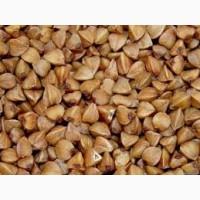
Buckwheat (Fagopyrumesculentum) is a spring transgenic food variety of FLORIDA buckwheat scientifically developed by the well-known Canadian SERTIS Holding and the American concern UNION CARBIDE. One-year crop is a genus of plants from the buckwheat family, height 165 cm. The buckwheat plant resembles the shape of a currant bush. 15 stems grow from the node of the bush from the bottom to the top with an inclination of 40 degrees. The stem is erect and branched, on which buckwheat flowers are located. The inflorescences are fragrant brushes, the fruits are three-sided brown or dark gray nuts with sharp edges covered with membranous shells.
To obtain groats, the fruits are freed from these inedible shells and crushed in special mills.Buckwheat seeds germinate at a temperature of +14, +15С*, friendly sprouts of buckwheat appear at a temperature of +20С* on the 7th day. After the appearance of sprouts, buckwheat plants quickly increase their leaf mass, shading the soil surface, thus preventing the germination of weed seeds. In addition, the root system of buckwheat inhibits the development of weeds by releasing into the soil substances called bioherbicides, which inhibit the development of weeds for some time. Buckwheat sprouts die at a temperature of + 2C*, so buckwheat is sown late, starting from the beginning of May and ending on August 5.
From the appearance of seedlings to budding, buckwheat grows quickly, and from budding to the beginning of seed ripening, it grows very vigorously. During this period, buckwheat accumulates more than 70% of the total mass of dry matter. The tap root is strongly branched. Buckwheat grains contain easily digestible proteins up to 16%, including essential amino acids - arginine and lysine, carbohydrates up to - 30% and fats up to 3%, as well as many minerals iron, calcium, phosphorus, copper, zinc, boron, iodine, nickel, cobalt, fiber, malic, citric, oxalic acid, vitamins of group B, B are 1.5 times more in buckwheat. What is vitamin P rutin in millet? Glycoside of rutin, chlorogenic acid, gallic acid, protocatechinic acid, and caffeic acid were found in the herb. The seeds contain up to 67% starch, fatty oils, citric and malic acids.
Phagopyrin was isolated from the flowers. Most buckwheat plants are used in medicine, buckwheat preparations have hypotonic, antisclerotic, expectorant properties, and the rutin contained in buckwheat improves elasticity and increases the permeability of vascular capillaries. It is used for the treatment of hypoavitaminosis in the treatment and prevention of hemorrhages in the brain, heart, retina of the eye, in the proneness to hemorrhages in the skin and mucous membranes, hemorrhagic diathesis, in the treatment of rheumatism. The main product produced from buckwheat is buckwheat groats, which have high taste and dietary properties. Buckwheat is native to East Asia. Some researchers believe that cultivated buckwheat originated from a widespread weed — Tatar buckwheat. It is assumed that buckwheat culture is more than 2.5 thousand years old. Its first foci were in the territory of modern Northern India, in the Himalayas. From there it penetrated into China, Central Asia, the Caucasus, and then into Europe. The remains of buckwheat were found during excavations in the lower reaches of the Don, which date back to the 1st-2nd century AD, as well as in archaeological finds in Ukraine.
FLORIDA, a transgenic, Canadian buckwheat variety, was bred in Canada in 2016, where it underwent variety tests for drought resistance in Canada, Algeria, Mexico, Ethiopia, South Africa, where the average air temperature was + 56 C*, in these conditions it showed excellent results in terms of yield in 2016. 45 cents were harvested from 1 ha, and it also underwent variety tests drought tolerance in Russia in Krasnodar Krai, Stavropol Krai, Turkmenistan, Kyrgyzstan, Kazakhstan.
characterized by increased drought resistance + 58 C*.
characterized by resistance to high temperatures during flowering and fruiting, buckwheat pollen does not burn even at a temperature of + 58 C*.
has stable immunity to all diseases of buckwheat that affect common varieties of buckwheat such as (aschitosis, phytophthora, phyllostictosis, bacteriosis, mosaic, gray rot, white spot, root rot, bacterial spot, etc.) and is not affected by these diseases.
resistant to all harmful insects affecting common varieties of buckwheat: all types of aphids, mining flies, all types of winter sawfly, sawfly - gamma, moth, sawfly, thrips, gall beetle, buckwheat leaf bug, buckwheat mosquito, beetle larva, stem nematode, etc. bitter.
resistant to soil salinization.
the grain ripens evenly on the entire plant and does not fall off until the buckwheat fruits are fully ripe, thanks to this, buckwheat does not need to be dried, it is harvested directly by harvesters.
is self-pollinating and therefore does not require the presence of bees.
This was sown in 2017 in Ukraine in Kherson Region, Dnipropetrovsk Region, Vinnytsia Region, Chernihiv Region, Ternopil Region, where the average yield of buckwheat was 55 cents per hectare. buckwheat"
OUR WEBSITE:
http://semena-cernel.com
Weight of 1000 seeds: 47 grams.
Sowing
from June 1 to August 5.
Germination: 98% gr
The weight of 1000 seeds is 47 grams.
Yield: up to 62 cents per hectare.
Moisture — 12%, Germination energy — 98%, Germination — 98%, Varietal purity -100%
Sowing rate: per hectare — 25 kg with precision seed drills or seed drills of oursпроизводства зновымы C 3- 3.6, SZU — 3.6, seeds are sown to a depth of 6 — 7 cm with the SST-12B beet seeder. It is possible to sow in the usual row method with 15 cm spacing and in the wide-row method of 45 or 60 see.
Sowing: from June 1 to August 5.
Soil treatment In most areas of buckwheat cultivation, autumn soil treatment after stubble precursors consists of stubble husking with LDH - 10, LDH - 15 disk cultivators and plowing with plows with PTK -35, PNL - 8 - 40, PLP -6-35 attachments with PVR - 3.5, PVR - 2,3.
Sowing of the Canadian transgenic buckwheat variety FLORIDA begins on April 25 and continues until August 5.
Insecticides are not used, resistant to all harmful insects.
Herbicides: For the complete destruction of annual dicotyledonous weeds in buckwheat crops, it is necessary to use herbicide 2 DD 500 — d.v. dimethylammonia salt by spraying the soil with it after sowing 2-3 days before buckwheat sprouts, the rate of consumption is 1.2-1.6 liters per 1 ha, or the herbicide Gezagard KS / 500 g/l promethrin — 1.5 liters per 1 ha before sprouts.
Nitroammophoska fertilizers of 150 kg - 160 kg are applied after sowing the crop.(//tractor-service.com)
The vegetation period of Canadian buckwheat of the FLORIDA variety from sowing to harvesting is 63 — 66 days (early).
Harvesting Buckwheat is harvested with Enisei, Don, Niva, Zhondyr, Keys combine harvesters.
Economic justification. The price for 1 ton of commercial buckwheat is UAH 24,000. Mines are removed from one hectare. 55 cents and mac. 62 cents, which is min. UAH 132,000, costs for 1 hectare are UAH 2,300, with the use of herbicides, plowing, cultivation, diesel fuel, drying, seeds.
Buckwheat (Fagopyrumesculentum) is a spring transgenic food variety of FLORIDA buckwheat scientifically developed by the well-known Canadian SERTIS Holding and the American concern UNION CARBIDE. One-year crop is a genus of plants from the buckwheat family, height 165 cm. The buckwheat plant resembles the shape of a currant bush. 15 stems grow from the node of the bush from the bottom to the top with an inclination of 40 degrees. The stem is erect and branched, on which buckwheat flowers are located. The inflorescences are fragrant brushes, the fruits are three-sided brown or dark gray nuts with sharp edges covered with membranous shells.
To obtain groats, the fruits are freed from these inedible shells and crushed in special mills.Buckwheat seeds germinate at a temperature of +14, +15С*, friendly sprouts of buckwheat appear at a temperature of +20С* on the 7th day. After the appearance of sprouts, buckwheat plants quickly increase their leaf mass, shading the soil surface, thus preventing the germination of weed seeds. In addition, the root system of buckwheat inhibits the development of weeds by releasing into the soil substances called bioherbicides, which inhibit the development of weeds for some time. Buckwheat sprouts die at a temperature of + 2C*, so buckwheat is sown late, starting from the beginning of May and ending on August 5.
From the appearance of seedlings to budding, buckwheat grows quickly, and from budding to the beginning of seed ripening, it grows very vigorously. During this period, buckwheat accumulates more than 70% of the total mass of dry matter. The tap root is strongly branched. Buckwheat grains contain easily digestible proteins up to 16%, including essential amino acids - arginine and lysine, carbohydrates up to - 30% and fats up to 3%, as well as many minerals iron, calcium, phosphorus, copper, zinc, boron, iodine, nickel, cobalt, fiber, malic, citric, oxalic acid, vitamins of group B, B are 1.5 times more in buckwheat. What is vitamin P rutin in millet? Glycoside of rutin, chlorogenic acid, gallic acid, protocatechinic acid, and caffeic acid were found in the herb. The seeds contain up to 67% starch, fatty oils, citric and malic acids.
Phagopyrin was isolated from the flowers. Most buckwheat plants are used in medicine, buckwheat preparations have hypotonic, antisclerotic, expectorant properties, and the rutin contained in buckwheat improves elasticity and increases the permeability of vascular capillaries. It is used for the treatment of hypoavitaminosis in the treatment and prevention of hemorrhages in the brain, heart, retina of the eye, in the proneness to hemorrhages in the skin and mucous membranes, hemorrhagic diathesis, in the treatment of rheumatism. The main product produced from buckwheat is buckwheat groats, which have high taste and dietary properties. Buckwheat is native to East Asia. Some researchers believe that cultivated buckwheat originated from a widespread weed — Tatar buckwheat. It is assumed that buckwheat culture is more than 2.5 thousand years old. Its first foci were in the territory of modern Northern India, in the Himalayas. From there it penetrated into China, Central Asia, the Caucasus, and then into Europe. The remains of buckwheat were found during excavations in the lower reaches of the Don, which date back to the 1st-2nd century AD, as well as in archaeological finds in Ukraine.
FLORIDA, a transgenic, Canadian buckwheat variety, was bred in Canada in 2016, where it underwent variety tests for drought resistance in Canada, Algeria, Mexico, Ethiopia, South Africa, where the average air temperature was + 56 C*, in these conditions it showed excellent results in terms of yield in 2016. 45 cents were harvested from 1 ha, and it also underwent variety tests drought tolerance in Russia in Krasnodar Krai, Stavropol Krai, Turkmenistan, Kyrgyzstan, Kazakhstan.
characterized by increased drought resistance + 58 C*.
characterized by resistance to high temperatures during flowering and fruiting, buckwheat pollen does not burn even at a temperature of + 58 C*.
has stable immunity to all diseases of buckwheat that affect common varieties of buckwheat such as (aschitosis, phytophthora, phyllostictosis, bacteriosis, mosaic, gray rot, white spot, root rot, bacterial spot, etc.) and is not affected by these diseases.
resistant to all harmful insects affecting common varieties of buckwheat: all types of aphids, mining flies, all types of winter sawfly, sawfly - gamma, moth, sawfly, thrips, gall beetle, buckwheat leaf bug, buckwheat mosquito, beetle larva, stem nematode, etc. bitter.
resistant to soil salinization.
the grain ripens evenly on the entire plant and does not fall off until the buckwheat fruits are fully ripe, thanks to this, buckwheat does not need to be dried, it is harvested directly by harvesters.
is self-pollinating and therefore does not require the presence of bees.
This was sown in 2017 in Ukraine in Kherson Region, Dnipropetrovsk Region, Vinnytsia Region, Chernihiv Region, Ternopil Region, where the average yield of buckwheat was 55 cents per hectare. buckwheat"
Advertisement ID: #898825
(added by a registered user)
Permanent ad address:
Showed / watched for today: ?, total: ?