For sale / buy
Rapeseeds Rapeseed seeds Winter transgenic two-nuclear rapeseed variety, Poltava region.
Region:all Ukraine,
Poltava region.
(Poltava city)
Grain purpose: Seed material
Quantity: 30000 tons
Rape seedsRape seeds Winter transgenic two-nuclear type of rapeseed
Rapeseed (Brassicaseeds.) Winter transgenic binuclear variety of rapeseed developed on the basis of nano-technology, transformation of rapeseed DNA cells and introduction into the nucleus of rapeseed (Agrobacteriumtumefaciens) by the well-known American chemical concern DOW Chemical, Canadian holding SERTIS HOLDING S.A., nano-modified binuclear rapeseed hybrid is used for food purposes due to low glucosinolate content - 000 myc. for 1 — gram and erucic acid — 0.00%. This variety of winter transgenic rape can be sown 8 years in a row, as it does not lose its qualities in terms of erucic acids and glucosinolates. Scientifically developed in Canada in 2016, passed grade tests in 2016. — 2017 according to frost resistance in the harsh climate of Canada, in the northern agricultural provinces of Saskatoon, Winnipeg, Edmonton, Yellowknife, Regina, where the average tem. air in the winter of 2017 was 45 C*, combined with strong arctic winds and snow storms, with freezing rain and wind gusts of 90 km per hour, in these conditions it showed excellent results in terms of yield, and also passed variety tests in the EEC countries, in Northern Norway in the regions of Finnmark, Tromsø, Nordland, in China in the northern regions of Harbin, the temperature was 40 C* in Russia in the Primorsky Krai, Khabarovsk Krai, Murmansk Region, where the average temperature in January drops to -38 C*, was tested in North America in the states of North Dakota, Minnesota, Tennessee, Montana, Iowa, Alaska, where since January 2017, according to the winch coefficient, the temperature dropped to -48 C*, with characteristic icy winds 30 m/s, and also passed field tests for drought resistance in Mexico, in Russia in the Krasnodar region, Rostov region, Brazil, Tunisia, Kazakhstan, Egypt, the average temperature was + 55 C *.
The height of the rape stalk is 185 cm, the powerful stalk is 10 cm in girth.
The branches of the rapeseed hybrid are located from the base of the root neck of the rapeseed from 9 cm and higher, and are located in a length of 105 cm to the top, with a slight slope of 35 degrees. and the leaves and pods of rapeseed are 3.5 cm. The thickness of the forming stem in the girth is 11 cm, later they resemble the shape of a spruce.
The thickness of developing rapeseed at the root neck in the girth in a circle is 11 cm, the thickness of the rape stem after its full ripening decreases to 8 cm. The weight of the plant in the development phase of 56 leaves is 18 kg. The mass of a rapeseed plant in the phase of full ripening is 30 kg. Distinctive feature of nano-modified, other common varieties and hybrids of rapeseed.
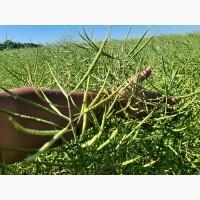
Rapeseed in its biological structure is binuclear, which means that each rapeseed pod has two partitions in which rapeseed seeds are located in two rows, it also differs in high productivity due to the length of the rapeseed pod of 23 cm, due to the weight of the seeds, and also due to the fact that the rapeseed pods are located at a distance of 2 cm or more and the number of pods on one branch is 220 pods, each pod has two partitions in in which rape seeds are placed in two rows, 72 seeds in one row. Rapeseed is characterized by good frost resistance up to -48C* in a dry winter, without snow cover in combination with high air humidity and strong hurricane winds in combination with freezing rain.
Resistant to abiotic stresses due to the increase in chromosomal aberrations of the LEA genes - it tolerates spring frosts and sharp changes in the background temperature in the stage of full plant development up to - 36 C *, thanks to the replaced nucleus of 2 - x genes that increase frost resistance and drought resistance, isolated from the genes of cryophilic arctic algae, which lives on glaciers and ice and withstands temperature drops to - 70 C*, as well as oceanic diatom algae growing at the bottom of the Arctic Ocean, at minus temperatures.
Rapeseed is characterized by thermotolerance, resistance to high positive temperatures and direct solar radiation due to a set of genes isolated from blue-green filamentous algae living in conditions (boiling water + 98 C*) that increase the drought resistance of rapeseed up to + 60 C*.
It has stable immunity to all rapeseed diseases affecting common hybrids and varieties such as (alternaria, fusarium, peronosporosis, bacteriosis, fomosis, etc.) and is not affected by these diseases.
Resistant to all harmful insects affecting ordinary varieties and ordinary hybrids of rapeseed (including cabbage aphids, whiteflies, sawflies, moths, cruciferous fleas, stem cabbage beetle, rapeseed sawfly, flower eater, bug, etc.) due to the introduction of a modified tetra gene isolated from the bitter wormwood plant into the DNA structure of the rapeseed cell, in different phases during the development of rapeseed, an essential oil with a sharp bitter taste is released, containing thuyl ether, which repels harmful insects, groups of lepidoptera and coleopterans that eat ordinary varieties and hybrids, this oil is released from the beginning of the appearance of sprouts and lasts until the rapeseed pods are fully ripened, and then disappears completely, therefore it is safe for all vertebrates, humans, warm-blooded animals, birds, mice .
Resistant to soil salinity due to a gene isolated from the green alga Dunaliella solonchakovaya, which lives in salty lakes with a salt concentration in water of 285 g/l.
Rapeseed is resistant to cracking of pods, due to the release from the stalk of rapeseed of a white resin that glues the rapeseed pod, which completely envelops the rapeseed pod and prevents it from falling apart until the rapeseed seeds are fully matured. Thanks to this, the rapeseed does not need desiccation, the rapeseed is harvested directly by harvesters.(//tractor-service.com)
The rapeseed is resistant to lodging due to a strong, powerful stem.
This rapeseed is self-pollinating and does not require the presence of bees. This rapeseed hybrid was sown in 2016-2017. in Ukraine, in Kyiv region, Dnipropetrovsk region, Chernihiv region, Kherson region, Donetsk region, Kirovohrad region, Kharkiv region, Kherson region, showed excellent results in yield of 65 cents per hectare of net weight. The weight of 1000 seeds is 4.2 grams. The yield of the Canadian winter transgenic rapeseed variety ANTIOCH 136 is min. 65 cents, max. 70 cents. c 1 - hectare.
Germination is 98%
Germination energy — 98%
Varietal purity — 100%
Humidity - 8%
The seeding rate of winter rapeseed ANTIOCH 136 per 1 ha is 4 kg of grass and grain crops. Rapeseed is sown to a depth of 2-3 cm. It is not necessary to use herbicides, as winter rapeseed kills them at the root, creating a strong shadow, covering 1 meter of the sowing area with its leaves, due to its powerful leaf mass.
Sowing begins in the Southern regions from July 2 to September 20 inclusive, in the Northern regions from July 10 to September 29.
Insecticides are not used because rapeseed is resistant to all harmful insects. Use herbicides as needed; Salsa 20 /25 grams + Trend 90 200 ml per 1 ha after rapeseed germination, Galera 0.30 grams per 1 ha in any phase of rapeseed development before bud emergence, Butazin Star CS 1.75 l - 2.5 l per 1 - ha before sowing or before germination, Lemur KE 1-l, 2.5-l per 1 ha in any phase of development rapeseed.
Fertilizer ammonium nitrate 170 kg — 180 kg is applied during sowing or after sowing. you can mix saltpeter with the seeds and apply it to the soil. Harvesting of winter rapeseed of the ANTIOCH 136 variety begins on June 10 and lasts until July 8.
Rapeseed harvest is harvested with Don, Jondyr, Case, Massey — Fergison combine harvesters.
Economic justification. The price for 1 ton of winter commercial rapeseed is UAH 15,000, due to low glucosinolates and erucic acid. Mines are removed from one hectare. 6.5 tons andmak. 7 tons, which is min. UAH 97,500, costs per hectare are UAH 1,900, with the use of plowing, cultivation, diesel fuel, drying, seeds.
Ad ID: #880720
(added by a registered user)
Permanent ad address:
Showed / watched for today: ?, total: ?
Similar fresh ads
Among them there are many interesting ones...