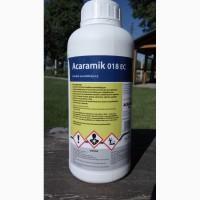
/ Fertilizers and plant protection products / Insecticides / Danadim 400 EC (Danadim) 1l - system...

For sale / buy
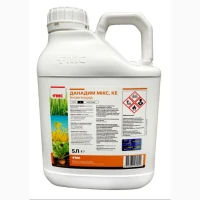
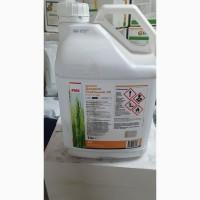
Danadim 400 EC (Danadim) 1l - systemic insectacaricide of contact-intestinal action, Volynska region.
Price370 UAH.
Region:all of Ukraine,
Volyn region.
Updated:
Danadim 400 EC (Danadym)
systemic insect acaricide of contact-intestinal action
Preparative form: emulsion concentrate (KE)
Active substance: dimethoate 400 g/l
ADVANTAGES:
Has long-lasting systemic and contact action.
Quickly and effectively destroys sucking and leaf-gnawing harmful insects and ticks.
Due to the penetration into plant tissues, it suppresses secretive pests (miners, fly larvae).
It has a wide spectrum of action, is used on many cultures.
It is used in programs to control pest populations resistant to pyrethroids.
PURPOSE: systemic insect acaricide of contact-intestinal action for the protection of grain,legumes technical, fruit and vegetable crops.
Danadim 400 EC (Данадим) - SYSTEMIC INSECTOACARICIDE FOR FIGHTING THE COMPLEX OF PESTS IN MANY CULTURES
Dimethoate is a systemic organophosphorus insect acaricide synthesized by Cyanamide (USA), BASF and Montecatini. The company Kemynova A/S started producing the drug Danadym® based on the active substance dimethoate in 1976.
Features
The active substance dimethoate belongs to the phosphorus-organic class of compounds and has a systemic effect. The company Keminova A/S is a leader in the production of dimethoate and sells this active substance all over the world.
The drug is suitable both for combating a wide range of biting-sucking pests and against ticks on many field and plantation crops.
The active substance dimethoate can be mixed with other insecticides to expand the spectrum of action and increase efficiency. You can buy the insecticide Danadym at Novosad.
Danadim is a systemic insect acaricide with contact-intestinal action. The active substance dimethoate inhibits the enzyme acetylcholinesterase in excitatory synapses of the central nervous system.
The drug is highly effective against gnawing, sucking, and mining pests from various groups of insects (Espidoptera, Coleoptera, Lepidoptera, Diptera), as well as mite species on many field, vegetable, and fruit crops.
Regulations for the application of the insecticide Danadym
Culture
Consumption rate, l, kg/ha
Harmful object
Method, time of processing, special features of application
Waiting time (time of processing)
Release dates for manual (mech.) works
Wheat
1-1.5
Bread bug
Spraying seedlings. Consumption of working fluid - 100-200 l/ha
30(1)
10(4)
1-1,2
Harmful turtle bug, leech, grain flies, aphids, thrips, bread bugs
Spraying during the growing season. Consumption of working fluid - 200-400 l/ha
30(2)
Rye, barley
Leech, cereal flies, aphids, thrips
Oats
Cereal flies, aphids
Apple tree, pear
0.8-2
Scale insects, false scale insects, mites, leafhoppers, aphids, honeydew, moths, fruit borers, leaf-gnawing caterpillars, beetles
Spraying before and after flowering. Consumption of working fluid - 1000-1500 l/ha
40(2)
10(4)
Sugar beet
0.5-1
Bed bugs, leaf aphids, mining flies and moths, ticks, leafhoppers, carrion eaters, fleas
Spraying during the growing season. Consumption of working fluid - 200-400 l/ha
30(2)
Fodder beets
(//tractor-service.com)
-(2)
Vegetable (seed crops)
Ticks, aphids, thrips, bed bugs
Potatoes (seed plots)
2-2.25
Aphids
1.5-2
Potato moth
Alfalfa (seed crops)
0.5-1
Bedbugs, aphids, alfalfa thrips, mites
Len-Dolgunets
Fruit beetles, thrips, sovka-gamma
Hemp for technical purposes (varieties entered into the State Register of breeding achievements, approved for use)
1,2-2
Flyers, aphids
Plum
Ticks, aphids, sawflies
Spraying after flowering. Consumption of working fluid - 800-1200 l/ha
40(1)
Apple tree
1.5
Apple flower eater
Spraying before flowering. Consumption of working fluid - 800-1200 l/ha
Raspberries (pigs)
0.6-1.2
Ticks, aphids, leafhoppers, ticks
Spraying during the growing season. Consumption of working fluid - 800-1200 l/ha
-(2)
Currants (nurseries, broodstocks)
1.2-1.6
Leafhoppers, galls, aphids
Grapes
1.2-2.8
Ticks, worms, leafhoppers
Spraying during the growing season. Consumption of working fluid - 600-1000 l/ha
20(2)
Lupine (seed crops)
0.8
Stem-mining fly, aphids
Spraying during the growing season. Consumption of working fluid - 200-400 l/ha
-(1)
Mulberry
2-3
Ticks, Comstock's worm
Spraying before and after the end of silkworm cull. It is forbidden to eat berries. Consumption of working fluid - 800-1200 l/ha
-(2)
Hazard class for bees: 1
systemic insect acaricide of contact-intestinal action
Preparative form: emulsion concentrate (KE)
Active substance: dimethoate 400 g/l
ADVANTAGES:
Has long-lasting systemic and contact action.
Quickly and effectively destroys sucking and leaf-gnawing harmful insects and ticks.
Due to the penetration into plant tissues, it suppresses secretive pests (miners, fly larvae).
It has a wide spectrum of action, is used on many cultures.
It is used in programs to control pest populations resistant to pyrethroids.
PURPOSE: systemic insect acaricide of contact-intestinal action for the protection of grain,legumes technical, fruit and vegetable crops.
Danadim 400 EC (Данадим) - SYSTEMIC INSECTOACARICIDE FOR FIGHTING THE COMPLEX OF PESTS IN MANY CULTURES
Dimethoate is a systemic organophosphorus insect acaricide synthesized by Cyanamide (USA), BASF and Montecatini. The company Kemynova A/S started producing the drug Danadym® based on the active substance dimethoate in 1976.
Features
The active substance dimethoate belongs to the phosphorus-organic class of compounds and has a systemic effect. The company Keminova A/S is a leader in the production of dimethoate and sells this active substance all over the world.
The drug is suitable both for combating a wide range of biting-sucking pests and against ticks on many field and plantation crops.
The active substance dimethoate can be mixed with other insecticides to expand the spectrum of action and increase efficiency. You can buy the insecticide Danadym at Novosad.
Danadim is a systemic insect acaricide with contact-intestinal action. The active substance dimethoate inhibits the enzyme acetylcholinesterase in excitatory synapses of the central nervous system.
The drug is highly effective against gnawing, sucking, and mining pests from various groups of insects (Espidoptera, Coleoptera, Lepidoptera, Diptera), as well as mite species on many field, vegetable, and fruit crops.
Regulations for the application of the insecticide Danadym
Culture
Consumption rate, l, kg/ha
Harmful object
Method, time of processing, special features of application
Waiting time (time of processing)
Release dates for manual (mech.) works
Wheat
1-1.5
Bread bug
Spraying seedlings. Consumption of working fluid - 100-200 l/ha
30(1)
10(4)
1-1,2
Harmful turtle bug, leech, grain flies, aphids, thrips, bread bugs
Spraying during the growing season. Consumption of working fluid - 200-400 l/ha
30(2)
Rye, barley
Leech, cereal flies, aphids, thrips
Oats
Cereal flies, aphids
Apple tree, pear
0.8-2
Scale insects, false scale insects, mites, leafhoppers, aphids, honeydew, moths, fruit borers, leaf-gnawing caterpillars, beetles
Spraying before and after flowering. Consumption of working fluid - 1000-1500 l/ha
40(2)
10(4)
Sugar beet
0.5-1
Bed bugs, leaf aphids, mining flies and moths, ticks, leafhoppers, carrion eaters, fleas
Spraying during the growing season. Consumption of working fluid - 200-400 l/ha
30(2)
Fodder beets
(//tractor-service.com)
-(2)
Vegetable (seed crops)
Ticks, aphids, thrips, bed bugs
Potatoes (seed plots)
2-2.25
Aphids
1.5-2
Potato moth
Alfalfa (seed crops)
0.5-1
Bedbugs, aphids, alfalfa thrips, mites
Len-Dolgunets
Fruit beetles, thrips, sovka-gamma
Hemp for technical purposes (varieties entered into the State Register of breeding achievements, approved for use)
1,2-2
Flyers, aphids
Plum
Ticks, aphids, sawflies
Spraying after flowering. Consumption of working fluid - 800-1200 l/ha
40(1)
Apple tree
1.5
Apple flower eater
Spraying before flowering. Consumption of working fluid - 800-1200 l/ha
Raspberries (pigs)
0.6-1.2
Ticks, aphids, leafhoppers, ticks
Spraying during the growing season. Consumption of working fluid - 800-1200 l/ha
-(2)
Currants (nurseries, broodstocks)
1.2-1.6
Leafhoppers, galls, aphids
Grapes
1.2-2.8
Ticks, worms, leafhoppers
Spraying during the growing season. Consumption of working fluid - 600-1000 l/ha
20(2)
Lupine (seed crops)
0.8
Stem-mining fly, aphids
Spraying during the growing season. Consumption of working fluid - 200-400 l/ha
-(1)
Mulberry
2-3
Ticks, Comstock's worm
Spraying before and after the end of silkworm cull. It is forbidden to eat berries. Consumption of working fluid - 800-1200 l/ha
-(2)
Hazard class for bees: 1
|
Author, contacts | |
Sergiy/ отзывы, инфо. / activity assessment | |
|
Phone:
+380xxxxxx
show
| |
All user ads ~117 | |
Ad ID: #874969
(added by a registered user, registration date: 12-12-2018)
Added/Updated: 02-15-2026 19:52 (current, until: 15-02-2027)
Permanent ad address:
Showed / watched for today: ?, total: ?
Similar ads
Among them there are many interesting ones...