For sale / buy
Lucerne, Chernihiv region.
Region:all Ukraine,
Chernihiv region region.
(Chernihiv)
Perennial plant of the legume family.
Alfalfa cultivation:
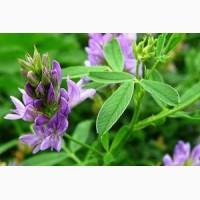
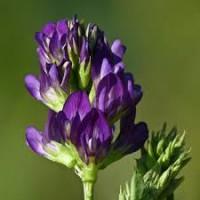
Alfalfa is a perennial herbaceous plant, sown or growing wild, belonging to the legume family.
Lucerne has a rather high winter resistance, is characterized by drought resistance and longevity.
Alfalfa "Nadezhda" - grows quickly after mowing, gives a high yield of green mass.
It is useful fodder for animals. The feed value of this leguminous grass is very high: 1 kg of alfalfa hay contains 0.48 feed units and 103 g of digestible protein. In terms of nutritional value, 2 kg of such hay can be compared to 1 kg of oats.
Enriches the soil with organic substances, protects against water and wind erosion. Alfalfa is an excellent precursor for all crops except legumes. Beautiful, often planted for decorative purposes.
Seeds are sown directly in open ground at the beginning of spring. If alfalfa is used as a green fertilizer, then the bushes are buried in the ground immediately before they enter the flowering phase.(//tractor-service.com)
Nectar is colorless, contains up to 50% sugar. Liquid alfalfa honey - transparent or golden yellow. In folk medicine, it is used as a sedative.
Alfalfa provides protein and vitamin rich fodder for cattle in the form of green mass, hay and hay meal. The leaves contain up to 19-20% proteins, many vitamins - A, C, RR, etc., 0.24% phosphorus and 1.49% calcium, so alfalfa, together withclover, is a valuable fodder for young animals.
Yield of lucerne:
The average yield of green mass is 450 - 750 centners / ha;
The yield of hay is 80 - 150 t/ha, with irrigation it can reach up to 300 t/ha;
The yield of seeds is 5 - 9 c/ha. Seeds can be collected in the 2nd year of growth.
Alfalfa is fertilized with organic mineral fertilizers.
Phosphorus is very important, but you should be a little more careful with nitrogen.
Alfalfa cultivation:
Alfalfa is a perennial herbaceous plant, sown or growing wild, belonging to the legume family.
Lucerne has a rather high winter resistance, is characterized by drought resistance and longevity.
Alfalfa "Nadezhda" - grows quickly after mowing, gives a high yield of green mass.
It is useful fodder for animals. The feed value of this leguminous grass is very high: 1 kg of alfalfa hay contains 0.48 feed units and 103 g of digestible protein. In terms of nutritional value, 2 kg of such hay can be compared to 1 kg of oats.
Enriches the soil with organic substances, protects against water and wind erosion. Alfalfa is an excellent precursor for all crops except legumes. Beautiful, often planted for decorative purposes.
Seeds are sown directly in open ground at the beginning of spring. If alfalfa is used as a green fertilizer, then the bushes are buried in the ground immediately before they enter the flowering phase.(//tractor-service.com)
Nectar is colorless, contains up to 50% sugar. Liquid alfalfa honey - transparent or golden yellow. In folk medicine, it is used as a sedative.
Alfalfa provides protein and vitamin rich fodder for cattle in the form of green mass, hay and hay meal. The leaves contain up to 19-20% proteins, many vitamins - A, C, RR, etc., 0.24% phosphorus and 1.49% calcium, so alfalfa, together withclover, is a valuable fodder for young animals.
Yield of lucerne:
The average yield of green mass is 450 - 750 centners / ha;
The yield of hay is 80 - 150 t/ha, with irrigation it can reach up to 300 t/ha;
The yield of seeds is 5 - 9 c/ha. Seeds can be collected in the 2nd year of growth.
Alfalfa is fertilized with organic mineral fertilizers.
Phosphorus is very important, but you should be a little more careful with nitrogen.
Advertisement ID: #867008
(added by a registered user)
Permanent ad address:
Showed / watched for today: ?, total: ?
Similar fresh ads
Among them are many interesting...