/ Fertilizers and plant protection products / Organic fertilizers / HUMAT KALIYA "Galichyna" (peat liquid)
For sale / buy
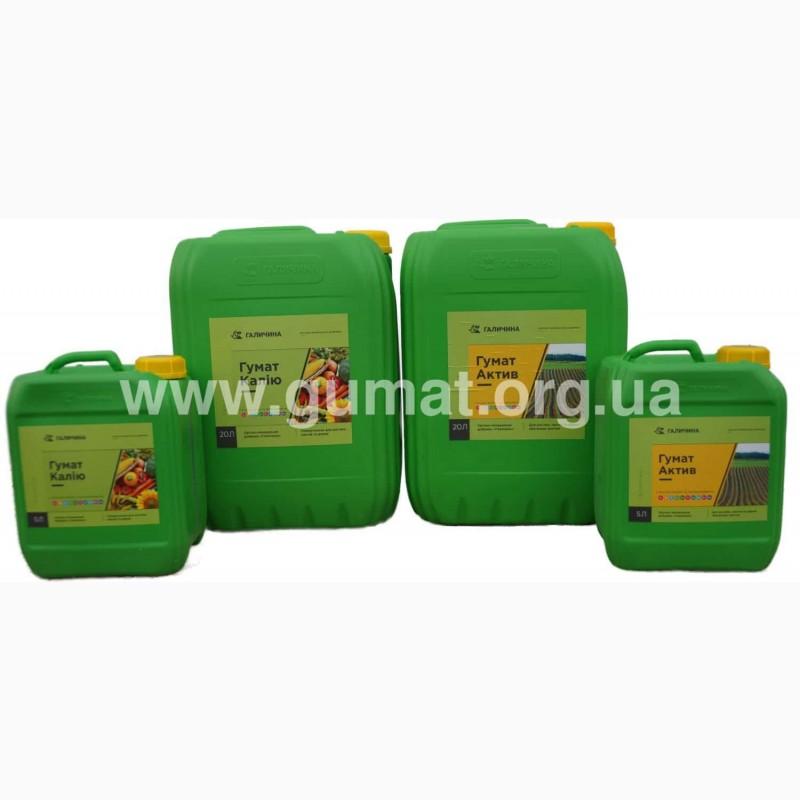
POTASSIUM HUMAT "Galichyna" (peat liquid), Lviv region region.
Region:all of Ukraine,
Lviv region.
Gumat.org.ua
Potash humate of Ukrainian-Italian production
•Packaging: 5l, 20l, 400, 500,eurocube 1000l.
20-liter canisters UAH 1500
5-liter canisters UAH 400
1000 l-negotiable
• How does this fertilizer differ from other humates? - high content of HUMIC ACIDS.
• The content of salts of humic acids is 75-80g/l.!!!
Application rates of 0.4-0.5/ha.!!!(//tractor-service.com)
• Filtration 50 microns
• The action of potassium humate in the soil is not limited to the influence on microorganisms "responsible" for the accumulation of humus. The introduction of humates into the soil significantly intensifies the activity of different groups of microorganisms, which are closely related to the mobilization of soil nutrients and the transformation of potential fertility into effective. Due to the increase in the number of silicate bacteria, there is a constant replenishment of exchangeable potassium absorbed by plants. Potassium humate increases the number of microorganisms in the soil that decompose difficult-to-dissolve mineral and organic compounds of phosphorus. After the introduction oftorfohuminových udboreniy the soil is enriched with digestible nitrogen reserves: the number of ammonifying bacteria increases three to five times, in some cases a tenfold increase in ammonifiers was recorded; nitrifying bacteria - 3-7 times. Due to the improvement of the conditions of life of free-living bacteria, when potassium humate is introduced, their ability to fix molecular nitrogen from the atmosphere increases almost 10 times. The stimulating effect of humate on nodule bacteria of the genus Rhizobium trifoli living in symbiosis (coexistence) with legumes (alfalfa, lupine, clover, peas, vetch, beans) and also on rhizospheric microorganisms living in the root zone of isolated non-leguminous plants was established. Thus, the introduction of potassium humate into the soil stimulates the activity of all types of microorganisms that fix atmospheric nitrogen and make it digestible for cultivated plants.
• Humates contribute to the significant activation of those groups of microorganisms that participate in the mineralization of organic substances. As a result, the soil is enriched with available nutrients. During the decomposition of organic matter, many organic acids and carbon dioxide are formed. Under their influence, hard-to-reach mineral compounds of phosphorus, calcium, potassium, and magnesium are transformed into a form accessible to the plant. At the same time, it is important to remember that the introduction of humic fertilizers ensures the "overweight" of the accumulation of organic matter in the soil over its decomposition. Although the content of humus in the soil is usually less than 10% of the soil mass, it is due to the humus substances in the soil that a diverse microbial population is maintained.
• The introduction of humic fertilizers improves the physical, physico-chemical properties of soils, their air, water and thermal conditions. Humic acids together with mineral and organomineral particles of the soil form a soil absorbing complex that determines its absorbing capacity. The introduction of humic fertilizers leads to the fact that humus substances, enveloping and gluing together the mineral particles of the soil, contribute to the creation of a very valuable water-resistant lumpy-granular structure that improves the water-permeable and water-retaining capacity of the soil, its air permeability.
• Molecules of humates enter the soil structure, in their presence the exchange capacity increases sharplypotency of soils Adsorbed forms of nutrients do not bind to the soil, are not washed away by water, and are in a state available for use by plants. In the future, plants use these adsorbed substances, and more intensively than from the soil solution. The marked ability of humus substances to prevent the fixation of potassium by clay minerals as a result of the formation of compounds of the chelate type. All useful trace elements, being metals, form chelate complexes with humates in the soil and then penetrate into plants, providing them with nutrition, while iron and manganese, according to the authoritative opinion of a number of soil scientists, are absorbed exclusively in the form of humic complexes.
• Humic substances prevent the irreversible sorption of phosphates by binding iron and aluminum ions into complexes, especially on those soils that contain them in excess.
Call
Potash humate of Ukrainian-Italian production
•Packaging: 5l, 20l, 400, 500,eurocube 1000l.
20-liter canisters UAH 1500
5-liter canisters UAH 400
1000 l-negotiable
• How does this fertilizer differ from other humates? - high content of HUMIC ACIDS.
• The content of salts of humic acids is 75-80g/l.!!!
Application rates of 0.4-0.5/ha.!!!(//tractor-service.com)
• Filtration 50 microns
• The action of potassium humate in the soil is not limited to the influence on microorganisms "responsible" for the accumulation of humus. The introduction of humates into the soil significantly intensifies the activity of different groups of microorganisms, which are closely related to the mobilization of soil nutrients and the transformation of potential fertility into effective. Due to the increase in the number of silicate bacteria, there is a constant replenishment of exchangeable potassium absorbed by plants. Potassium humate increases the number of microorganisms in the soil that decompose difficult-to-dissolve mineral and organic compounds of phosphorus. After the introduction oftorfohuminových udboreniy the soil is enriched with digestible nitrogen reserves: the number of ammonifying bacteria increases three to five times, in some cases a tenfold increase in ammonifiers was recorded; nitrifying bacteria - 3-7 times. Due to the improvement of the conditions of life of free-living bacteria, when potassium humate is introduced, their ability to fix molecular nitrogen from the atmosphere increases almost 10 times. The stimulating effect of humate on nodule bacteria of the genus Rhizobium trifoli living in symbiosis (coexistence) with legumes (alfalfa, lupine, clover, peas, vetch, beans) and also on rhizospheric microorganisms living in the root zone of isolated non-leguminous plants was established. Thus, the introduction of potassium humate into the soil stimulates the activity of all types of microorganisms that fix atmospheric nitrogen and make it digestible for cultivated plants.
• Humates contribute to the significant activation of those groups of microorganisms that participate in the mineralization of organic substances. As a result, the soil is enriched with available nutrients. During the decomposition of organic matter, many organic acids and carbon dioxide are formed. Under their influence, hard-to-reach mineral compounds of phosphorus, calcium, potassium, and magnesium are transformed into a form accessible to the plant. At the same time, it is important to remember that the introduction of humic fertilizers ensures the "overweight" of the accumulation of organic matter in the soil over its decomposition. Although the content of humus in the soil is usually less than 10% of the soil mass, it is due to the humus substances in the soil that a diverse microbial population is maintained.
• The introduction of humic fertilizers improves the physical, physico-chemical properties of soils, their air, water and thermal conditions. Humic acids together with mineral and organomineral particles of the soil form a soil absorbing complex that determines its absorbing capacity. The introduction of humic fertilizers leads to the fact that humus substances, enveloping and gluing together the mineral particles of the soil, contribute to the creation of a very valuable water-resistant lumpy-granular structure that improves the water-permeable and water-retaining capacity of the soil, its air permeability.
• Molecules of humates enter the soil structure, in their presence the exchange capacity increases sharplypotency of soils Adsorbed forms of nutrients do not bind to the soil, are not washed away by water, and are in a state available for use by plants. In the future, plants use these adsorbed substances, and more intensively than from the soil solution. The marked ability of humus substances to prevent the fixation of potassium by clay minerals as a result of the formation of compounds of the chelate type. All useful trace elements, being metals, form chelate complexes with humates in the soil and then penetrate into plants, providing them with nutrition, while iron and manganese, according to the authoritative opinion of a number of soil scientists, are absorbed exclusively in the form of humic complexes.
• Humic substances prevent the irreversible sorption of phosphates by binding iron and aluminum ions into complexes, especially on those soils that contain them in excess.
Call
Ad ID: #698902
(added by a registered user)
Permanent ad address:
Showed / watched for today: ?, total: ?
Similar fresh ads
Among them there are many interesting...