For sale / buy
Excellent Медонос Ваточник сирийский, Sumy region.
Region:all of Ukraine,
Sumy region.
We accept rhizome orders (September-October-November 2017)
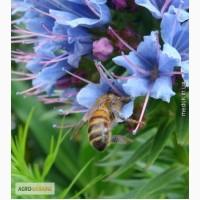
For beekeeping, the cottonwood is an excellent honey plant - in the center of the flower there are five large funnel-shaped nectaries, pink in color, filled with nectar. Each such funnel can hold about three milligrams of fragrant nectar, and one flower of cotton wool can bloom for eight days.
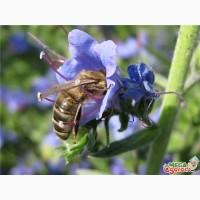
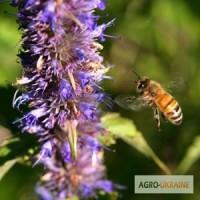
Bees willingly visit cottonseed crops, and there are extremely rare years when bees refuse to collect nectar from it, so this plant is good to use in areas close to the apiary, thereby creating a food base for bees.
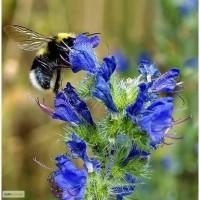
The flowering of cotton wool is abundant, so you can count on its high honey productivity. If you estimate the yield from one hectare of cotton seed, it can be determined that it can vary from 750 to 1000 kilograms per year. Bribery lasts for more than a month, and the release of nectar during the day occurs so quickly that a strongчелиная семья can collect 5-7 kilograms of it in one day. If, in sunny weather, you observe the blooming thickets of cotton wool from the outside, you can see the continuous movement of bees and other insects over the flowers.
Flowering begins at the end of June, when the white acacia has already bloomed, and continues in July, until the sunflower begins to bloom. In this period of time, there are almost no bribes from other plants, so it is desirable to breed this culture on all free plots near the apiary.(//tractor-service.com)
The honey of cotton wool has its own characteristics, and it is easy to distinguish it from honey taken from other honey bees - it is aromatic and has its own, very delicate taste. In terms of color, it is unusually light, or with a slightly yellowish tint, and the caps on the combs are pearly white. High-quality and aromatic honey from cotton wool is always in demand.
Reproduction of cotton wool
It is quite problematic to grow cotton wool from seeds - even sprouted seedlings require very careful care and take root poorly. But this plant is easily propagated by rhizomes. If the root of cotton wool is planted in autumn, then in June of the following year you can expect flowering. If the rhizome is planted in the spring, then flowering will begin in an hour, and if the cottonwood is sownby seeds - after two years.
Expanding, cotton wool very quickly captures new territories. In one season, it can grow a meter from its initial position. It is not necessary to burn it - it drowns out and displaces weeds. It also does not need watering, as its roots penetrate deep into the soil. Such deep rooting guarantees drought tolerance and annual availability of nectar to cotton wool.
Call on tel. : +380xxxxxx
For beekeeping, the cottonwood is an excellent honey plant - in the center of the flower there are five large funnel-shaped nectaries, pink in color, filled with nectar. Each such funnel can hold about three milligrams of fragrant nectar, and one flower of cotton wool can bloom for eight days.
Bees willingly visit cottonseed crops, and there are extremely rare years when bees refuse to collect nectar from it, so this plant is good to use in areas close to the apiary, thereby creating a food base for bees.
The flowering of cotton wool is abundant, so you can count on its high honey productivity. If you estimate the yield from one hectare of cotton seed, it can be determined that it can vary from 750 to 1000 kilograms per year. Bribery lasts for more than a month, and the release of nectar during the day occurs so quickly that a strongчелиная семья can collect 5-7 kilograms of it in one day. If, in sunny weather, you observe the blooming thickets of cotton wool from the outside, you can see the continuous movement of bees and other insects over the flowers.
Flowering begins at the end of June, when the white acacia has already bloomed, and continues in July, until the sunflower begins to bloom. In this period of time, there are almost no bribes from other plants, so it is desirable to breed this culture on all free plots near the apiary.(//tractor-service.com)
The honey of cotton wool has its own characteristics, and it is easy to distinguish it from honey taken from other honey bees - it is aromatic and has its own, very delicate taste. In terms of color, it is unusually light, or with a slightly yellowish tint, and the caps on the combs are pearly white. High-quality and aromatic honey from cotton wool is always in demand.
Reproduction of cotton wool
It is quite problematic to grow cotton wool from seeds - even sprouted seedlings require very careful care and take root poorly. But this plant is easily propagated by rhizomes. If the root of cotton wool is planted in autumn, then in June of the following year you can expect flowering. If the rhizome is planted in the spring, then flowering will begin in an hour, and if the cottonwood is sownby seeds - after two years.
Expanding, cotton wool very quickly captures new territories. In one season, it can grow a meter from its initial position. It is not necessary to burn it - it drowns out and displaces weeds. It also does not need watering, as its roots penetrate deep into the soil. Such deep rooting guarantees drought tolerance and annual availability of nectar to cotton wool.
Call on tel. : +380xxxxxx
Ad ID: #685486
(added by a registered user)
Permanent ad address:
Showed / watched for today: ?, total: ?
Similar fresh ads
Among them there are many interesting ones...