For sale / buy
Zond žedrochnyj dlya hulkyni zhivotno, Kyiv
Region:all of Ukraine,
Kyiv
(Ukraine Kyiv, str. Strategicheskoe shosse, 35 03028)
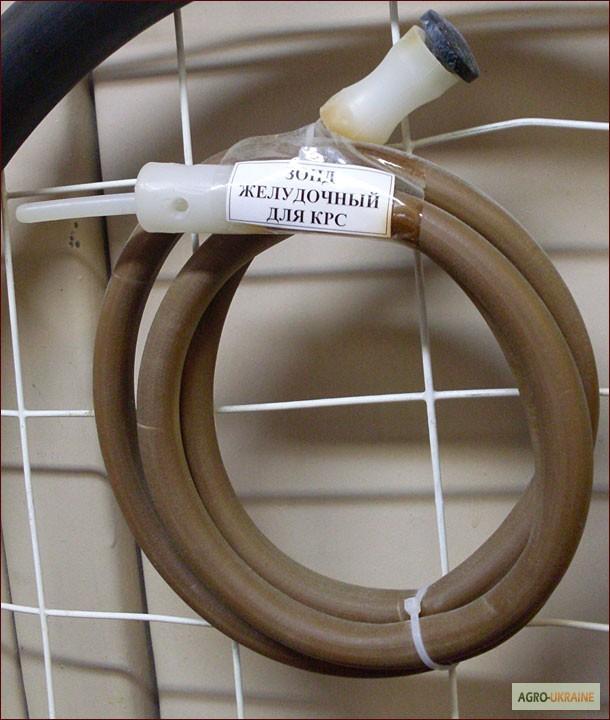
Intended for gastric lavage in case of animal poisoning, for administration of medicinal products, for prophylactic release of stomach contents before or during operations on the esophagus, for pushing out small foreign bodies. The introduction of a nasogastric tube to large and small cattle does not differ significantly from the introduction of this tube to horses. It can be noted that this probe causes less anxiety in comparison with the probe administered to this animal through the mouth. For sheep, it is possible to recommend the use of a medical esophageal probe. Currently, the gastric tube is mainly made of rubber. In some models of probes, for greater elasticity, a metal spiral is inserted into the thickness of the rubber, in others, a metal rod is inserted into the cavity of the probe. When introducing a gastricprobe of a horse its head should be stretched almost in line with the neck. The operator's assistant must pull out the tongue and move it to the side and open the mouth with the outer part of the mouth. The operating probe, lubricated with petroleum jelly, passes through the lumen of the zygoma and further, adhering to the medial line of the oral cavity and the palatal *taken*o *with vetinfa.rf arch, to the pharynx. On this path, there is resistance from the soft palate. The resistance of the walls of the pharynx is insignificant, and the walls of the esophagus - significantly. A more significant obstacle is the cardiac sphincter, but it is also overcome without much difficulty. It is much easier to introduce a gastric tube to cattle than to horses. This is explained by the fact that incattle the soft palate is shorter, and the esophagus is much wider. The technique *taken *from v*etinfa.rf introduction is the same as for horses. To fix the mouth in the open state, it is most convenient to use a mandible - a block with a hole in the center for the passage of the probe. It is best to introduce a gastric probe to a dog in a lying lateral position. The head is placed in such a position that the line of the head and neck would be a straight line. It is necessary to open the mouth with the external part. The diameter of the probe should be 8-10 mm. It is possible *taken* from vetinfa.*rf to use a urinary catheter for stallions, pre-immersing it in warm water. When the probe is inserted into the pharynx, vomiting occurs quite often in dogs. In this case, the further advancement of the probe should be stopped and an attempt should be made to stop the vomiting by pressing the spatula on the root of the tongue.
Ad ID: #676068
(added by a registered user)
Permanent ad address:
Showed / watched for today: ?, total: ?