
For sale / buy
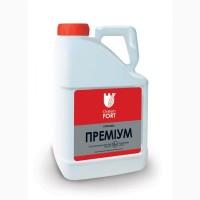
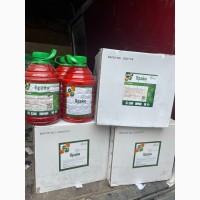
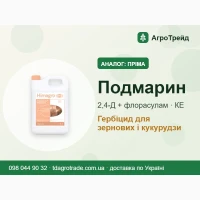
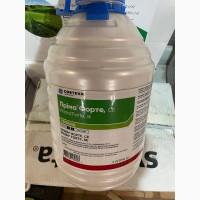
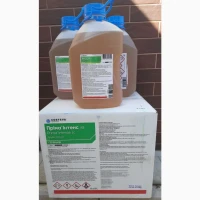
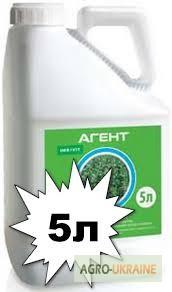
Herbicide Agent (Prima), Ukravit, Dnipropetrovsk region.
Region:all Ukraine,
Dnepropetrovsk region.
(Synelnikovo)
Updated:
Post-emergence systemic herbicide for the destruction of annual dicotyledonous weeds, including those resistant to 2,4-D and MCPA and some perennial dicotyledonous species in cropsgrain cereals crops andcorn.
· inherent high speed of action on weeds;
· capable of controlling a wide range of weed species;
· compatible with other agrochemicals in the sowing of grain crops and corn;
· it is used in a wider temperature range compared to other forms of 2,4-D preparations;
· quite wide "technological window" of application;
· absence of after-effects of the drug on subsequent crops in crop rotation;
· non-toxic for animals and humans, safe for the environment.
Active ingredient. 2,4-D 2-ethylhexyl ether, 452 g/l, in acid equivalent, 300 g/l + florasulam, 6.25 g/l.
Preparative form. Suspo-emulsion.
Chemical group. Derivatives of chlorophenoxyacetic acid + triazolpyrimidines.
Compatibility Compatible with most pesticides and liquid fertilizers that have a neutral reaction. Before preparing the working mixtures, it is advisable to check the drugs for compatibility (absence of sediment, foam, delamination, clumping, incomplete dissolution of one of the drugs, etc.). Combine only those components that match the recommended processing terms, taking into account the phase of culture development.
(//tractor-service.com)
Mechanism of action. The active substance 2,4-D is of the auxin type, which blocks the action of the hormone of growth and development of plants and affects the growth processes of cells in weeds. Florasulam is an inhibitor of acetolactate synthase, which is the main enzyme in the biosynthesis of amino acids such as isoleucine, leucine and valine. The combination of two active substances with different mechanisms of action prevents the emergence of resistance in weeds.
Spectrum of action.
Susceptible weeds: ragweed, gray hiccup, field mustard, common sorrel, fine-leaved double-leaved sedge, yellow sedge, Sophia's curlew, white quinoa, samosa poppy, prickly sedge, small-fruited red sedge, rape (carrion), common scurvy, carrionsunflower, dry rib, field talaban, stinking sedge, bent scotch.
Moderately sensitive weeds: field birch, yellow thistle, pink thistle.
The maximum number of treatments is 1.
The waiting period from the last processing to harvesting is not established.
The consumption rate of the working solution is 150-250 l/ha, depending on the numerical composition of the weed component.
Visible symptoms of herbicidal activity appear already a few days after using the drug, and the complete death of weeds is observed after 2-3 weeks, depending on weather conditions.
Treatment with the drug must be carried out in the stage of active growth of weeds: in the cotyledon phase - 2-4 leaves.
Spraying should be carried out at an air temperature of 10 to 25°С and at a wind speed of no more than 3-4 m/s. Spraying should not be carried out immediately after frosts or when they are expected.
Toxicity. WHO classification: 3rd class (malotoxic).
The period for workers to leave the treated areas for mechanized work is 3 days, for manual work it is not necessary.
Packaging. 5 l.
· inherent high speed of action on weeds;
· capable of controlling a wide range of weed species;
· compatible with other agrochemicals in the sowing of grain crops and corn;
· it is used in a wider temperature range compared to other forms of 2,4-D preparations;
· quite wide "technological window" of application;
· absence of after-effects of the drug on subsequent crops in crop rotation;
· non-toxic for animals and humans, safe for the environment.
Active ingredient. 2,4-D 2-ethylhexyl ether, 452 g/l, in acid equivalent, 300 g/l + florasulam, 6.25 g/l.
Preparative form. Suspo-emulsion.
Chemical group. Derivatives of chlorophenoxyacetic acid + triazolpyrimidines.
Compatibility Compatible with most pesticides and liquid fertilizers that have a neutral reaction. Before preparing the working mixtures, it is advisable to check the drugs for compatibility (absence of sediment, foam, delamination, clumping, incomplete dissolution of one of the drugs, etc.). Combine only those components that match the recommended processing terms, taking into account the phase of culture development.
(//tractor-service.com)
Mechanism of action. The active substance 2,4-D is of the auxin type, which blocks the action of the hormone of growth and development of plants and affects the growth processes of cells in weeds. Florasulam is an inhibitor of acetolactate synthase, which is the main enzyme in the biosynthesis of amino acids such as isoleucine, leucine and valine. The combination of two active substances with different mechanisms of action prevents the emergence of resistance in weeds.
Spectrum of action.
Susceptible weeds: ragweed, gray hiccup, field mustard, common sorrel, fine-leaved double-leaved sedge, yellow sedge, Sophia's curlew, white quinoa, samosa poppy, prickly sedge, small-fruited red sedge, rape (carrion), common scurvy, carrionsunflower, dry rib, field talaban, stinking sedge, bent scotch.
Moderately sensitive weeds: field birch, yellow thistle, pink thistle.
The maximum number of treatments is 1.
The waiting period from the last processing to harvesting is not established.
The consumption rate of the working solution is 150-250 l/ha, depending on the numerical composition of the weed component.
Visible symptoms of herbicidal activity appear already a few days after using the drug, and the complete death of weeds is observed after 2-3 weeks, depending on weather conditions.
Treatment with the drug must be carried out in the stage of active growth of weeds: in the cotyledon phase - 2-4 leaves.
Spraying should be carried out at an air temperature of 10 to 25°С and at a wind speed of no more than 3-4 m/s. Spraying should not be carried out immediately after frosts or when they are expected.
Toxicity. WHO classification: 3rd class (malotoxic).
The period for workers to leave the treated areas for mechanized work is 3 days, for manual work it is not necessary.
Packaging. 5 l.
|
Author, contacts | |
ООО "TD "Svarog Agro"/ отзывы, инфо./ evaluation activities | |
|
Phone:
+38(xxxxxx
show
| |
All user ads ~179 | |
Ad ID: #643411
(added by a registered user, registration date: 22-01-2016)
Added / Updated: 10-09-2026 08:34 (relevant, until: 10-09-2027)
Permanent ad address:
Showed / watched for today: ?, total: ?
Similar ads
Among them there are many interesting ones...