Sell / buy
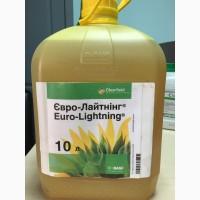
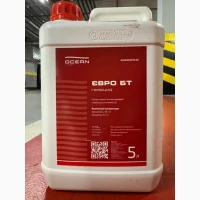
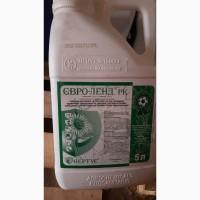
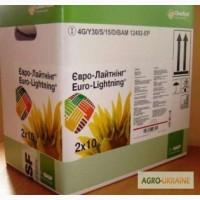
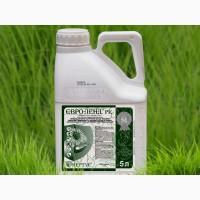
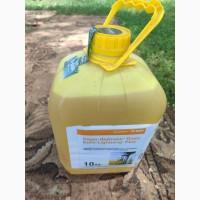
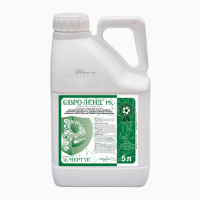
Herbicide Vitalait (Euro-Lighting), Dnepropetrovsk region.
Price550 UAH.
Region:вся Украина,
Dnepropetrovsk region.
(G. Sinelnikovo)
Updated:
Innovative post-emergence herbicide for the complete destruction of cereal and dicotyledonous types of weeds in cropssunflower which is resistant to the group of imidazolines.
― a wide range of cereal and dicotyledonous weed species;
― destroys "problem" weeds, namely: thistle (species), ragweed (species), tenacious nightshade, sunflower gorse and others;
― only one treatment keeps the field clear of weeds during the entire growing season;
― exhibits soil properties, prevents the emergence of a new wave of weed seedlings;
― safety and profitability in use.
― the possibility of application in the No-till farming system and with minimal tillage of the soil.
Active substance content: Imazapyr, 15 g/l Imazamox, 33 g/l
Preparative form: Soluble concentrate.
Chemical group: Imidazolines
Compatibility: Compatibility with other drugs is not required. In most cases, it is used independently.(//tractor-service.com)
Mechanism of action: Systemic action. When applied to weeds, imazapyr and imazamox are quickly absorbed through the leaves, and also penetrate the plant through the roots. The two active substances enter the plant tissues through the xylem and phloem, where they act as inhibitors of the enzyme acetolactate synthetase (ALS). ALS is a catalyst for the biosynthesis of essential amino acids: valine, leucine, and isoleucine. Suppression of the formation of ALS imidazolinones blocks the formation of the specified essential amino acids and protein synthesis, which leads to the complete death of weed vegetation.
Range of action:
Dicotyledonous species: ragweed (species), field bindweed, sunflower gorse, birch mustard, field mustard, shepherd's bag, gills, common starling, Theophrastus's rope, white marigold, milk thistle (species), common gorse, thistle (species), black nightshade, tenacious nightshade, wild radish, chamomile (species), field sedge, schiritsa (species), dymyanka officinalis.
Cereal species: oats (species), mice (species), millet (species)
The maximum number of treatments is 1. The waiting period before harvesting is not set.
The consumption rate of the working solution is 200-300 l/ha.
The drug should be used when weeds are actively growing. A high biological effect is achieved when applied in the initial phases of weed development, which in most cases coincides with the phase of culture development - 4 true leaves.
Processing is carried out only with a freshly prepared working solution of the drug at an air temperature of no higher than 25 0С and a wind speed of no more than 5 m / s. Spraying plants wet with dew and sediments reduces the effectiveness of the herbicide. Processing is inappropriate when there is a risk of night frosts, as well as on diseased and weakened crops. The drug exhibits broad herbicidal activity, so the organization of crop rotation is as follows: after 4 months - wheat, rye; after 9 months * ― corn, barley **, oats, sunflower, soy, peas, sorghum, beans; after 18 months ― vegetable crops,potatoes; after 24 months - beets (sugar, fodder), rapeseed, buckwheat, millet and other crops.
* ― When the pH of the soil is higher than 6.2 and the amount of precipitation is more than 200 mm;
** ― when the pH of the soil is lower than 6.2 and the amount of precipitation is less than 200 mm, there is a possible threat of phytotoxicity, therefore, in order to reduce the negative effect, a mechanicalobradoka pochvy to a depth of at least 15 cm.
Toxicity. WHO classification: 3rd class (low toxicity). The period for workers to enter the treated area for mechanized work is 3 days, for manual work it is not necessary.
Packaging. 5 l.
― a wide range of cereal and dicotyledonous weed species;
― destroys "problem" weeds, namely: thistle (species), ragweed (species), tenacious nightshade, sunflower gorse and others;
― only one treatment keeps the field clear of weeds during the entire growing season;
― exhibits soil properties, prevents the emergence of a new wave of weed seedlings;
― safety and profitability in use.
― the possibility of application in the No-till farming system and with minimal tillage of the soil.
Active substance content: Imazapyr, 15 g/l Imazamox, 33 g/l
Preparative form: Soluble concentrate.
Chemical group: Imidazolines
Compatibility: Compatibility with other drugs is not required. In most cases, it is used independently.(//tractor-service.com)
Mechanism of action: Systemic action. When applied to weeds, imazapyr and imazamox are quickly absorbed through the leaves, and also penetrate the plant through the roots. The two active substances enter the plant tissues through the xylem and phloem, where they act as inhibitors of the enzyme acetolactate synthetase (ALS). ALS is a catalyst for the biosynthesis of essential amino acids: valine, leucine, and isoleucine. Suppression of the formation of ALS imidazolinones blocks the formation of the specified essential amino acids and protein synthesis, which leads to the complete death of weed vegetation.
Range of action:
Dicotyledonous species: ragweed (species), field bindweed, sunflower gorse, birch mustard, field mustard, shepherd's bag, gills, common starling, Theophrastus's rope, white marigold, milk thistle (species), common gorse, thistle (species), black nightshade, tenacious nightshade, wild radish, chamomile (species), field sedge, schiritsa (species), dymyanka officinalis.
Cereal species: oats (species), mice (species), millet (species)
The maximum number of treatments is 1. The waiting period before harvesting is not set.
The consumption rate of the working solution is 200-300 l/ha.
The drug should be used when weeds are actively growing. A high biological effect is achieved when applied in the initial phases of weed development, which in most cases coincides with the phase of culture development - 4 true leaves.
Processing is carried out only with a freshly prepared working solution of the drug at an air temperature of no higher than 25 0С and a wind speed of no more than 5 m / s. Spraying plants wet with dew and sediments reduces the effectiveness of the herbicide. Processing is inappropriate when there is a risk of night frosts, as well as on diseased and weakened crops. The drug exhibits broad herbicidal activity, so the organization of crop rotation is as follows: after 4 months - wheat, rye; after 9 months * ― corn, barley **, oats, sunflower, soy, peas, sorghum, beans; after 18 months ― vegetable crops,potatoes; after 24 months - beets (sugar, fodder), rapeseed, buckwheat, millet and other crops.
* ― When the pH of the soil is higher than 6.2 and the amount of precipitation is more than 200 mm;
** ― when the pH of the soil is lower than 6.2 and the amount of precipitation is less than 200 mm, there is a possible threat of phytotoxicity, therefore, in order to reduce the negative effect, a mechanicalobradoka pochvy to a depth of at least 15 cm.
Toxicity. WHO classification: 3rd class (low toxicity). The period for workers to enter the treated area for mechanized work is 3 days, for manual work it is not necessary.
Packaging. 5 l.
|
Author, contacts | |
ООО "TD "Svarog Agro"/ отзывы, инфо./ evaluation activities | |
|
Phone:
+38(xxxxxx
show
| |
All user ads ~179 | |
Ad ID: #633528
(added by a registered user, registration date: 22-01-2016)
Added / Updated: 10-09-2026 08:34 (relevant, until: 10-09-2027)
Permanent ad address:
Showed / watched for today: ?, total: ?
Similar ads
Among them there are many interesting ones...