/ Fertilizers and plant protection products / Complex fertilizers / For sale KAS - 32 (Kharkov Poltava Summy)
For sale / buy
For sale KAS - 32 (Kharkov Poltava Summy), Kharkov region.
Region:
Kharkov region.
For sale Russian KAS-32. Urea-ammonia mixture (KAS-32). The price is UAH 5,700/ton, the minimum batch is 2.6 tons (2 cubes). In Poltava and Kharkiv and Sumy regions, delivery from 20 tons is free.
Aqueous solution of urea and ammonium nitrate, containing ammonium and nitrate nitrogen of ammonium nitrate and amide nitrogen of urea. Liquidnitrogen fertilizer, containing 32% nitrogen.
KAS is a high-quality mineralудобрения for all types of soil and for any agricultural crops.
If you are looking for a fertilizer with maximum economic benefit, you should pay attention to KAS-32. There is practically no free ammonia in it - this is a guarantee of safety for the environment, since it does not evaporate into the atmosphere during transportation, storage or application. Therefore, if you decide to buy KAS-32, it will be the best investment.
Moreover, this is the only nitrogen fertilizer that contains three forms of nitrogen at once - nitrate, ammonium and amide. Due to the different rate of assimilation of these forms of nitrogen by the soil, prolonged nutrition of plants becomes possible.
For what purpose can KAS-32 be used:
1) for the main application under tillage;
(//tractor-service.com)
2) for pre-sowing cultivation;
3) for root feeding of plants;
4) for applying to the soil before or after sowing.
KAS can be combined with other fertilizers, which include trace elements, pesticides, and growth regulators.
Properties and use of KAS-32
KAS-32 is a liquid fertilizer based on a solution of urea with ammonium nitrate. Nitrogen content - 32%. Has a yellowish color or no color at all. The drug has a neutral or slightly alkaline reaction. Density - 1.26-1.33 g/cm³.
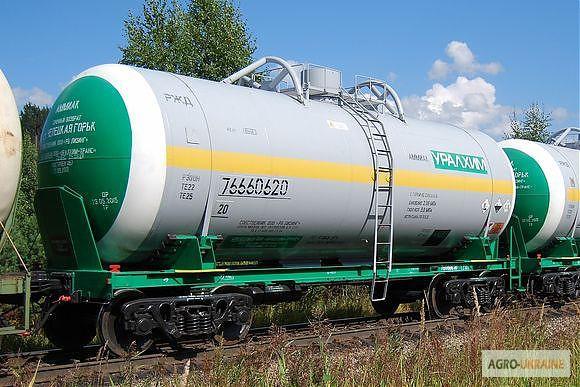
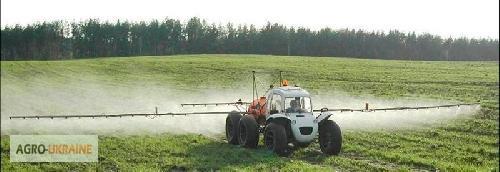
KAS can be applied using special equipment without sealing into the soil, as well as in the process of watering together with water. KAS-32 solution, which contains corrosion inhibitors, can be transported in automobile andrailway tanks. The solution can crystallize at a temperature of -2°C and freeze at a temperature of -26°C, but this does not pose a danger, since the physical properties of the fertilizer are restored as the temperature increases.
Aqueous solution of urea and ammonium nitrate, containing ammonium and nitrate nitrogen of ammonium nitrate and amide nitrogen of urea. Liquidnitrogen fertilizer, containing 32% nitrogen.
KAS is a high-quality mineralудобрения for all types of soil and for any agricultural crops.
If you are looking for a fertilizer with maximum economic benefit, you should pay attention to KAS-32. There is practically no free ammonia in it - this is a guarantee of safety for the environment, since it does not evaporate into the atmosphere during transportation, storage or application. Therefore, if you decide to buy KAS-32, it will be the best investment.
Moreover, this is the only nitrogen fertilizer that contains three forms of nitrogen at once - nitrate, ammonium and amide. Due to the different rate of assimilation of these forms of nitrogen by the soil, prolonged nutrition of plants becomes possible.
For what purpose can KAS-32 be used:
1) for the main application under tillage;
(//tractor-service.com)
2) for pre-sowing cultivation;
3) for root feeding of plants;
4) for applying to the soil before or after sowing.
KAS can be combined with other fertilizers, which include trace elements, pesticides, and growth regulators.
Properties and use of KAS-32
KAS-32 is a liquid fertilizer based on a solution of urea with ammonium nitrate. Nitrogen content - 32%. Has a yellowish color or no color at all. The drug has a neutral or slightly alkaline reaction. Density - 1.26-1.33 g/cm³.
KAS can be applied using special equipment without sealing into the soil, as well as in the process of watering together with water. KAS-32 solution, which contains corrosion inhibitors, can be transported in automobile andrailway tanks. The solution can crystallize at a temperature of -2°C and freeze at a temperature of -26°C, but this does not pose a danger, since the physical properties of the fertilizer are restored as the temperature increases.
Ad ID: #561066
(added by a registered user)
Permanent ad address:
Showed / watched for today: ?, total: ?
Similar fresh ads
Among them there are many interesting ones...