/ Seeds, seedlings and sowing materials / Seedlings of fruit and berry bushes / Seedlings blackberries / Seedlings of blackberry ton of fries
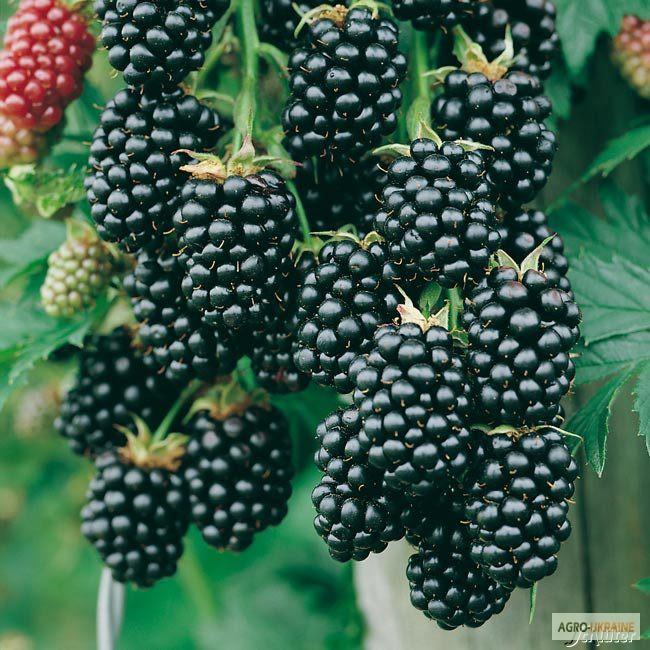
For sale / buy
Seedlings of blackberries Thornfree, Dnepropetrovsk region.
Region:
Dnepropetrovsk region.
(Nikopol)
Thornfree blackberry was bred in the USA in 1966. The yield of this variety is three to four times higher than that of raspberries, and in terms of biological properties and the content of some substances it is significantly superior.
Characteristic features of the blackberry include the complete absence of thorns, which allows unobstructed care for it, and root growth. In addition, Thornberry is resistant to such diseases as stem cancer and rust.
Blackberries of this variety have been growing on my plot for about ten years, which made it possible to develop my own method of agricultural technology.
Initially, as recommended by some amateur gardeners, I grew the plant on a trellis. However, this is quite time-consuming work, since the formation of the bush takes a lot of space and time. It is also bad that from the main perennial shoots, as a rule, there are shoots up to two meters long, which leads to a decrease in the yield and small berries.
As a result of many years of observations, I came to the conclusion that in the first hour it is necessary to grow three main shoots of the plant, which should be tied vertically to a metal rod with a diameter of 20 mm (perhaps 16-18 mm).
These shoots produce shoots during the year, which I cut at the end of July, leaving two buds on each. On the formed shoots, I receive the harvest of the future year.
On the second hour, I again grow three new shoots from the base of the bush, which I also fasten vertically to the rod. From these, I form the crop of the next season according to the described scheme.
(//tractor-service.com)
For the accumulation of nutrients and good fruiting, annual shoots are pinched at a height of about two meters. At the end of September - beginning of October, I cut off fruit-bearing branches to the base of the root system. This cultivation method allows you to get an annual harvest of up to 10 kg of berries from one adult bush.
I propagate the Thornfree blackberry in two ways. The first - shoots cut at the end of July are divided into cuttings, leaving one leaf on the upper bud, planted in the prepared soil and for better survival, I cover the area with them with a film.
Using the second method, which I consider the most successful, I drip the tops of the lower horizontal shoots. But for the success of this method, it is necessary that there was enough moisture in the soil during the intensive growth of shoots.
With the last method of propagation at the end of September, I getseedlings with a well-developed root system.
As experience has shown, it is best to plant blackberries in early spring. At the same time, it is necessary, taking into account its weak winter resistance, to allocate for it a well-lit and heated area, protected from cold winds.
It should be noted that Thornfry is unpretentious to the soil. However, to obtain good yields, it must be fed. In addition, when planting, it is also important to take into account that the roots of the plant lie deep. In this regard, I usually dig a hole 50x50x60 cm in size, pour a bucket of humus, about 150 g of superphosphate and about 50 g ofpotassium fertilizer into it. I mix the mixture well with the earth, add fertile soil on top. And only after that I put a blackberry seedling and cover it with soil. Watering is carried out at the rate of 30 liters of water per plant.
Every hour, I apply fertilizer under the fruit-bearing bush (a liter of fermented chicken droppings per 10 liters of water with the simultaneous addition of 150 g (seven matchboxes)complex fertilizer).
For the winter, I cover the blackberry with walnut leaves (perhaps straw, humus). For the purpose of prevention, before and after removing the shelter, I treat the plants with a three percent Bordeaux mixture. When two or three leaves appear, I additionally treat with chorus (possibly with topaz). I produce all these measures exclusively for the purpose of prevention.
Characteristic features of the blackberry include the complete absence of thorns, which allows unobstructed care for it, and root growth. In addition, Thornberry is resistant to such diseases as stem cancer and rust.
Blackberries of this variety have been growing on my plot for about ten years, which made it possible to develop my own method of agricultural technology.
Initially, as recommended by some amateur gardeners, I grew the plant on a trellis. However, this is quite time-consuming work, since the formation of the bush takes a lot of space and time. It is also bad that from the main perennial shoots, as a rule, there are shoots up to two meters long, which leads to a decrease in the yield and small berries.
As a result of many years of observations, I came to the conclusion that in the first hour it is necessary to grow three main shoots of the plant, which should be tied vertically to a metal rod with a diameter of 20 mm (perhaps 16-18 mm).
These shoots produce shoots during the year, which I cut at the end of July, leaving two buds on each. On the formed shoots, I receive the harvest of the future year.
On the second hour, I again grow three new shoots from the base of the bush, which I also fasten vertically to the rod. From these, I form the crop of the next season according to the described scheme.
(//tractor-service.com)
For the accumulation of nutrients and good fruiting, annual shoots are pinched at a height of about two meters. At the end of September - beginning of October, I cut off fruit-bearing branches to the base of the root system. This cultivation method allows you to get an annual harvest of up to 10 kg of berries from one adult bush.
I propagate the Thornfree blackberry in two ways. The first - shoots cut at the end of July are divided into cuttings, leaving one leaf on the upper bud, planted in the prepared soil and for better survival, I cover the area with them with a film.
Using the second method, which I consider the most successful, I drip the tops of the lower horizontal shoots. But for the success of this method, it is necessary that there was enough moisture in the soil during the intensive growth of shoots.
With the last method of propagation at the end of September, I getseedlings with a well-developed root system.
As experience has shown, it is best to plant blackberries in early spring. At the same time, it is necessary, taking into account its weak winter resistance, to allocate for it a well-lit and heated area, protected from cold winds.
It should be noted that Thornfry is unpretentious to the soil. However, to obtain good yields, it must be fed. In addition, when planting, it is also important to take into account that the roots of the plant lie deep. In this regard, I usually dig a hole 50x50x60 cm in size, pour a bucket of humus, about 150 g of superphosphate and about 50 g ofpotassium fertilizer into it. I mix the mixture well with the earth, add fertile soil on top. And only after that I put a blackberry seedling and cover it with soil. Watering is carried out at the rate of 30 liters of water per plant.
Every hour, I apply fertilizer under the fruit-bearing bush (a liter of fermented chicken droppings per 10 liters of water with the simultaneous addition of 150 g (seven matchboxes)complex fertilizer).
For the winter, I cover the blackberry with walnut leaves (perhaps straw, humus). For the purpose of prevention, before and after removing the shelter, I treat the plants with a three percent Bordeaux mixture. When two or three leaves appear, I additionally treat with chorus (possibly with topaz). I produce all these measures exclusively for the purpose of prevention.
Advertisement ID: #530507
(added by registered by the user)
Permanent ad address:
Showed / watched for today: ?, total: ?
Similar fresh ads
Among them there are many interesting...




All Ukraine: Seeds, seedlings and seeds materials 1273 / Seedlings of fruit and berry shrubs 191 / Seedlings blackberries 8
Dnepropetrovsk region: Seeds, seedlings and sowing materials 137 / Seedlings of fruit and berries кустарников 25 / Blackberry seedlings 2